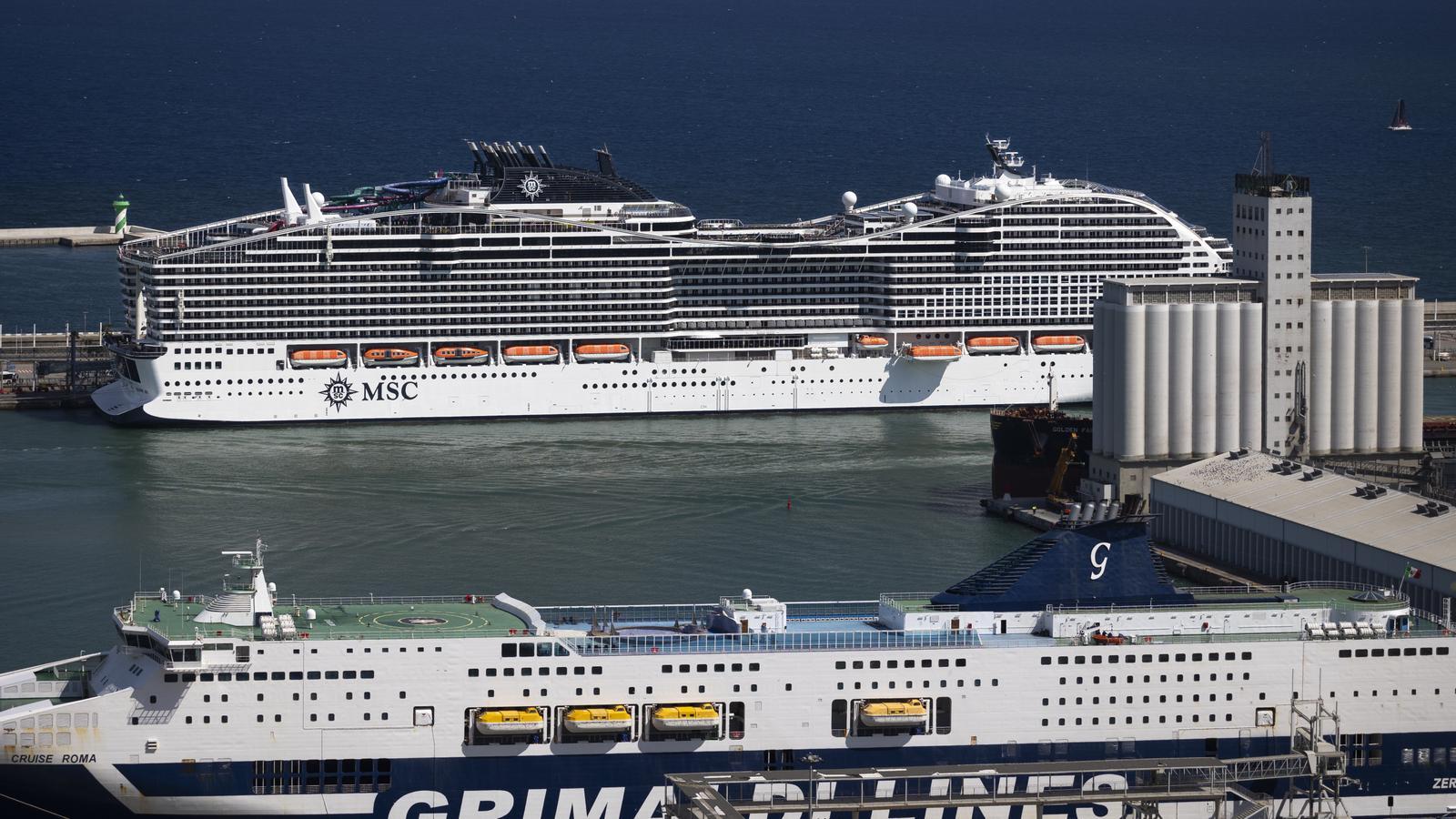
BarcelonaThe mayor of Barcelona, Jaume Collboni, already has a date for his first major political test of the term. The fourth deputy mayor, Jordi Valls, announced this Friday the calling of an extraordinary Economy commission next Tuesday to put to a vote the fiscal ordinances for the next term and the proposal to increase the tourist surcharge on cruise ships in transit. Two key debates that the municipal government aspires to be able to move forward before facing a folder that at first glance seems much more complicated: the budgets.
In a press conference, Valls said he is confident he can move forward with both the ordinances and the new surcharge—which he is promoting in two separate files—because, he said, both are measures that stem from previous agreements with ERC and the Comuns. In the case of municipal taxes, he explained that they will be continuationist and that they will maintain the government's philosophy throughout the mandate of increasing tourist taxation and practically freezing the taxes paid by the city's residents.
In this sense, the deputy mayor specified that the 2027 ordinances will include the agreement that Valls himself reached with Barcelona en Comú a year ago: raising the IBI (property tax) on luxury hotels from the current 1.17% to 1.3%, the legal maximum. The law allows city councils of cities like Barcelona to apply a differentiated IBI rate to the 10% of properties with the highest value in the city, a category in which there are 233 properties, of which 203 are luxury hotels.
In addition to the ordinances, Valls explained that he will also bring to Tuesday's commission the proposal to raise the municipal surcharge on cruise ships in transit, which are those that spend less than 12 hours in the city. In the month of June, the PSC, ERC, and Comuns reached an agreement in the Parliament that allowed—through an amendment to the accompanying law—for Barcelona to triple the surcharge on cruise ships in transit, going from the maximum of 8 euros per day to 24 euros.
Now the municipal government is grounding that pact with a proposal that foresees increasing the surcharge gradually. Thus, the forecast is that in 2027 this surcharge will go from the current 5 euros to 12, and then increase at a rate of four euros each year until reaching 24 euros in the year 2030. The City Council calculates that in the year 2031 the surcharge on cruise ships in transit could leave up to 23.7 million euros more in the municipal coffers. However, Valls has stressed that the objective is not to increase revenue, but to deter this type of offer.
The support of the commons, up in the air
To move forward with the ordinances and the new tourist surcharge, however, the municipal government will need the votes of other groups. In the case of Barcelona en Comú, the negotiation has started on the wrong foot. This Friday, the group's spokesperson, Marc Serra, asked Collboni to remove the files from the agenda. The reason? They want the surcharge on cruise ships to rise to the maximum as early as 2027 and not gradually as the PSC executive currently proposes. On Wednesday, the municipal government already rejected another request from the Comuns that involved raising the tourist surcharge for luxury hotels to 8 euros this year.
While waiting to see what position Barcelona en Comú ends up adopting on each of the files, another door has opened for Collboni to move forward with the new surcharge on cruise ships. In a statement, the leader of Junts per Barcelona at the City Council, Jordi Martí Galbis, said that his group views the increase "favourably," but has demanded that the extra resources the council receives from this measure "revert to less tax pressure for the residents and into a shade plan to face the climate crisis."
Collboni announces a fund to buy emblematic shops
The mayor of Barcelona, Jaume Collboni, announced this Friday the creation of a fund to acquire commercial premises in order to "preserve their activity" in the neighborhoods. During the inauguration of the European Forum of Cities and Proximity Commerce, Collboni did not provide details on how much money will be in this fund or how it will work, but he said that there are businesses that "because of the role they play in a commercial axis or because they guarantee a necessary service" must continue.
On the other hand, the Minister of Business and Labor, Miquel Sàmper, who also participated in the kickoff of the event, explained that a working group will be created with the city councils to equip themselves with "a legal framework" to exercise the right of first refusal on premises considered to be of general interest.