Catalonia will have a pioneering brain center at the UAB
The Government will invest 20 million euros until 2029 to build a pioneering space to research neuroprosthetics and brain-computer interfaces

-
CAT -
CAST
BarcelonaMaking a person control a prosthesis with their brain, developing implants capable of interacting with nerve tissue, or identifying patterns in brain activity using artificial intelligence. All of this is no longer science fiction: in many places around the world, the scientific community is striving to achieve a better brain-machine connection that, on one hand, deepens the knowledge of the most complex organ in the human body and, on the other, improves people's lives. Catalonia wants to be part of this neurotechnological race on a European scale, and the Government has chosen Cerdanyola del Vallès as a reference hub.
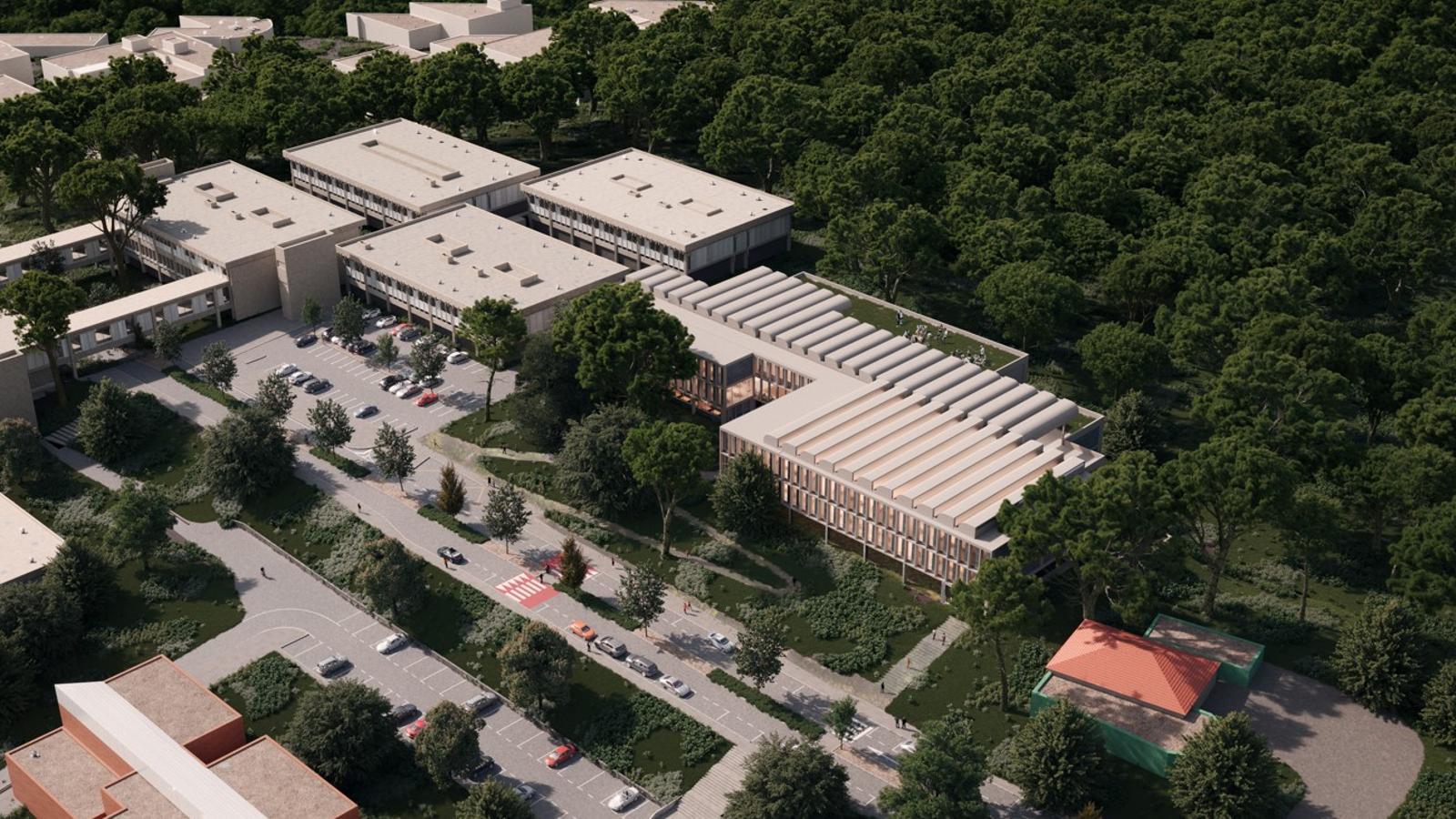
The Generalitat will invest 20 million euros between 2026 and 2029 in the construction at the Bellaterra campus of the new Center for Integrative Neuroscience and Neurotechnology of the Autonomous University of Barcelona (CENIT-UAB), a facility that aims to become the epicenter of research in neuroscience, technology, and cognitive sciences. The project, which will have an estimated total cost of about 45 million euros (excluding VAT), plans to put the center into operation by the end of 2029. The new facility, covering 17,809 square meters, will bring together the UAB Institute of Neurosciences (INc-UAB), research groups in psychology and cognition, and a new platform specialized in neurotechnology.

According to the Catalan executive, advanced research and technology transfer –the leap from science to the market– will be carried out within this pioneering facility, combining multiple disciplines: biology, medicine, psychology, engineering, materials science, data science, and artificial intelligence. All these areas share the will to study the nervous system and, in the future, to develop new tools to prevent and treat neurological diseases such as stroke, Parkinson's, or amyotrophic lateral sclerosis (ALS), as well as spinal cord injuries.
The presentation ceremony for this project will take place this Friday and will be led by the Minister of Research and Universities, Núria Montserrat. The investment approved by the Generalitat (20 million) will be allocated to the financing of construction works, facilities, and the equipment necessary to put the new center into operation by the end of 2029. In accordance with the planned calendar, the executive project must be completed this month of September and the awarding of the works is scheduled for May 2027.
Patients and companies
Among the planned lines of work, neuroprosthetics, bioelectronic and brain-computer interfaces, neuromodulation, nerve regeneration, and technologies aimed at restoring sensory, motor, and autonomic functions stand out. And, in fact, the Generalitat asserts that its location on the Bellaterra campus will allow for leveraging one of the most powerful scientific and technological ecosystems in Catalonia.
The campus already concentrates infrastructures and centers specialized in nanotechnology, microelectronics, advanced materials, biomedicine, and scientific imaging, such as the Catalan Institute of Nanoscience and Nanotechnology (ICN2), the Institute of Microelectronics of Barcelona (IMB-CNM), the Institute of Materials Science of Barcelona (ICMAB-CSIC), and the ALBA Synchrotron.
Furthermore, the center will collaborate closely with the healthcare and research centers within the UAB sphere –the Vall d'Hebron Hospital, the Sant Pau Hospital, the Germans Trias i Pujol Hospital, and the Guttmann Institute– and thus will favor the application of scientific results in real patients.
The other key piece of the project is the business fabric: the CENIT-UAB will also strengthen its relationship with neurotechnology and neuromodulation companies to attract talent and investments and foster the arrival of research to society as products or services.
