Women pay a higher price for heatwaves
Female physiology makes women more vulnerable during stages such as pregnancy or menopause, but experts agree that excess mortality is mainly explained by the sum of social, economic, and age inequalities.
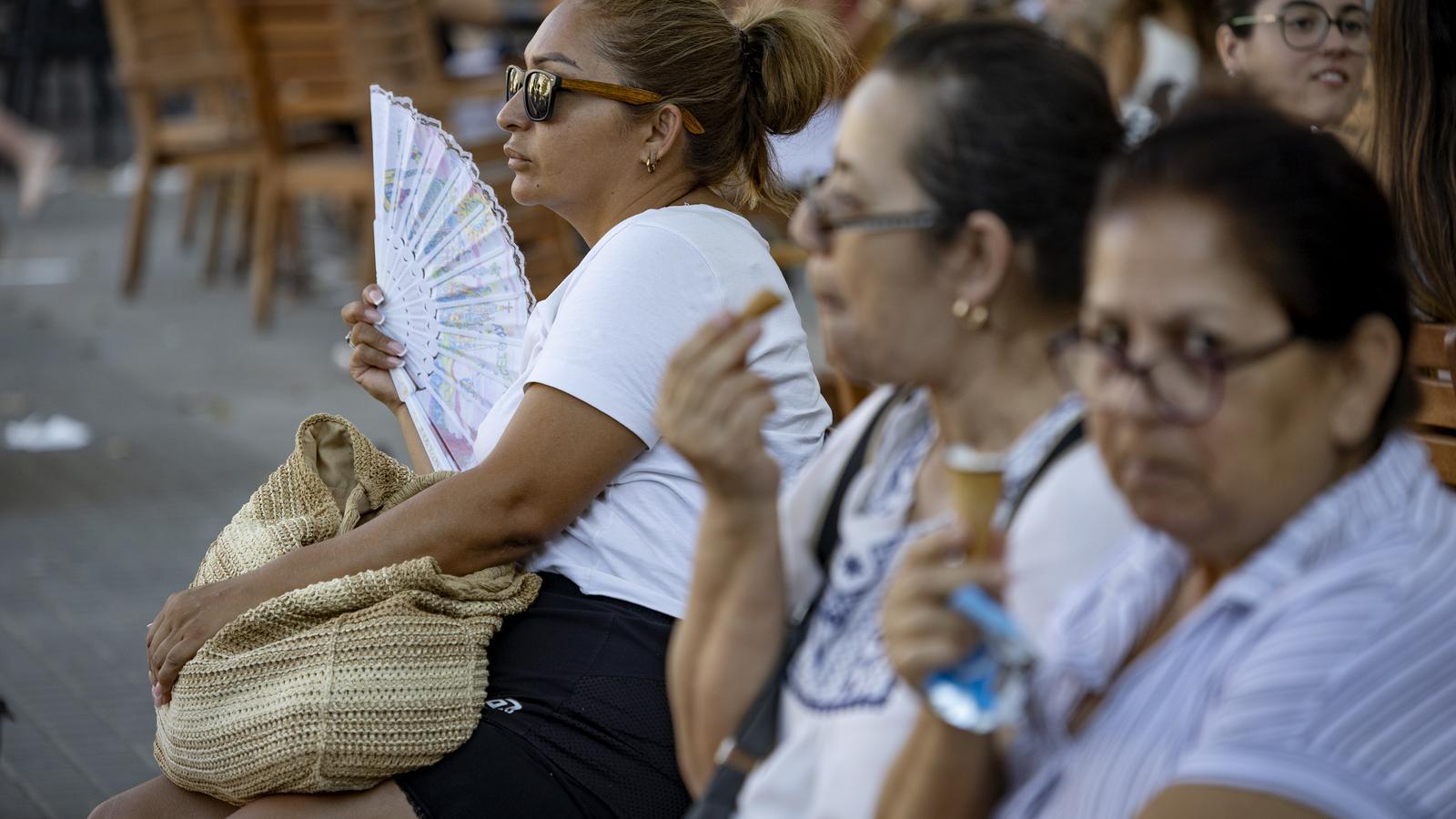

Catalonia –and Europe– is experiencing an unprecedented summer, with extreme temperatures that have exceeded 45 degrees in some parts of the country and a historic record of heat-related deaths has been reached. According to data from the Daily Mortality Monitoring System (MoMo), only in the month of June, 218 deaths attributable to extreme heat were recorded, a 300% increase in cases compared to the same period last year. And although these official data do not publish a breakdown by gender, previous epidemiological studies indicate that women die more than men from this cause.
In this sense, a work by the Barcelona Institute for Global Health (ISGlobal), a centre driven by the "La Caixa" Foundation, concluded that in 2022, until then considered the hottest summer ever recorded in Europe, heat-attributable mortality had a greater impact on women, who accounted for around 60% of heat-related deaths.
A cocktail of factors explain the reasons why they fare worse from heatwaves linked to the climate crisis. To begin with, their bodies respond differently to extreme temperatures, and this is in addition to the fact that they are the majority in an increasingly aging population and that the socioeconomic inequalities they suffer expose them to a higher risk.
A more vulnerable body
Physiologically, women dissipate heat differently than men: they produce less sweat and begin to sweat at higher internal temperatures, making it difficult for them to quickly get rid of excess heat. Furthermore, their bodies are regulated by hormonal cycles, which are also affected by high temperatures.
“There is growing evidence that extreme heat can alter the menstrual cycle,” points out gynecologist Elisa Llurba, head of the Obstetrics and Gynecology Service at the Hospital de Sant Pau in Barcelona.
Thermal stress activates hormonal mechanisms that increase cortisol, the stress hormone, and can alter the secretion of reproductive hormones. Consequently, cycles may become more irregular, and periods, heavier or longer in some women. And painful. “If a woman has endometriosis or adenomyosis, the inflammatory response and vasodilation can intensify menstrual pain and the sensation of discomfort,” adds Llurba.

During perimenopause and menopause hot flashes exacerbate the most common symptoms, such as hot flashes and night sweats, which worsen sleep quality and increase tiredness and irritability.
Pregnancy is also a particularly vulnerable period for hot flashes. For the pregnant mother, it is more complicated to regulate body temperature. Progesterone fluctuations, especially at the beginning and middle of pregnancy, increase the sensation of heat and the larger body volume increases the cardiovascular load.
Furthermore, thermal stress significantly increases the probability of adverse effects for the mother and baby, especially in high-risk pregnancies. “It is a very vulnerable time,” highlights Llurba, who participated in a recent study led by ISGlobal that found a relationship between exposure to high temperatures during the early stages of life and the baby's brain development. Specifically, they observed slower thalamus growth.
The climate crisis intensifies gender inequalities
But it's not just biology that puts women at greater risk. The report “Who can protect themselves from the heat?”, elaborated by the Barcelona Urban Research Institute (IDRA), concludes that the most vulnerable profile in heatwaves and extreme temperatures is an elderly woman with health problems who lives alone in a low-income neighborhood and in housing without adequate cooling. Age is another important risk factor: the older you are, the more vulnerable to heat. And women, on average, live longer than men.
To this is added the layer of socioeconomic factors, as seen by the researcher from the Department of Political and Social Sciences at Pompeu Fabra University, Mar Coll in a recent work: women live on lower pensions, in poorer housing, with fewer resources, which results in less capacity to cope with extreme heat episodes.
Coll has analyzed the impact of the climate crisis on daily life in Catalan households and has documented how it adds another layer to gender inequalities, not just reproducing existing ones. One example is caregiving. “It is mothers who still predominantly have the role of caregivers, and during heatwaves we see them reorganizing family schedules, looking after the well-being of children and dependent individuals; they adapt the family's diet to combat the heat, and take care of everything during a period of extreme heat when they are also in a more vulnerable situation,” Coll explains to ARA.
Furthermore, the UPF researcher adds an emotional aspect: “fatigue, frustration, guilt at not always being able to do it perfectly or not being able to do more”.
