The scientific shipwreck of the Catalan school
-
CAT -
CAST
Although distorted in the Catalan case, the PISA results we have just learned about will likely put back on the table the low level of our students in mathematics, reading comprehension, and science. We already knew this for some time and it has been discussed a lot. But until now, the attention has focused only on the first two topics, while science has been incomprehensibly ignored by public debate. Will we now see the discussion once again focus on mathematics and reading comprehension while science is left aside again?
However, science is essential if we want our children to understand the world they live in. And that is why it is very important to also place science at the center of educational reflection. This neglect towards science has diverse roots, such as the belief that it is a technical and relatively dispensable subject. It also has a lot to do with the fact that most people who participate in the educational debate are from the “humanities,” and their scientific culture is limited. The truth is that some training in physics, biology, or geology is essential to understand what matter is, why the sun rises every morning, or where the human species comes from. Themes that should be part of everyone's general culture.
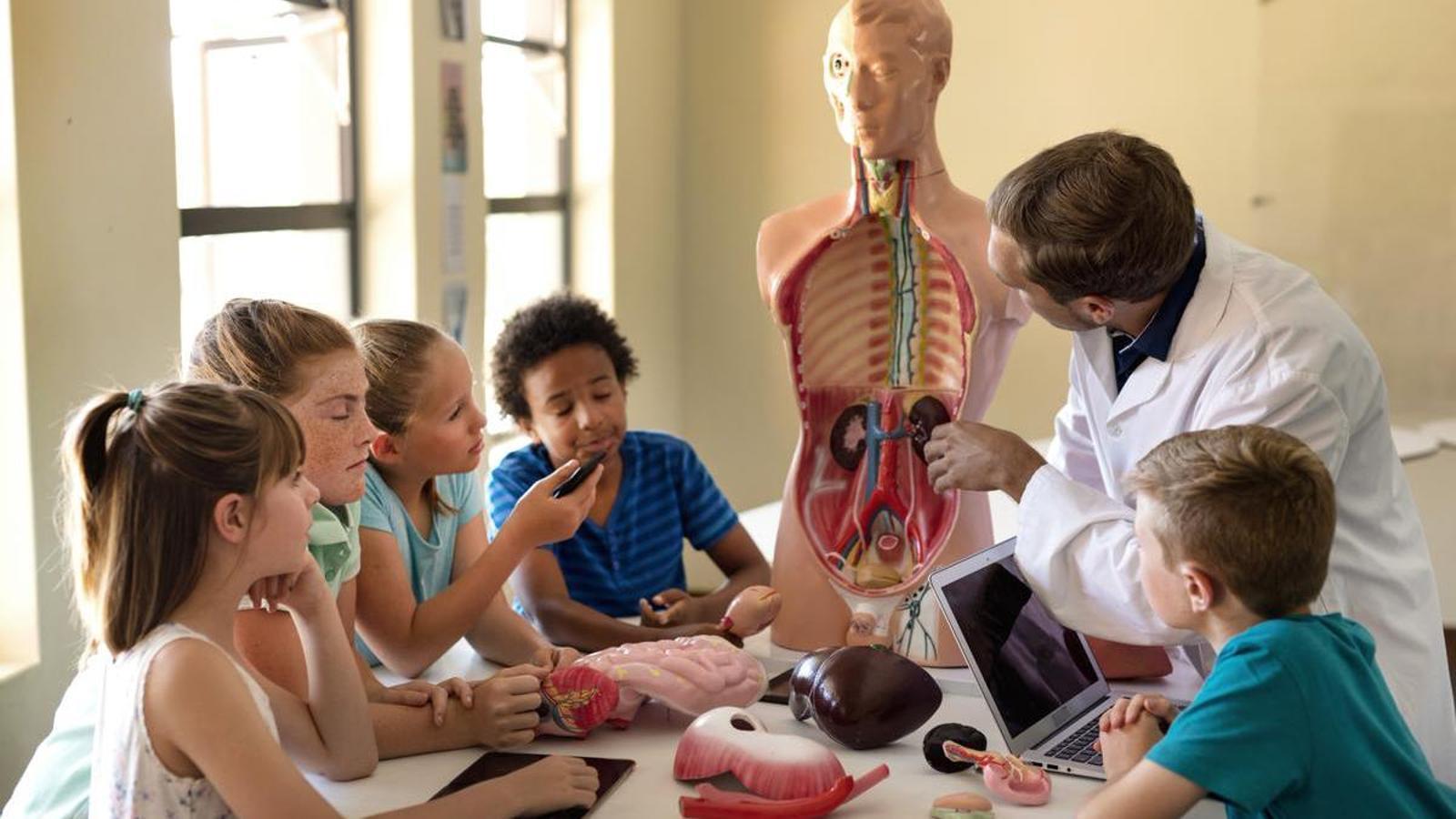
But the Catalan school system does not guarantee this. It all starts in primary school: most Catalan educational centers do little work on scientific content during this stage. The reasons are well known: on one hand, there is the lack of scientific training of the teachers and their rejection of these subjects. On the other, the syllabus is so lax and generic that it is very easy to skip the content that is convenient. Furthermore, the primary school curriculum has deep shortcomings that mean that, for example, a subject as essential as biological evolution does not even appear in the syllabus.
As a result of all this, science gets the worst grades among all the subjects evaluated in Catalonia in the sixth year of primary school. In fact, it is the only subject with a failing average for several years. No other competency has obtained such poor results, as was explained in the article “Why Catalan children know more English than physics”, published on February 28 of this year in this section.
With this meager background, Catalan students have secondary school (ESO) left to learn some content in physics, biology, chemistry, or geology. They will only have three years to do so, however, since in the fourth year of ESO science subjects are elective. And they will be complex years, with students soaked in hormones and emotional upheavals, as is inevitable when one is between 13 and 15 years old.
But things are not going well in secondary school either: Catalonia occupies the penultimate position among European countries in terms of the percentage of hours with minimum dedication to science at this stage, with 8.8%, well below the EU average (12%), just as Xavier Duran explained in these pages (“Do not put science out of orbit”, 17-1-2026). At the state level, we Catalans occupy the last position in the number of mandatory minimum hours (12 h). The next ones have 16, and La Rioja, 20. It is very little, and for all those students who do not pursue the baccalaureate or scientific-themed degrees, which are the vast majority, this is all the formal science education they will receive in their lives.
If we talk about the scientific baccalaureate, Catalonia continues to come off badly: the fact of joining the physics and chemistry subjects, on one hand, and biology and geology on the other, has also led to the loss of teaching hours, since each of the new condensed subjects will have 4 hours per week, when previously the sum of the subjects separately was 6 hours. And not long ago, until 2022, the total was 8 hours. This situation has motivated the protest of teachers, universities, scientific entities, research centers and professional associations, cries that have not managed to reverse the situation.
All of this is more than worrying. Catalonia has designed a system that seems tailor-made to produce scientific illiterates by not dedicating enough time to it in any educational stage and by neglecting such basic topics as teacher training or the curriculum. Once adults, our students will have to navigate a world full of pseudosciences, denialist discourses and populisms of all kinds, and it will not be easy for them to defend themselves against anti-vaxxers, climate renegades or followers of dubious beliefs. Some will say that all of this is a conspiracy by the elites to generate citizens without judgment, but it is quite a bit easier to believe in incompetence than in conspiracies.
It is never too late to remedy it. But it is very urgent to get to it. We are facing an absolute shipwreck that is creating a more ignorant and weaker society. And faced with the challenges of the current world, this is the last thing that Catalonia needs.
Key scientific ideas can be cultivated early, in primary school, by working on the essence of concepts with appropriate models. At these ages, children can very well understand the essence of scientific ideas, spurred by their infinite curiosity. Primary education should ensure that children establish deep roots for the conceptual foundations of a series of essential topics. If this is done, students will be able to incorporate new knowledge in secondary school in a structured and fluid way, and scientific culture will become part of their global culture in a natural and spontaneous way. This is what should be expected of compulsory education, especially in a country that wants to base its economy on knowledge, such as ours.
