Elizabeth Loftus: "Emotion is no guarantee that a memory is authentic"
Psychologist, expert on human memory
-
CAT -
CAST
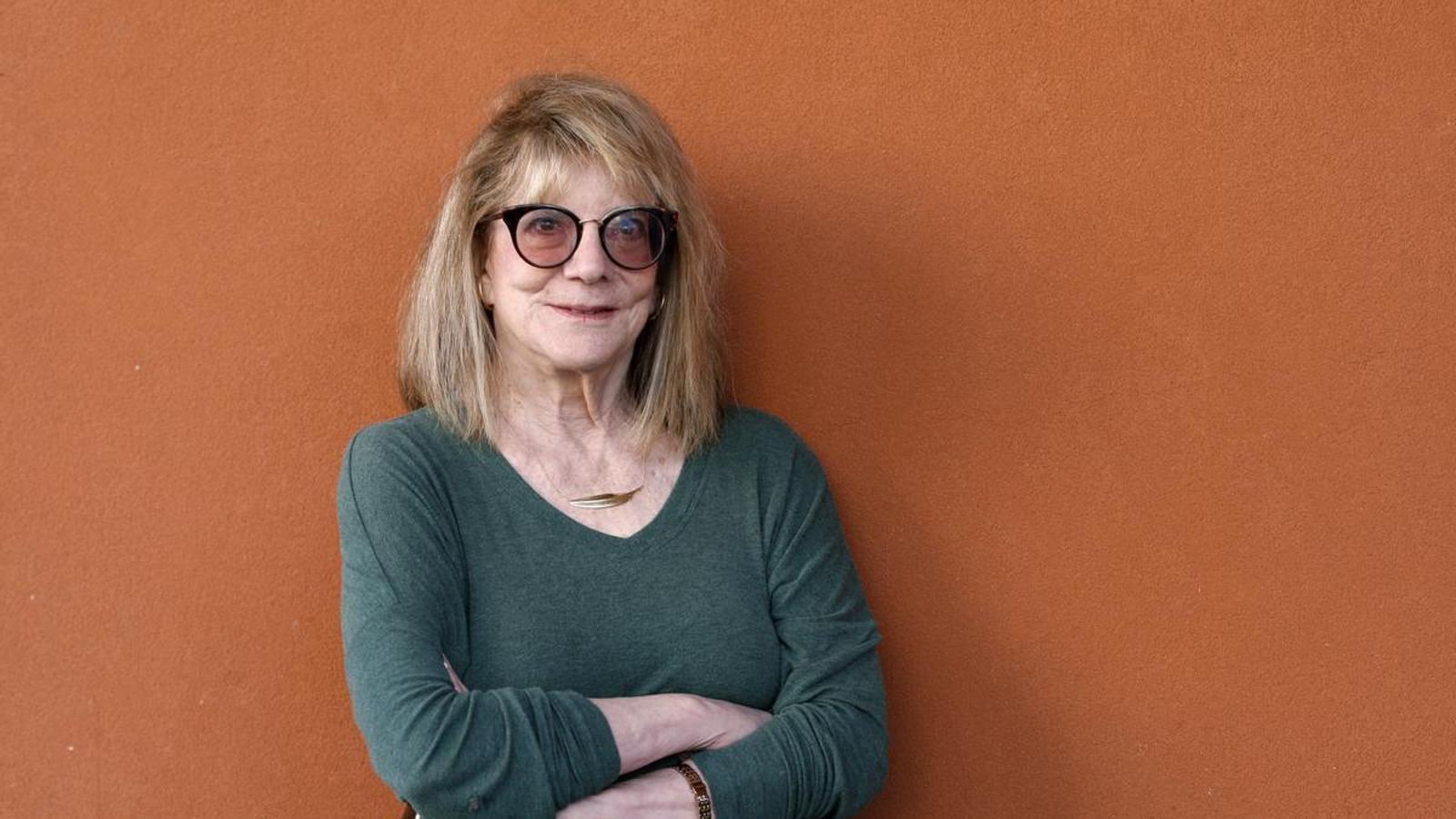
She looks at the camera, half-smiling, from her office at the University of California, Irvine. Elizabeth Loftus, 81, has spent half a century studying memory, and she speaks about her own recollections with scepticism: as she has been repeating for decades, memory is like a Wikipedia page —other people can go in and change it, and so can time.
Can you tell an authentic memory from a false one?
— Without independent corroboration, no. A lot of people think a story is true because the person telling it does so with a lot of detail, a lot of emotion or a lot of confidence. But false memories can have those same characteristics.
Prove it.
— In the laboratory, we show people a simulated accident —a car goes through a stop sign that's controlling the intersection. Later on we expose our witnesses to misinformation: that it was a yield sign. Many will now claim, with complete confidence, that they saw a yield sign.
You've also studied the influence of language.
— Another accident, between two cars. We ask our witnesses how fast the cars were going, but we question them in different ways. Some are asked: how fast were the cars going when they smashed into each other? Others: how fast were the cars going when they hit each other? People estimated the speed as greater if you used the word smashed. And with that word they were also more likely to remember broken glass that didn't exist.
So eyewitness testimony should never be taken into account?
— Eyewitness testimony can be accurate and it can help solve crimes. But when you have an accumulation of problematic factors, you have to be careful. I don't only want to know how good the lighting was on the night of the crime, but what the questioning process was like.
For instance?
— Was there suggestive information? Was there biased media coverage? Was it a cross-racial identification? How long a period of time was there between the crime and the questioning?
Does it change if the events are traumatic?
— Another experiment. We plant false memories in our witnesses: that they saw their parents having a physically violent fight when they were kids, or that they accidentally caught their parents having sex.
And?
— Once we succeed, we measure their emotional reactions to those memories: they're just as emotional as the people who truly had those experiences. Emotion is no guarantee that you're dealing with an authentic memory.
That's unsettling.
— People still think memory works like a recording device: you record the event and later on you can play it back the way it was. But those of us who study memory have been showing for years that it is a constructive process.
Has anyone ever tried to plant a false memory in you?
— My mother drowned when I was 14. One day my uncle started telling me that I had been the one who found her body, when in fact that wasn't how it happened. He wasn't trying to confuse me or play with my memory: he was simply convinced that was how it had been.
What happened next?
— He kept insisting, and I began to think maybe it was true, and little by little I started to visualise it, to remember it. And then he said: no, I was wrong, it was your aunt who found her. It was like being inside one of my own experiments.
But you were very young…
— No. This happened twenty years ago, decades after my mother's death, and I had already spent many years studying the contamination of memory. But then, if our eyes don't work well, we put on glasses or contact lenses…
And if our memory doesn't work?
— We can be sceptical, investigate, ask for proof. In the profile The New Yorker published about me, a cousin told something about my mother's death that I remembered differently. It made me very angry: I had lived with my memory almost my whole life and suddenly she was making me doubt it.
Who was right?
— The author of the piece found evidence that the correct memory was mine. And I felt enormously relieved.
Why does it affect us so much to have our memory questioned?
— Memories matter to us: they're the basis of our identity. It's not very pleasant to think our minds may be full of floating bits of fiction.
You even received death threats.
— When I published The Myth of Repressed Memory in the early nineties, some people got angry. I still remember giving a lecture at the University of Michigan with a guard beside me. I even took a shooting lesson, but I found it appalling.
What was going on in the country?
— Those were the memory wars. Therapists being sued for planting false memories in their patients. Parents suing psychologists for making their children believe they had memories that weren't true…
Has the situation improved?
— Well, I don't need guards any more. And there's a little more acceptance of the idea that sometimes we remember things that didn't happen. But there are still people who think you must always believe women and children, no matter how dubious the accusations are.
You've testified in hundreds of trials as an expert witness on how memory works, including Ghislaine Maxwell's. Did you hesitate before accepting?
— No. In the Maxwell case I gave what we call teaching testimony: basic memory science, as if I knew nothing about the facts of the case. The judge did not permit me to talk about any specific person's memory, or about the suggestive things that had happened to them, or about the changes I had noticed in their stories over successive interviews.
What had you noticed?
— I was not allowed to talk about that. But I did hesitate in the Harvey Weinstein case.
Why?
— By the time things were developing in New York, there had been so much media coverage and so many bad stories about him that I started to worry about testifying. I found them another expert.
And in the end you testified all the same.
— I felt like a coward. I was about to withdraw because I was influenced by the media coverage — the very thing I've been telling people for years not to let happen to them. So I went to New York and I testified.
Have you paid a price for it?
— Absolutely. Even now, every time I testify, people say: didn't you testify for Harvey Weinstein? They try to link the current defendant to an unpopular person. But it's too late now.
How do you live with everything you know?
— It's actually positive. When somebody tells me something I know isn't true, I don't think they're a liar. They may simply have a false memory. It's a kinder way of relating to other people.
