Barcelona gains proportionally more rental apartments than the housing stock grows
Properties destined for rent rise 0.7% while the set of dwellings in the city rises 0.5%

-
CAT -
CAST
BarcelonaRent caps manage to contain price increases. This is demonstrated by international academic evidence and the deposits at Incasòl made since the measure came into force in Catalonia. This does not mean that families continue to have trouble meeting rental costs, stresses the deputy director of the Metropolitan Housing Observatory of Barcelona (O-HB), Carles Donat. Faced with this consensus, the debate revolves around the effects that caps have on the supply of rental apartments.
A study by the O-HB presented this Monday in Barcelona concludes that the Catalan capital has gained 1,895 rental apartments since March 2024, when the rent containment came into force. This figure is the net balance of contracts, that is, those signed during this time, subtracting those that have expired or been cancelled. In these two years, the rental stock has grown by 0.7%, while the housing stock as a whole has grown by 0.5%.
Donat believes that the stock is expanding despite rent containment because, for the bulk of owners, renting continues to be profitable: "the majority of the properties are in the hands of people who have owned them for a long time; therefore, profitability has nothing to do with current purchase prices or those from five years ago".
This expert admits that the number of rental apartments "has grown, but that growth has slowed down", but argues that the change in trend predates the pandemic: he links it to the 2019 reform of the Urban Leasing Act (LAU), when the duration of contracts was extended from three to five or seven years. Since then, the supply has fallen "because turnover has decreased, and the stability of tenant families has increased", he stated. Once the market has absorbed the impact of the legislative change, the supply has stabilized, if one observes a time lapse of more than twenty years.
What happens with the price per square meter?
Although the Barcelona City Council and the Generalitat boast that rents for new contracts have fallen by 4.4% compared to before the cap came into force, the price per square meter has risen by 2.3%, according to data from the city council itself.
Donat attributed this to the fact that smaller apartments have entered the market and demanded emphasis be placed on the trend of "breaking the rise." "The curve has stopped being upward and is flattening out," regardless of the indicator observed. According to O-HB data, the price per square meter, which has stood at 17.1 €/m2, would have reached 18.7 €/m2, following the trend of the previous decade, or 20.8 €/m2, maintaining the pace of the two years prior to the containment.
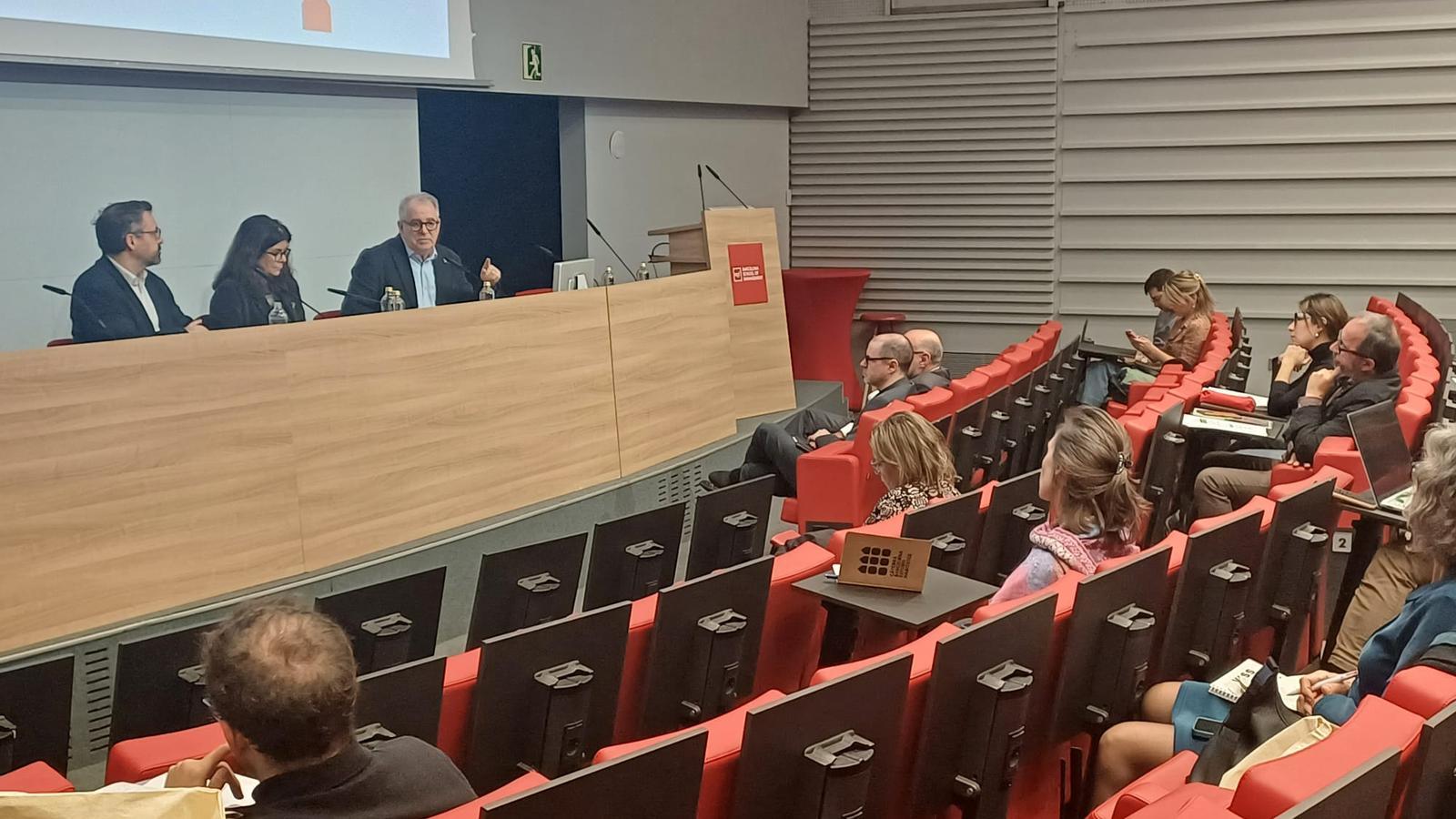
Donat, like other experts, lamented that while in Catalonia there is "very certain data" on deposits, there is none on supply. At the Second International Housing and City Congress, promoted by the Barcelona Housing Chair (CHB), he asked the academic community to "do a bit of self-criticism and be critical of the data," and warned that real estate portals are not a source for conducting "rigorous analyses." "Most agents tell us that advertisements no longer even reach the portals," he concluded.

