Emilia Redolar: "Saying that being trans is a trend goes against biology: the brain always fights to fit in"
Professor and director of the Cognitive NeuroLab, at the UOC

-
CAT -
CAST
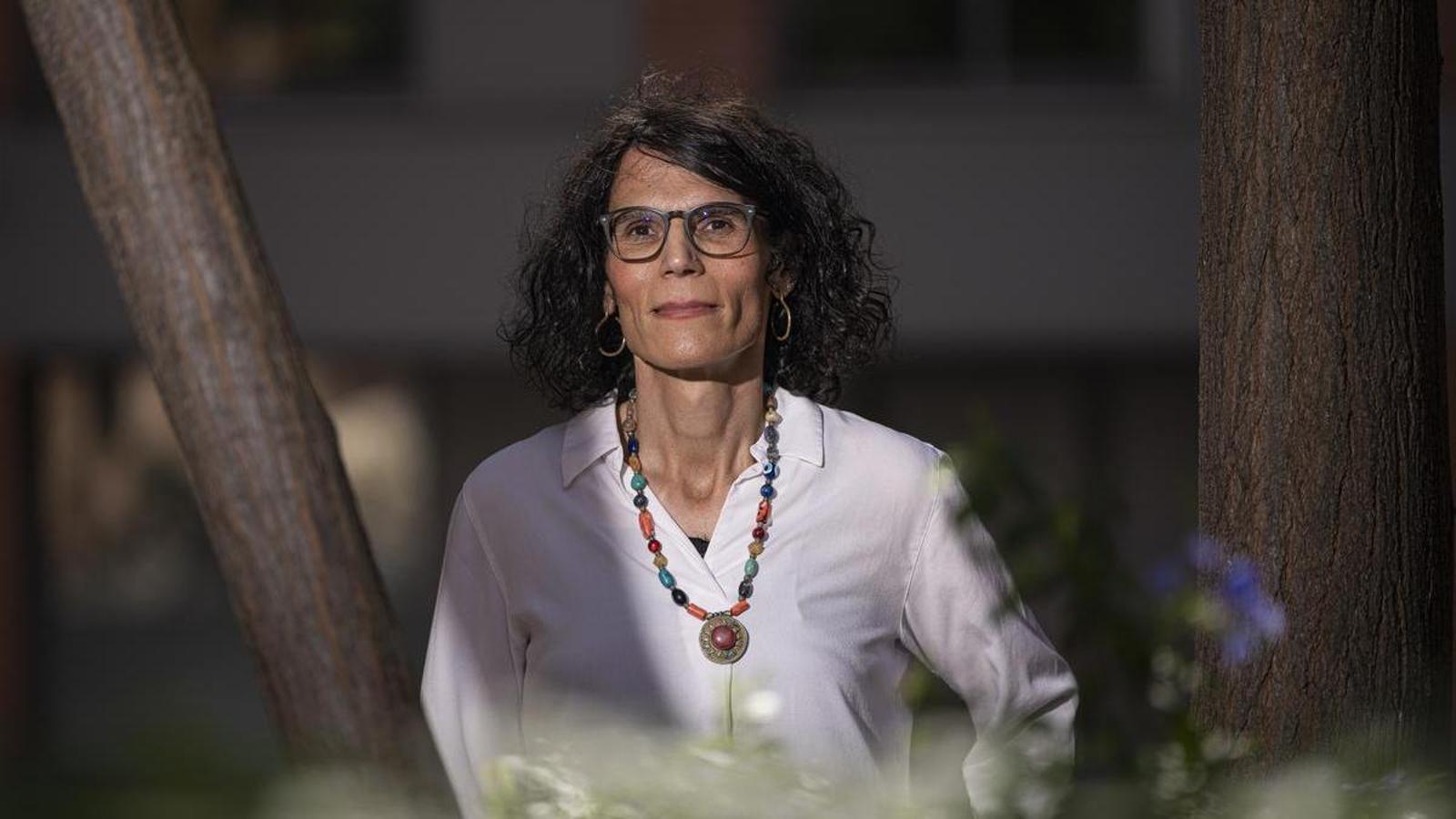
She has the soft, welcoming tone of someone who knows how to listen, but when she speaks about neuroscience, she does so with surgical precision and a confidence that leaves no room for doubt. Emilia Redolar Ripoll (Teruel, 1974), a tenured professor at the UOC and director of the Cognitive NeuroLab at the same university, has dedicated her career to deciphering how the brain makes us human. In Lo que somos bajo la piel (Destino), her latest book, science is explained through Almudena, a trans woman whom we accompany from childhood and who, as the author acknowledges, is her own mirror. Redolar combines science and testimony to remind us that the brain is also biology, that identity cannot be reduced to genitals, and that diversity is the most natural way life has of expressing itself.

We go through the book guided by Almudena, a trans girl who tries to understand herself in a world that does not see her. Why did she need this story to explain neuroscience?
— I turned it over in my mind for almost four years. I wanted to write about how the brain constructs the sense of the "self," a great mystery that researchers like António Damásio have pursued for decades. But I did not want to write a cold academic treatise. I was fascinated by embodied identity: how we feel our body, how we inhabit ourselves from within. To bring this science closer to people, I needed a living story, with a soul. This account might seem like pedagogical fiction, but in reality, it is my own childhood and youth. Sharing it helped me to put a face and warmth to the concepts of the laboratory. Biology is fascinating, but it only makes sense if it serves to understand the experiences of real people.
How does the brain manage to make a handful of cells and electrical impulses make us feel who we are?
— It is a daily miracle. At birth we arrive with a kind of genetic roadmap, an instruction book that contains the ingredients to form the heart, the hands, the genitals and, above all, the brain. But this roadmap is not a cage or an immutable sentence; it is incredibly plastic and flexible. We human beings are social creatures that need to adapt to an environment that is constantly changing. Our experiences, the affection we receive, our fears and the words of others are constantly dialoguing with these genes, turning them on or off as if they were small switches. Identity is woven in this way: between what we are born with and how the world welcomes us.

Our body changes with the years, but inside we continue to be ourselves. How does the brain sustain this intimate continuity?
— Thanks to episodic memory, which is the invisible thread that stitches our days together. It depends on a wonderful structure called the hippocampal formation. When I look at my hands, I know they are not the same ones from twenty or thirty years ago; time passes over the skin. But I know with absolute certainty that I am still me. This structure stores memories, links them together, and gives us the feeling of being the same person throughout our entire existence. First, it allows us to recognize ourselves as beings different from the table where we work or the person in front of us, and then it gifts us this peace of knowing who we are despite the passing of the years.
At birth, it seems that everything is decided by looking only at the genitals. What role does the brain really play?
— We have made the mistake of reducing biological richness to that which is visible to the naked eye. From a reproductive point of view, sex is the exchange of genetic material between an egg and a sperm. When a creature arrives in the world, we look between its legs and immediately say: "It's a boy" or "it's a girl". But in doing so, we are not describing a body: we are projecting an entire universe of roles, expectations, and labels. And identity does not reside in the genitals; it resides in the brain. The brain is also biology, and it is an organ that takes more than twenty years to complete its development. This long immaturity is what makes us vulnerable during childhood, but it is also what allows us to learn and live together thanks to an infinite flexibility.
What weight do hormones have before coming into the world on our sense of identity?
— They play a key role, but it must be understood well. From the outset, the brains of men and women are practically identical in almost everything; there are no different capabilities. The only differences are found in the small networks that regulate sexual behavior and identity. The basic biological program of the human brain is initially female. During gestation, testosterone intervenes to transform these circuits in certain cases. However, it is not a mathematical mechanism: the uterine environment, such as maternal stress or cortisol levels, modulates how these hormones interact with nervous tissue. Nature works with nuances, never with inflexible dogmas.
In the book it states that neuroscience has found at least four brain variants. What does this mean for a trans person?
— In neuroscience we speak of endophenotypes, that is, biologically verifiable brain configurations. When the international scientific community has studied the structure of the brain, the thickness of the cortex, or how neurons connect, it has not found two closed boxes (cis man and cis woman), but at least four well-defined variants: cis women, cis men, trans women, and trans men. These are empirical data reproduced in many laboratories around the world. This scientifically demonstrates to us that being trans is part of the natural and legitimate spectrum of human neurodevelopment; it is one more biological expression of how the brain is organized.
This reality often clashes with an unsympathetic healthcare system. Is there also a health gap for trans people?
— It certainly exists, and it is very evident. People talk, with good reason, about the gap that women suffer in medical research, but the trans community lives in an even deeper vulnerability. Many trans people encounter misunderstanding in consultations, deficient mental health care, or a lack of specific studies on how treatments interact with their biology. When you live in a society that questions you, your body lives in a state of constant alert that alters the neuroendocrine system. Medicine must incorporate the reality of trans men and women so as not to leave them on the margins of care.
How do social coexistence or social rejection shape the physical architecture of our brain?
— Brain plasticity is a tool that allows us to learn and adapt, but it is also a double-edged sword. In our laboratory at the UOC, we investigate neuropathic pain and verify that harsh experiences during childhood can modify brain circuits to the point of generating real and chronic physical pain in adulthood, without any injury to justify it. The brain learns pain. And our brain is profoundly social: from a very young age, we have a basic need to feel accepted by the group. To fit in at school or at home, we are capable of containing our own self. Each experience seeps in, drop by drop, until it shapes our neural connections.
Do identity and desire travel along different paths?
— Neuroanatomy is very clear about this. It happened to Almudena since she was little: she knew she was a woman, but she liked women. These are independent brain circuits. One thing is the network that answers the question "who am I?", which has to do with self-perception and one's own body image, and another very different one is the circuit of desire and reward, which answers "who am I attracted to?". They can coincide in any combination, exactly the same as happens in a cisgender person. Mixing them up only generates unnecessary confusion.
What does neuroscience tell those who claim that the increase in transitions among young people is "a fad" or a "social contagion"?
— He tells him that he does not understand how human biology works. Identity is a deeply rooted internal experience; no one chooses to complicate their life out of mimicry. But furthermore, the social contagion hypothesis is absurd from the point of view of the social brain. Our brain is programmed to do whatever it takes to not stand out and avoid rejection from the group. Expressing a trans identity in an environment that still questions this reality does not make your life easier; it entails misunderstanding and a lot of courage. If the social brain were to act to follow the crowd, what it would do is push the young person to be silent and to hide to protect themselves. What has fortunately changed is not a trend: it is that today many families listen to their children and offer them a safe space where they do not have to live hidden.
After such a long journey as a scientist and as a woman, what reflection does it leave you regarding what we are "under the skin"?
— The main reflection is that today we finally have scientific information to explain how the nervous system works and to provide an answer to how identity is constructed, which is precisely what makes us human. And also that, although identity is built throughout one's entire life, it begins to emerge from the time we are very young. From that moment on, no matter how much the environment influences us, everyone is already clear about how they feel. That is why it is so important that these concepts reach society and the media: because when you have scientific information in hand, exclusionary discourses fall under their own weight.
