Catalonia builds half of the apartments it needs
Only one out of every five new construction homes is officially protected

-
CAT -
CAST
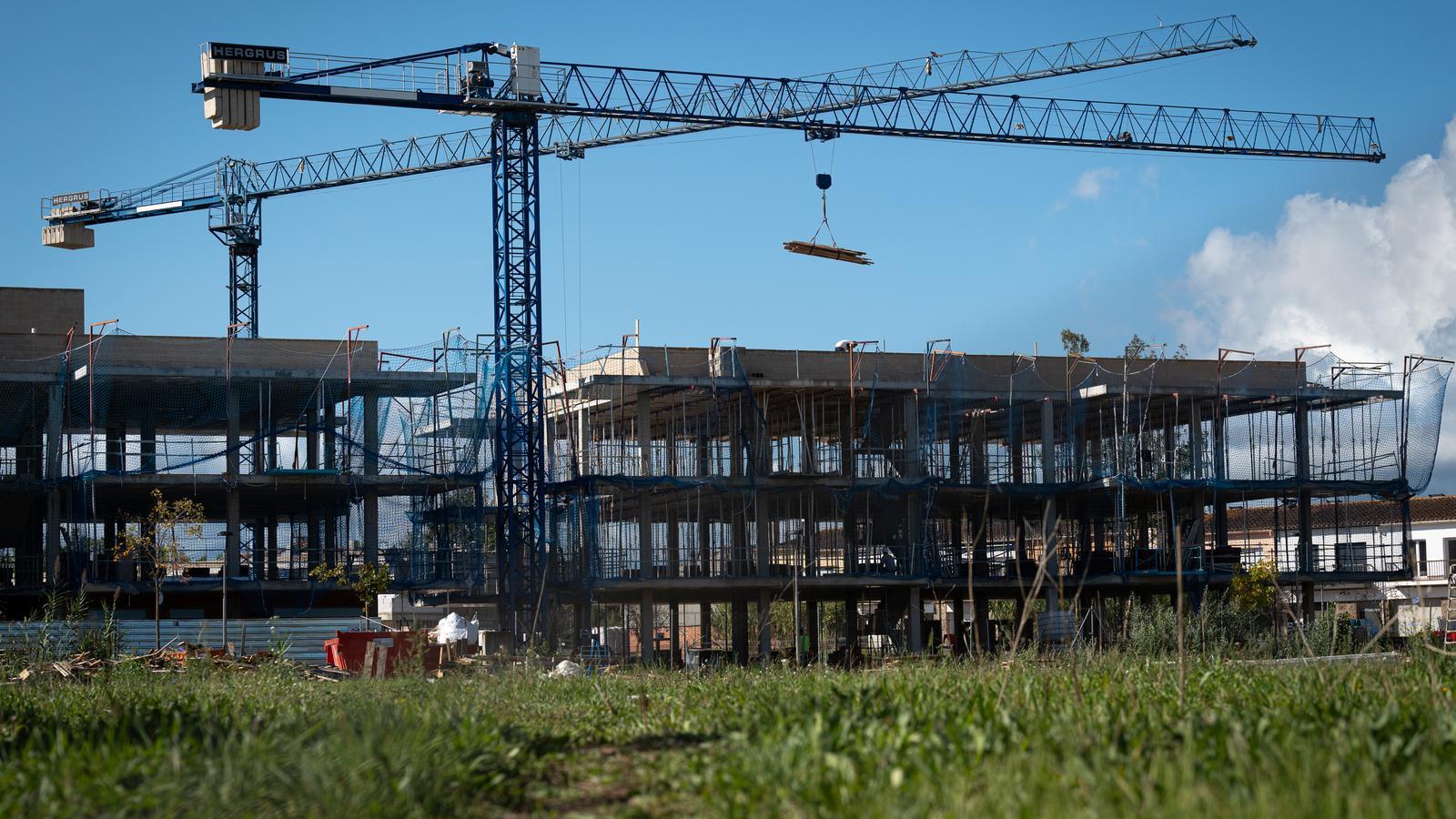
In 2008, Catalonia had 7.29 million inhabitants. In 2025, 8.21 million. In the case of Spain, in 2008 there were 46.1 million inhabitants, and in the first quarter of this year, there were 49.8 million. A population increase that has coincided, precisely, with a major decline in housing construction. To get an idea, in 2008, 71,000 homes were completed in Catalonia. But the real estate bubble burst, banks turned off the credit tap, and construction fell to a minimum. Despite a small upturn in recent years, in 2025, just over 6,500 new homes were completed in Catalonia. The figures for the country as a whole are proportional. From the great boom before the bubble, it also fell to a minimum, and in recent years there has been some recovery, but it is insufficient.
In fact, all experts agree that the current housing crisis has a component of basic economic law: demand is very high and supply is scarce, which drives up prices. According to sector calculations, to be on the right track in Catalonia, about 25,000 apartments should be built per year, and in Spain, about 100,000 homes. The reality is that last year in Spain, just over 88,000 apartments were completed. In Catalonia, the proportion is worse, because if 25,000 homes should be built per year, last year just over 16,500 came onto the market.
It would be necessary, therefore, to speed up the construction of new housing. "We are prepared to do so," said the president of the Association of Promoters and Builders of Spain (APCE) and also president of APCE Catalonia, Xavier Vilajoana, this week. In his view, the main difficulty is the lack of land to build on and the lack of agility in urban planning. For this reason, his main demands involve a reform of the land law that allows, when there is a remediable obstacle, that the process does not have to return to the beginning, because this greatly slows down the whole process. Along with this land law reform, Vilajoana also demanded a streamlining of administrative procedures. In fact, it is considered common in the sector that from the time a planning process begins until a housing development is completed, if the land has to be transformed, at least an entire real estate cycle passes.
And if construction figures are not sufficient for the existing demand, when talking about protected housing, whether from public or private developers, the construction of housing is much lower. In Catalonia, a rebound in the construction of HPO (social housing) has been detected in the last two years, but out of the 16,562 homes finished last year, only 1,778 were publicly promoted HPO homes and 1,739 were privately promoted HPO homes. That is to say, between public and private promotion, little more than 21% of the homes were protected. The Generalitat has launched the 50,000 Plan and the 214,000 Plan to provide itself with public housing in the medium and long term. But building housing requires a long period and, within these plans, it has also acquired properties, some coming from banks, Sareb (the bad bank) or real estate funds, others from individuals, which have exercised the so-called right of first refusal and retraction. In fact, through this system it has already obtained almost 5,000 homes.
Buying is not the solution
Experts, however, bet on construction. They are not against buying apartments to convert them into social housing (HPO), but they consider that this does not help create a new housing stock. "Buying is the fastest and most efficient system" to have protected housing, considers Carme Trilla, president of Hàbitat 3. For Òscar Gorgues, manager of the Barcelona Urban Property Chamber, "there is no other solution than to build new homes for new households". Even so, Gorgues also points out that there are many homes –approximately 60% in Barcelona– where one or two people live and it would therefore be necessary to densify more.
"Buying apartments [by the administration] is fine, but what is missing is new housing", explains the general director of Amat Immobiliaris, Guifré Homedes, who quantifies at 100,000 the apartments that should be built in Catalonia and at 800,000 those needed in the whole of the State. But since building new housing takes time, Homedes believes that we should also bet on changing uses to convert buildings that are currently offices or shops into homes.
