Five million fans and a health challenge: the World Cup activates a network to detect outbreaks
An independent network will analyze samples from host cities to detect outbreaks of diseases early among the millions of fans who will travel to the tournament.
-
CAT -
CAST
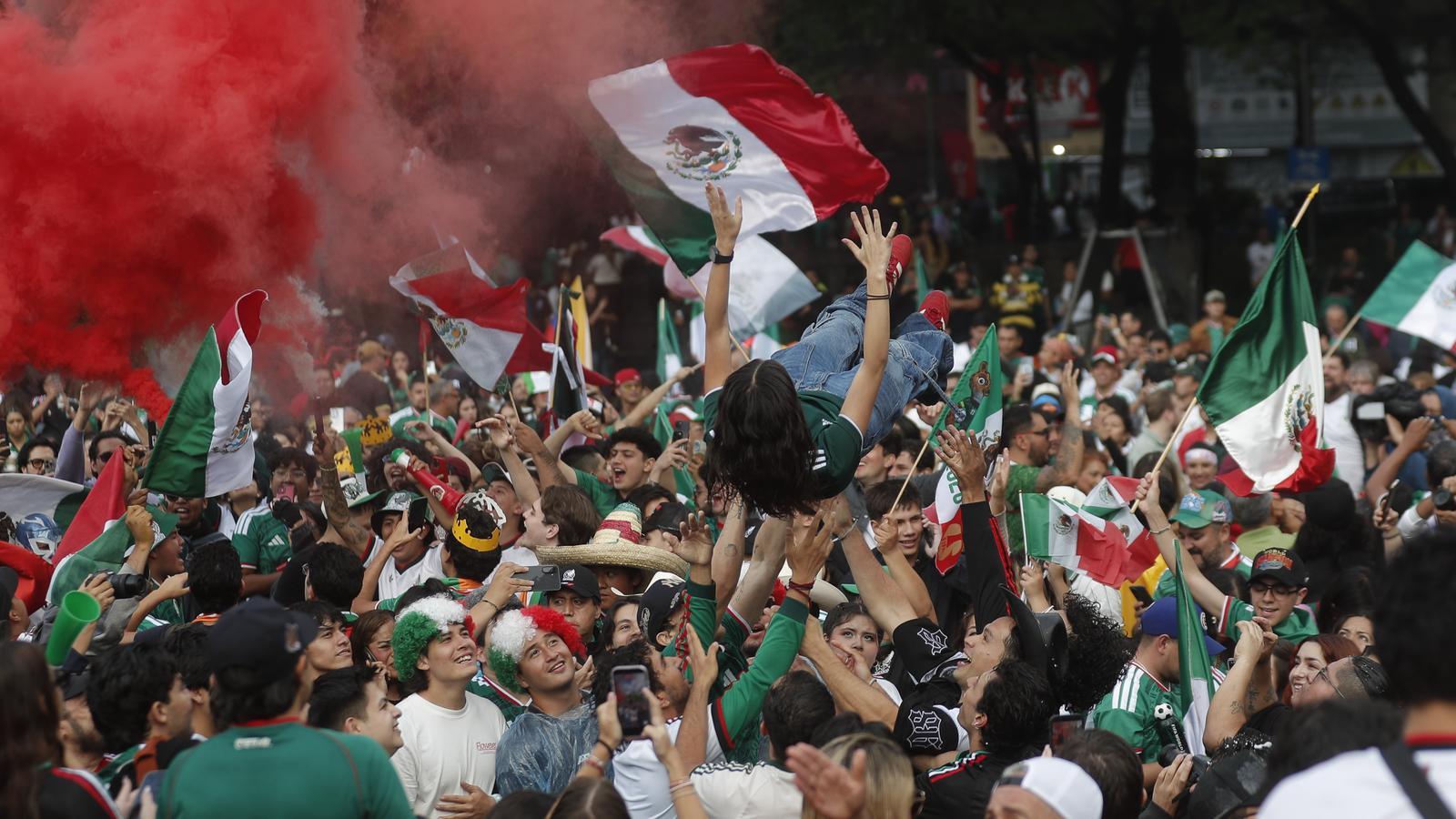
This week the FIFA World Cup has begun in North America. It is expected that five million fans from all over the world will travel to the 16 host cities, in three different countries, to cheer on their team in packed stadiums: it will therefore be a perfect breeding ground for the spread of diseases.
outbreak in the Democratic Republic of the Congo.As Rebecca Katz, an expert in global health security at Georgetown University and director of the Center for Health Security Operations, says: “Mass gatherings are complicated. And these, in particular, are more complicated than you can imagine”.
Anticipating possible threats
This strategic public health information center, created by experts from Georgetown University and the Medstar Health organization, collaborates with wastewater surveillance sites, biotechnology companies (such as Verily Health), genomics laboratories, and local health agencies to anticipate potential disease threats during the games. Local associations and health officials will receive daily reports, as well as alerts of any significant risks.
According to Windell Washington, Chief Medical Officer at Verily: “The World Cup is like the Super Bowl but on steroids. People are coming from different countries with different disease prevalences; therefore, when you gather a lot of people in one place, a monitoring strategy that ensures a safe environment is very important.”
Three states are hosting this competition for several weeks and, therefore, must coordinate with the 48 participating countries and regions and their teams. The exchange of health data between regions is already complex, but, as Katz points out, the current public health landscape in the US further complicates coordination: “The relationship between the United States and the World Health Organization is complicated. [Washington formally left the WHO this year.] Our colleagues in local, state, and federal health departments are overwhelmed.” He adds that this is why his team wanted to fill this gap by creating a non-governmental operations center dedicated to public health.
Wastewater surveillance sites allow us to ascertain disease levels in a specific population by detecting fragments of viral DNA or other pathogens that have entered municipal wastewater systems through feces, urine, or other bodily fluids. This data can sometimes show the community spread of a pathogen days or even weeks before cases surge in hospitals and public health systems. This gives experts more time to begin isolating the sick, administering vaccines, applying treatments, and ultimately saving lives.
In the words of Marc Johnson, a wastewater researcher at the University of Missouri who also collaborates with SecureBio, one of the organizations associated with the project: “We are not trying to replace clinical surveillance, but to complement it: to offer an unbiased portrait of the entire local society, instead of focusing on individual patients.”
For example, data obtained from wastewater reinforced the response and preparation to face outbreaks during the peak of the covid-19 pandemic. They were also used during the 2022 World Cup in Qatar, the 2024 Summer Olympics in Paris, and different political conventions in the United States.
They will track the most prevalent viruses
This year's monitoring activities will focus mainly on the championship venues, but researchers will be very vigilant to detect possible disease spread patterns that could be unique to the 2026 World Cup. As Johnson explains, visitors will not always be distributed randomly. Fans are most likely to travel to the cities where their country's team plays, and may even follow their teams from venue to venue across North America during the tournament stages. As she herself says: “There is nothing that can compare to the influx of crowds and the reach of the World Cup”.
Researchers may detect numerous pathogens that are common or uncommon in the United States. For example, Verily has real-time monitoring systems for each venue that track five of the most relevant and prevalent viruses, such as SARS-CoV-2, influenza, measles, respiratory syncytial virus (RSV), and norovirus. Many of the monitoring points use rapid polymerase chain reaction (PCR) tests, capable of detecting very small amounts of viral DNA.
“PCR tests are very fast,” says Windell Washington. “They allow us to take samples, analyze them, and then, within approximately three days, obtain results that give us a quick overview of whether a pathogen is prevalent and the prevalence of that disease in the local community.
Genomic sequencing of viruses from samples can further deepen the analysis. SecureBio can sequence a genome in five days, but genetic analysis can reveal much more information, such as the variant or lineage of a virus. This data can be useful for tracking and interrelating outbreaks and thus better understanding the spread of a disease.
As Marc Johnson explains: “We could say, ‘Look, we have detected measles, and it turns out to be – or not to be – the same viral variant found elsewhere.’”
The network will also track monkeypox, some sexually transmitted diseases, and others spread by insects, such as dengue and chikungunya. It is also capable of detecting other viruses that have recently become a cause for concern. For example, Johnson’s surveillance system has a page dedicated to “unexpected findings,” such as the Ebola virus and hantavirus (which recently caused an outbreak on a cruise ship, although it is believed not to spread easily).”
“We are not looking for a specific objective – says Johnson–. So, whether it is what we expected or not, it will appear in our results”.
In addition to information on wastewater, the center will collect climate data and unidentified electronic health records. The teams will also monitor social networks to detect conversations among fans about possible infections. If a specific pathogen spikes in an area, the Health Security Operations Center will notify collaborators from local health agencies and the Centers for Disease Control and Prevention. The team also works in close coordination with the Pan American Health Organization to exchange information with health officials from Canada and Mexico.
As Rebecca Katz says: “The World Cup is fun and offers us an exciting opportunity to watch good matches and cheer for the teams. Behind the scenes, there is a whole infrastructure and organization made up of people and entities who strive to ensure everyone has as good a time as possible without taking risks.
Translation by Lídia Fernández Torrell
