Why is there no revolt in the PSOE against Pedro Sánchez?
Despite the judicial storm and the bad electoral results in the regional cycle, the party is cohesive around its leader

-
CAT -
CAST
MadridIf any impartial observer were to land in Madrid and review what has happened in the last six months, they would ask themselves a question: considering the regional election results, the polls, and the proliferation of alleged corruption cases, why doesn't Pedro Sánchez face an internal revolt within the PSOE? Is there currently too much criticism within the socialist ranks to launch an internal challenge and force, for example, an election? The answer is that the probability is almost zero. Although there are some voices raising a finger, the opposition, infinitesimal, is not articulated, has no visible face, nor support within the party's organic structures, which are dominated by Sánchez's allies. For what reason?
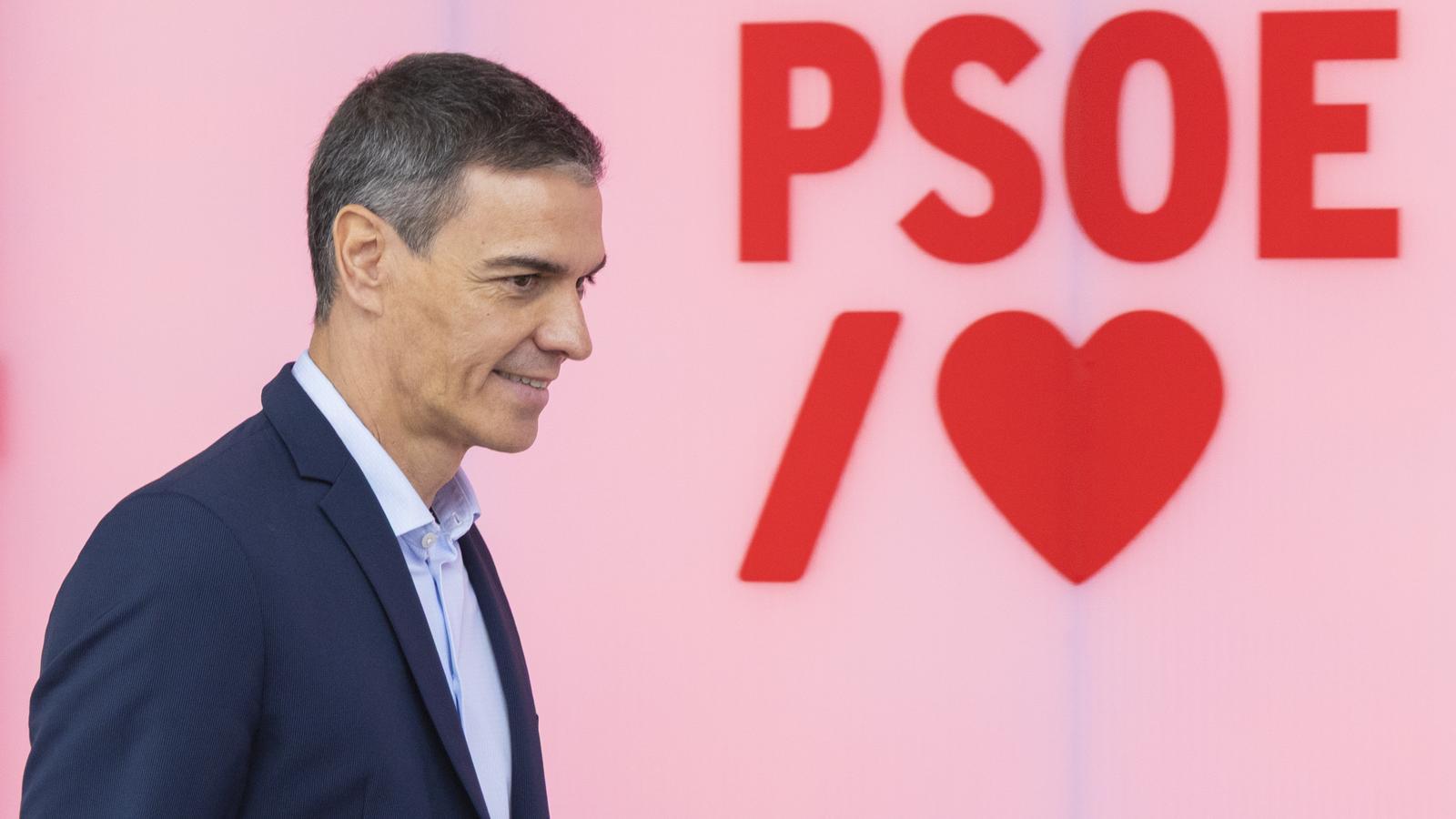
Let's take it step by step. The PSOE is no longer the party it was ten years ago, the formation that ousted Sánchez from the general secretariat for not following the marked path and not wanting to abstain in favor of Mariano Rajoy's presidency. Nor is it the party that Sánchez reconquered in 2017 with unprecedented primaries with the Peugeot team of José Luis Ábalos and Santos Cerdán (now dethroned as former organization secretaries). The PSOE is currently an organization tailor-made for Sánchez – Rebeca Torró, who steers the ship at Ferraz, is someone he fully trusts – and the general secretary has control over both the federal executive commission and the federal committee. After the trauma Sánchez went through in 2016, he vowed it would never happen to him again, that the party would not turn against him again. Consequently, he has been making the necessary decisions to ensure a loyal troop. Colleagues who, in this time of crisis, are rallying around their leader with their sights set on the elections until 2027. The slogan is to resist all behind the captain.
, as they could benefit from the mobilization that Sánchez does generate in Catalonia against the PP and Vox.
The strategy of the ministersWhere are the critical cores? Besides González's group and the free spirits, there is Emiliano García-Page, president of Castilla-La Mancha. Among the leaders most distanced from Ferraz, or at least not entirely controlled, are the general secretary of Castilla y León, Carlos Martínez, who achieved a good result in the last regional elections despite coming second, or the mayor of Palencia, Míriam Andrés. In Andalusia, there is also Hacer Más PSOE, led by lawyer Juan Silva, who called for Spanish elections after the failure of María Jesús Montero.
One of the things that most worries some territorial leaders, in any case, is the date of the Spanish elections, which Sánchez is keeping for 2027. Page directly asks for the call to be prior to the municipal and regional elections in May, as they attribute a good part of the wear and tear they may have to Sánchez and want him to take it with him. Faced with this dispute, Jordi Sevilla's platform has put forward that Sánchez should say he will not run again after eight years in Moncloa, as José María Aznar and José Luis Rodríguez Zapatero did, since in this way the debate among territorial leaders would cease to exist. They propose primaries, therefore, and the election of a new candidate. An analysis that, on the other hand, is not shared by the PSC, to the point that they consider that the elections should be held in the summer of 2027 or they would not even mind bringing everything together in a super Sunday, as they could benefit from the mobilization that Sánchez does generate in Catalonia against the PP and Vox.
The ministers' strategy
But how has Sánchez achieved this control? Historically, the counterweights to the PSOE's general secretary have been the federal executive commission and the federal committee. Two bodies that Sánchez now controls through two avenues: placing people of his utmost confidence, with the presence of many ministers, in the party's leadership, and also sending members of his government not only to be candidates in regional elections but, above all, to occupy the general secretary position in the different PSOE federations, which are the key bodies for the federal committee, and to prevent strong regional leaders from emerging who could act as a counterweight.
We only need to review the latest decisions: Pilar Alegría is the general secretary of the PSOE in Aragon; María Jesús Montero, who was his right-hand woman in government and party, in Andalusia; and the still ministers Óscar López and Diana Morant in Madrid and Valencia, respectively. He also has people of utmost confidence in the Balearic Islands with the President of Congress, Francina Armengol, and in the PSC which, despite being a different party, is part of the PSOE's federal committee. Salvador Illa, President of the Generalitat and first secretary of the party, is in fact the only operation that worked out well for him: he stopped being Minister of Health and won the 2021 elections to, four years later, become head of the Catalan executive, in addition to controlling the entire PSC. In fact, Illa is, within the PSOE – where he is highly valued internally – one of the great supporters of Sánchez's strategy.
In summary, as a good connoisseur of the PSOE says, if Sánchez controls Andalusia, Catalonia, Madrid, and Valencia, he has any congress won.
