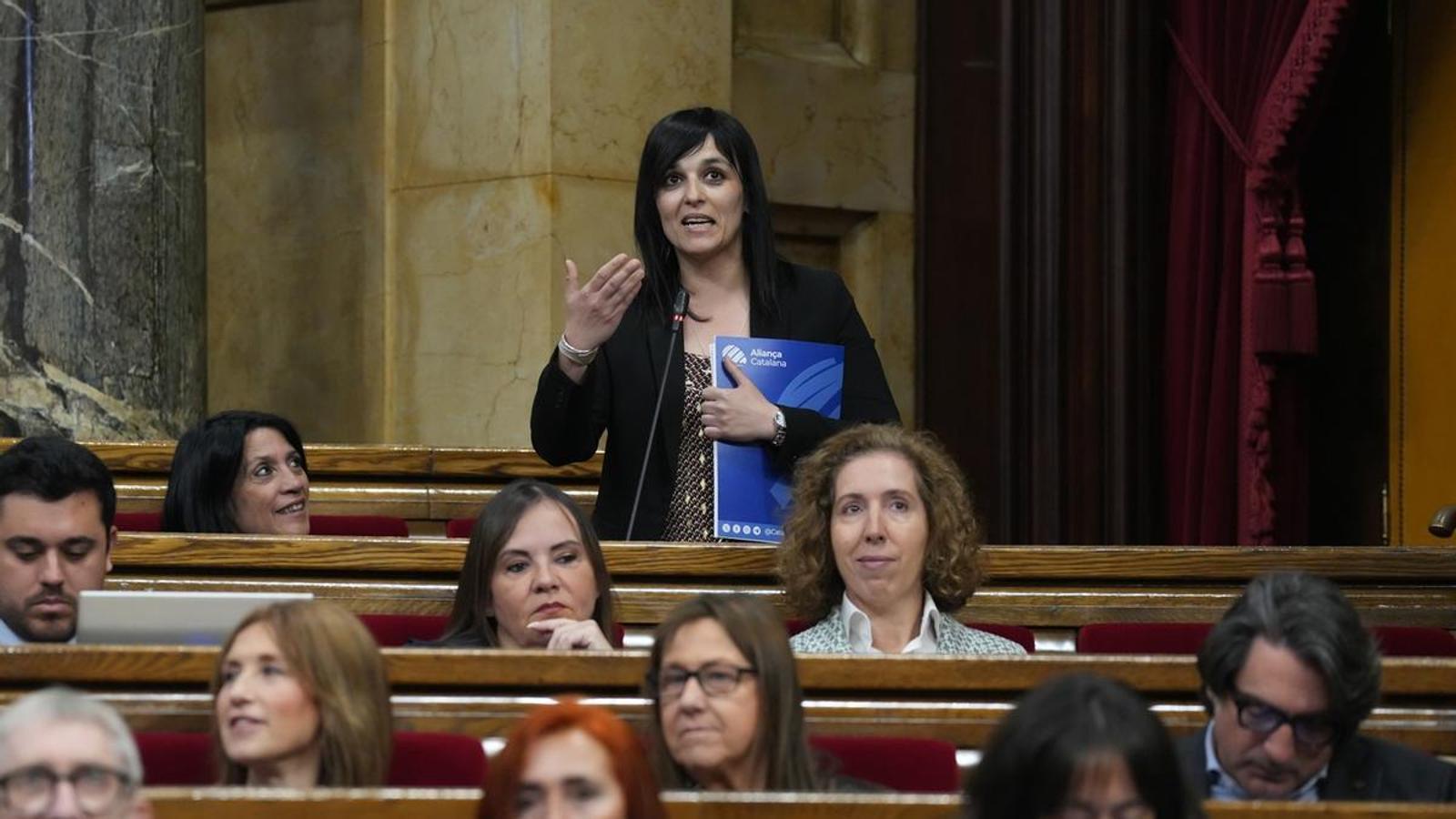
What do the parties do after Sílvia Orriols speaks?

-
CAT -
CAST
BarcelonaSince its emergence as a leading player, many political parties have tried to find a way to react to the far-right. The radical populist right's ability to win over diverse voters, as well as to mobilize non-voters and profiles disconnected from politics, disconcerts many formations accustomed to playing on a different playing field. The far-right's rhetoric and the issues it raises, especially immigration, have fueled the desire to build a strategy to confront it. Whether out of conviction or electoralism, how to react to the far-right is a matter of concern and occupies minds.
Initially, a good number of parties opted for an adversarial strategy, especially through sanitary cordons. They pledged not to make deals with them and not to offer any collaboration. As the radical populist right grew (often driven by large coalitions of ideological jumbles that turned it into the de facto opposition), parties across Europe moderated their confrontation and tried two more strategies. On the one hand, ignoring them. Shifting the focus to other, less conflictive issues, perceived as more aligned with left-wing or right-wing formations. On the other hand, imitating them. Interpreting, often erroneously, that many workers are moving towards the far-right has been a common strategy among the social democratic family. If we look at the research, the results have not been very good and, consequently, they have allowed alternative left-wing parties to gain ground on these parties. Often, however, this imitation has not been conscious. As has also been studied, the far-right has an effect of normalizing certain issues in the public arena, what is talked about and how it is talked about, including among political elites.
When Aliança Catalana and Vox speak, how do the deputies react?
What is happening in Catalonia? How are Vox and Aliança Catalana being responded to? Is an adversarial strategy chosen, even in the emotional realm, or is the option taken to ignore their attacks? We have a small laboratory to study these questions in the Parliament of Catalonia. By analyzing the speeches of parliamentarians throughout the legislature with natural language processing techniques, we can see the parties' reactions every time AC and Vox speak (and about what topic they speak) and analyze whether the response differs from what would be usual with other formations.
What is happening in Catalonia? How are Vox and Aliança Catalana being responded to? Is an adversarial strategy chosen, even on an emotional level, or is the option taken to ignore their attacks? A small Finally, when AC and Vox talk about immigration, we observe that the most common response, especially from the PSC and Comuns, are references, rather vague, to institutions and the importance of rules. Some differences are glimpsed in the margins, however: Junts reacts to immigration speeches by often referring to issues of security, but also of culture and education. ERC reacts by adding an economic touch, while the PP quickly deviates towards security issues.
Sanitary cords
Last weekend’s ARA survey revealed that the majority of Catalans (53%) were in favour of a sanitary cordon for Vox. On the contrary, the sanitary cordon towards Aliança Catalana received much less support (39% agreed). Whether to implement sanitary cordons or not is a debate that a good part of European countries have had at some point. Many follow a similar pattern: at first, citizen support for the sanitary cordon is high, but it falls as time passes and certain realities impose themselves (such as the lack of alternatives to reach government). One of the exceptions, however, is in Spain, where from its origin, and especially from conservative voters, a majority of citizens were in favour of treating Vox as another party. More than 70% of conservative voters already believed this in 2019.
