The two Catalans who are candidates to be judges at the Strasbourg Court
Professor Jordi Nieva-Fenoll and CGPJ member Carlos Hugo Preciado compete with 26 other candidates in the Spanish selection process
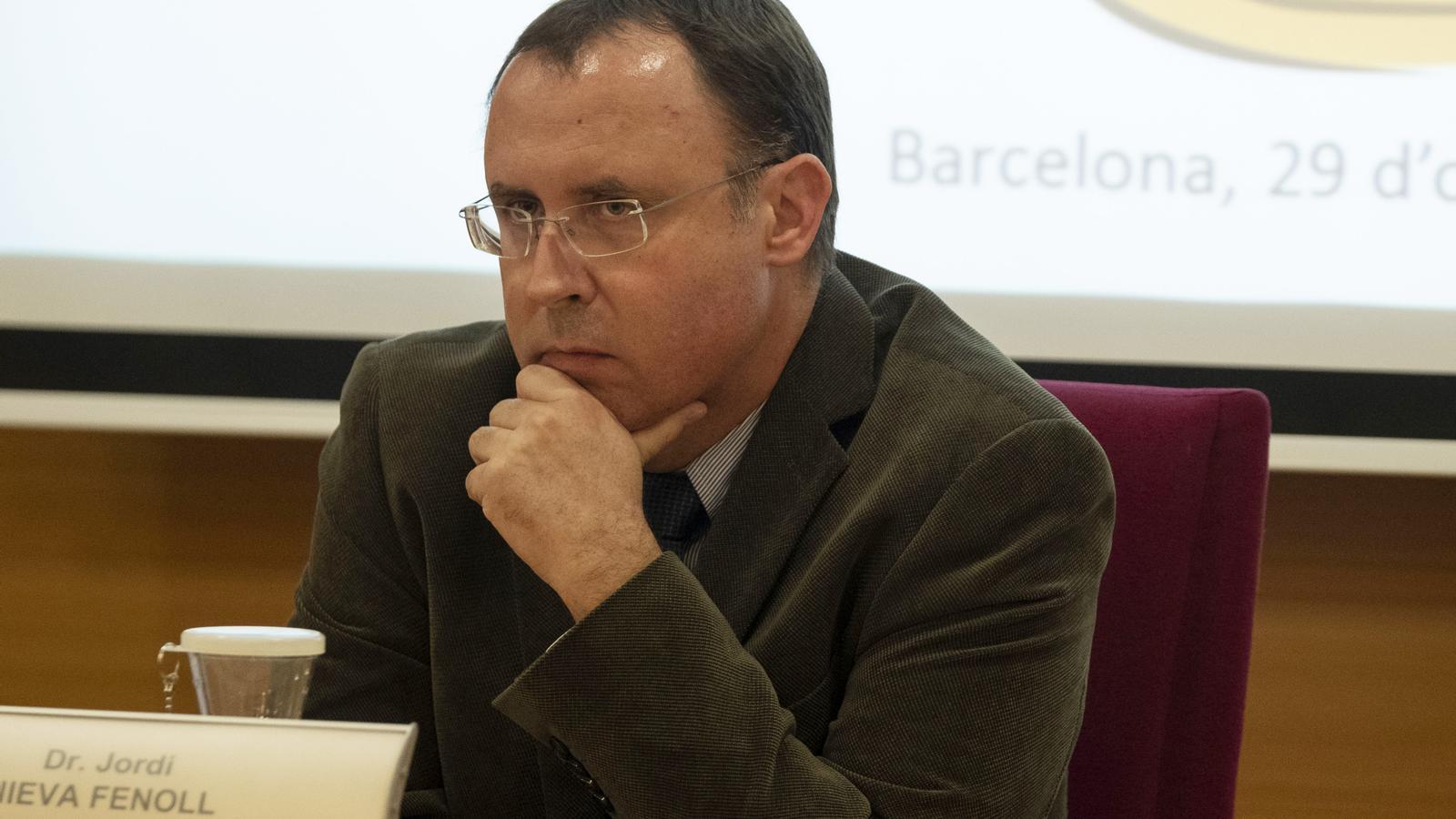

MadridSince March 11, there has been an open selection process to choose the next Spanish judge at the European Court of Human Rights. It is a call that has opened a new struggle between the judiciary and the Spanish government, there are about twenty applicants and interviews have already begun. Among those who have applied for this call, according to various sources consulted by ARA, is the Catalan jurist Jordi Nieva-Fenoll (Barcelona, 1970). This well-known professor of procedural law in Catalonia, along with the member of the General Council of the Judiciary (CGPJ) Carlos Hugo Preciado (who has challenged the procedure in the National Court), are the two Catalans that this newspaper is aware of among the 28 applicants who have submitted credentials to reach Strasbourg. A list that is currently not public.
Nieva is a professor of procedural law at the University of Barcelona and also teaches in civil and criminal matters. He has been a visiting professor at various foreign universities such as Münster, Würzburg, Bologna, Lyon, Libres de Colombia, Pontificia de Valparaíso, or Antofagasta. He is a well-known figure in Catalonia because he collaborates with various media outlets as a leading jurist and therefore has a divulgative aspect of law. However, he is also the author of 16 books, many of them procedural law manuals, and 90 scientific articles, according to his UB biography. He has also participated as a speaker in international congresses in the legal world and is the founder, together with Michele Taruffo, of the Procés i Dret collection from the prestigious academic publisher Marcial Pons.
Regarding Preciado (Tarragona, 1969), he was a magistrate of the Social Chamber of the High Court of Justice of Catalonia (TSJC) before arriving at the CGPJ as a progressive member. He joined the judicial career in 2007 and also worked in the courts of Valls and Reus, in addition to serving as coordinating lawyer for the social area of the Technical Cabinet of the Supreme Court. Despite being promoted by Sumar to reach the CGPJ, at the start of his term he has distanced himself from the bloc on several occasions and has declared himself an "independent progressive." That is to say, this is a profile very different from Nieva's, since while he comes from academia, Preciado comes from legal practice in a jurisdictional body. Nevertheless, he also has a track record in the university field: he holds a doctorate in law from the UNED with an award-winning thesis on fundamental rights in employment contracts, in addition to having also taught at the Rovira i Virgili University in Tarragona.

According to the European Convention on Human Rights, there are two ways to become a judge of the ECtHR: either to meet the conditions required for the exercise of other judicial functions – for example, to be a magistrate of state courts, as in Preciado’s case – or to be recognized jurisconsults of competence, that is, an erudite person in law. This latter path is the one Jordi Nieva-Fenoll intends to take, following his professional career in the legal field.
Regarding the bases advertised by the Spanish government, it is made clear that to be chosen, one must excel in the command of English or French and, at least, have passive knowledge of one of them. They require: "Candidates must hold Spanish nationality, be under 65 years of age on August 8, 2025, and demonstrate a high level of knowledge of one of the court's two official languages." They add, in parallel, that they will take into account the guidelines of the Committee of Ministers of the Council of Europe when choosing, which recommend candidates with a profound knowledge of national and international law, as well as with "moral solvency" and a "desirable practice" of judicial exercise. As evaluation criteria, they state that they will consider knowledge of public law, the functions of an ECtHR judge, or the legal system of other member states. In this regard, some consulted jurists consider that the requirements are too broad and should be more specific.
Who chooses: the most controversial part
Beyond the candidates, of which there are 28, and the selection criteria, the controversy lies in who is part of the selection committee decided by the Spanish government. Several legal sources consulted are critical because they consider that there is too much weight of executive positions and, in fact, the CGPJ spokesperson Carlos Hugo Preciado has challenged the call for this reason. It should be noted that the selection committee is made up of five members: the Secretary of State for Foreign Affairs, Diego Martínez Belío; the Secretary of Justice, Manuel Olmedo; the Undersecretary of the Presidency, Alberto Herrera; in addition to a person appointed by the General Council of the Judiciary, Gema Espinosa, and another jurist of "recognized competence", Paz Andrés Sáenz de Santa María. In other words, the Spanish government's appointees form a majority.
Be that as it may, this selection committee will not have the final say. They will choose a shortlist that will be evaluated by another specific committee of the Assembly of Parliamentarians of the Council of Europe and, finally, the plenary session will vote on who is the best candidate to be the Spanish judge in Strasbourg. The replacement must take place in the spring of next year, when the mandate of the current conservative judge María Elósegui expires.

