The PSOE entrusts the comeback to housing in what may be the final game of 'Sanchismo'
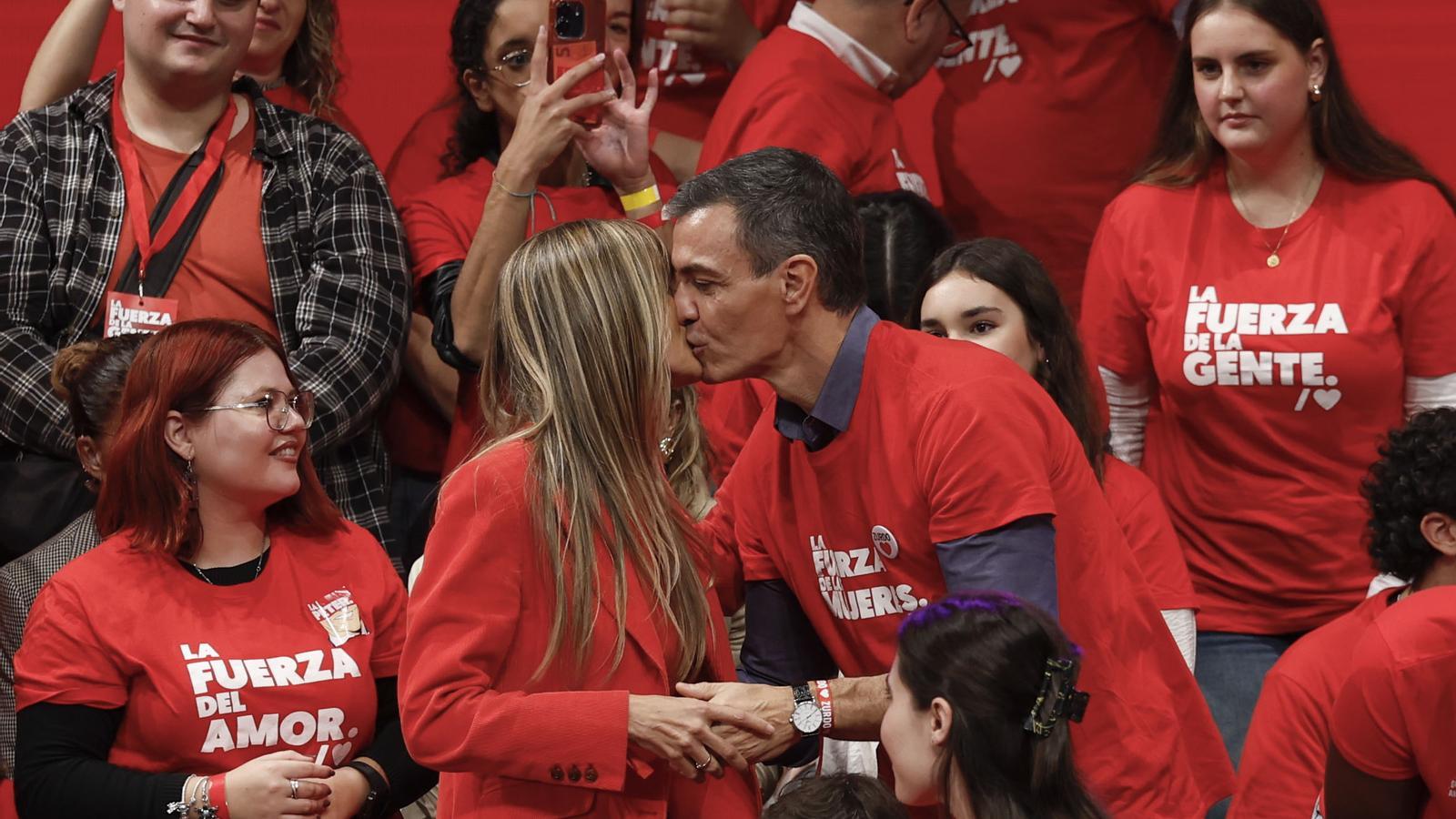
Begoña Gómez intervenes for the first time in a rally and Lula da Silva will be with Sánchez on Monday in Madrid to campaign

-
CAT -
CAST
MadridIn an electoral campaign, the most important thing is the narrative. What is talked about and what is not, what is placed at the center of the public debate and what is left aside. When the Spanish president, Pedro Sánchez, decided to call early elections on October 5th, he had the perfect narrative. The eviction of Maricarmen Abascal was the spark for the social outburst over the right to housing, and he decided to reactivate the legislative measures that had been in a drawer for some time to try to respond to it. It was a win-win: if Congress endorsed the project, it would give breathing room to the legislature and rebuild the plurinational majority; and in case it did not, he had the perfect excuse to call elections and call for social mobilization. That is what he did: bring forward elections to ask for a broad left-wing majority and respond to the housing problem after eight years of government. The PSOE stakes everything on this promise to recover for this November 29th, in an electoral match that could be the last for 'Sanchismo' depending on the result.
“These are elections with a social cause, housing,” they clarify from the PSOE, breaking down what will be the main message of their campaign: home, social rights, and also positivism, “love.” This was noted at the campaign kickoff rally in Seville, one of the main historical strongholds of Spanish socialism, where Sánchez had a mass bath with the slogan “the strength of the people.” However, the surprise was huge when, instead of the Spanish president, the first to take the stage was Begoña Gómez. The wife of the head of the executive, who has been in the eye of the storm throughout the legislature for alleged corruption, was the unexpected star of the night: “For too long we have been wives of, that time has ended, because we are the authors of our own lives,” she declared in the first public act in which she has intervened, asking for the vote for the PSOE because “it is behind all the advances for women.” “Let's go out to vote and win,” she advocated.
“The party is energized,” socialist sources maintain. “What an emotion. Thank you,” replied the Andalusian leader, María Jesús Montero, also from Seville, and subsequently Pedro Sánchez made two announcements from the stage: “shielding” the revaluation of pensions and the right to abortion in the Constitution. “I ask the women of this country for four more years of government,” he concluded.
The pillars of the campaign
The two fundamental pillars of the PSOE's campaign, on a domestic scale, will be to claim all the measures they have taken in government in terms of social rights and also to use the Council of Ministers to stage the electoral program they would like to roll out at Moncloa if they had a left-wing majority in Congress. This Thursday we had a first glimpse of it: after the general strike and the mobilization of unions for housing, the permanent deputation of Congress operating during the electoral period—in which Junts is not key—has validated the decree-law recently overturned by the Spanish chamber that extends rent contracts for two years and suspends evictions for vulnerable families. The Spanish president himself has made a promotional video for it on X: “Either you govern for the vulture funds or for the people”.
The other great pillar of Sánchez will be the international message, as the PSOE wants to convey that this electoral battle goes beyond Spanish politics and that the stage is global in the fight against the so-called ultra-international. For this reason, they will count on a guest of honor right from the start whom they wish to mirror: Lula da Silva. The Brazilian president will land on Sunday in Madrid to participate in the PSOE's electoral campaign on Monday—in addition to holding an institutional meeting also at the Moncloa—, thus being the first international event that the leader of the Latin American left performs after having won against all odds the elections in Brazil. In fact, the PSOE will turn to these elections and the midterm elections in the United States, where Donald Trump emerged very damaged, to send the message to the left that winning is possible.
What the PSOE will not want to talk about are the alleged cases of corruption that have followed it throughout the campaign or the recent railway accident, which they attribute to an error by a worker at the Atocha control center. For this reason, neither the former Spanish president José Luis Rodríguez Zapatero nor the resigned minister Óscar Puente will be there. According to socialist sources, they themselves have agreed that it was better not to do so so that political rivals do not use it against Sánchez.
Mobilization
All these ingredients must serve to guarantee the mobilization of progressive voters. According to socialist sources, the right's strategy is to take for granted that they will govern so that the left stays home. The PSOE must achieve the opposite effect: that people think there is still room to maintain the government. The PSOE does not hide that efforts will be focused wherever there are undecided voters at stake. An example is the alliance in the Senate with the Broad Front (the PP has also done so with Vox in some constituencies) and from Ferraz they also acknowledge that they have measured every province to know what possibilities they have of winning more seats in accordance with the D'Hondt law.
That is why Sánchez's agenda will also be adapted during the campaign. For now, they have only provided the events in which the Spanish president will participate three days in advance —from Friday to Monday in La Rioja, Navarre, the Balearic Islands, and Madrid— and his presence, for example, in Catalonia is up in the air, even though the mobilization of the PSC voter is key for Sánchez to be able to maintain the Moncloa. The forecast is to hold an event in Barcelona —they have already held one in the pre-campaign in Tarragona where there is a deputy at stake— on November 24th, but everything will depend on whether the agenda also fits with the rest of the events and the electoral prospects. The PSOE has 15 days to make the left believe that the game is still on and they must go out to vote. That is why this has been Sánchez's last message in Seville: “If Patti Smith and the Pope have voted in the US elections, will we stay at home on November 29th?”.
