The PSC obtains a victory with a taste of defeat
Illa warns that he will “protect” Catalonia from a Spanish government of the PP and Vox: “It is the time for courage”
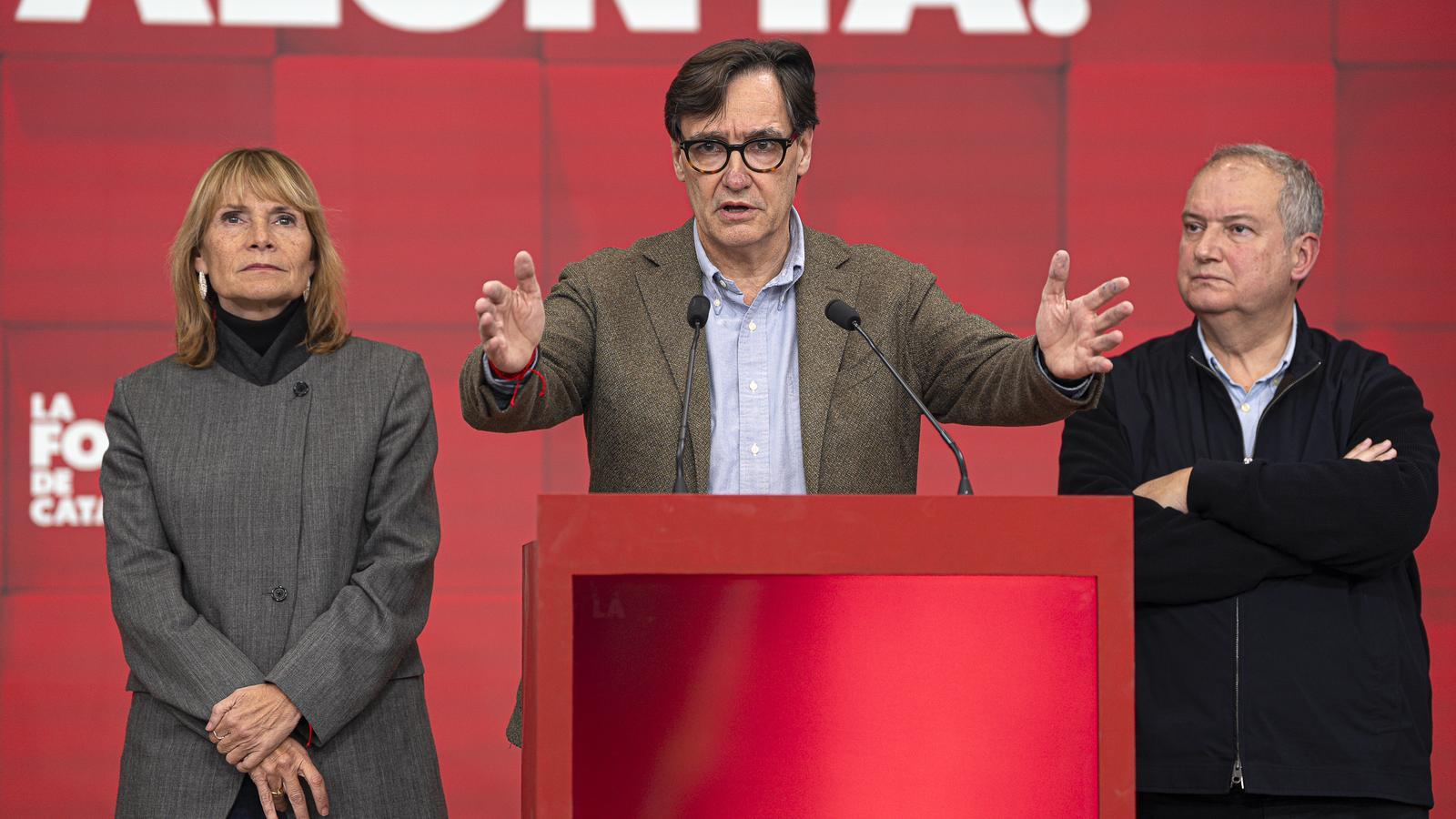

BarcelonaBitter victory for the PSC. The Catalan socialists remain the leading force in Catalonia, but they are losing support, and the Catalan progressive majority is insufficient to revalidate a new progressive government in the State. The longed-for great mobilization did not have the effect they expected. Although the goal was to repeat or improve the results of the previous Spanish elections, the party led by the president of the Generalitat, Salvador Illa, loses four seats –leaving it with 15–, Esquerra narrows the gap (11) and the Spanish nationalist right wing achieves its best results in history (14) in the Catalan constituencies.
The socialist family trusted until the last moment that they would overcome the poor results predicted by the polls and that Catalonia would once again be decisive for a new Pedro Sánchez executive. The key figure –they claimed from the headquarters on Carrer Pallars in Barcelona– was a 75% voter turnout. If this rate were exceeded, they took it for granted that they would win the elections in Catalonia with at least 20 deputies and, also, in the State. Participation exceeded this limit and in the Principality it registered 76% –eleven points more than in 2023 and four more than in 2019–, but the progressive forces lost weight in Catalonia. Furthermore, although Junts has seen its representation decrease, the Spanish nationalist right wing has grown by up to six seats: the PP has reached 9 and Vox, 5.
The main loss of support for the PSC has taken place, precisely, where it has historically achieved its best results: in the Barcelona constituency. It is where it fell the most in percentage of votes – more than five points, to below 30% – and it has lost three seats there. It has also lost one in Lleida, and has managed to maintain the two in Tarragona and Girona.
Even so, the President of the Generalitat has claimed victory for his party, although he admitted that it is not the result he expected. "It is not a consolation, but we take it as a responsibility," affirmed the first secretary of the PSC amidst shy smiles and applause. In fact, Illa had already warned that he intends to stand up to a Spanish government of the PP and Vox. The head of the Catalan executive has remarked that he will "protect" Catalonia from the Spanish right and far-right, and has acquired the "commitment" to defend "plurality, diversity, rights and freedoms" of the Catalans "in a context that will not be generous or simple".

Illa has also lamented the growth of the far-right in Catalonia and has warned that he will stand up to these formations, including in Parliament. In fact, the president of the Generalitat has maintained a very tough tone against Vox – and also against Aliança Catalana – over these last few months and wants to position himself as the main force that can act as a counterweight to these formations. “It is the time for courage and for working for Catalonia”, he remarked. Along the same lines, the PSC candidate in Barcelona, Jordi Hereu, has stressed that the results of this Sunday, which reinforce the “progressive majority” led by the PSC, give a “great responsibility” to the Catalan socialists in the “present and the future”.
A wake-up call from the Government
The loss of support in these general elections comes after just over two years of Illa at the Palau de la Generalitat and serves as a warning to the Government. It is clear that different factors come into play in Spanish and Catalan elections, but it is a clue to the electoral trend that Catalonia may follow. In fact, polls also point to a slight loss of support for the PSC in the Catalan chamber and socialist sources admit that they may suffer a slight worsening in results in the municipal elections.
However, sources from the Catalan socialists were already suggesting before this Sunday's elections that, in the event of a Spanish government formed by the PP and Vox, they would try to capitalize on the opposition to the state executive from Catalonia. A strategy that will lead it to work with (and at the same time compete with) its allies and above all with an ERC that is getting closer to it every time.
