The National Court excludes Jordi Pujol from the case due to impossibility of defense
The doctors conclude that the former president, who has not been seen publicly at any time, is not in a fit state to be tried
-
CAT -
CAST
San Fernando de HenaresJordi Pujol i Soley has finally been excluded from the judicial case that has his family at its epicenter after fourteen years of investigation. The procedure, which began in 2012 concerning his eldest son and worsened with the confession about grandfather Florenci's inheritance in 2014, has ended in the former president's case because he is not in a condition to be tried. Too much time has passed and his cognitive abilities are no longer adequate. This has been decided by the National Court, which has communicated his exclusion from the procedure after having seen him face to face. As the doctors had already repeatedly stated, the judges have confirmed the "impossibility" of Jordi Pujol continuing as an accused with "full knowledge and capabilities".
The decision has been accompanied by controversy. Not because of the meaning of the ruling —all doctors had pointed out that he was not in a fit state— but because of the how. The court presided over by Ricardo de Prada has made the decision on the day he was called to testify as an accused, despite the fact that at the beginning of the procedure, the forensic experts of the National Court had already concluded that Pujol was not in physical and psychological condition. The magistrates communicated last week that they wanted to see the former president in situ, which has forced Pujol to travel to Madrid at the age of 95. This Monday, De Prada wanted to justify himself: in his opinion, "personal contact" with the court was necessary to make a decision, as they could not transfer this responsibility to the doctors. "It was essential," he reaffirmed, regarding the obligation to make Pujol travel to San Fernando de Henares.
The fact of making the former president move has been widely criticized in Catalonia. Apart from Junts —"They are miserable," assured former president Carles Puigdemont—, the president of the Generalitat, Salvador Illa, also criticized the decision. "I celebrate that justice has acted with common sense and humanity," reacted this Monday the head of the Catalan executive, after learning that he was not finally made to testify. The Minister of Justice, Félix Bolaños, had also censured him for being forced to make the trip, as the same medical examination could have been done from Catalonia.
The entire political spectrum, in fact, has spoken out about the events. The president of the Parlament, Josep Rull, has branded the court's decision to make him go to Madrid as "indignant," knowing what the doctors had already said: "It is the chronicle of a humiliation, a dehumanizing demonstration of a long, cold, and calculated will to humiliate everything that it symbolizes," he said. Esquerra has also shown itself to be critical: its spokesperson, Isaac Albert, has called it "inhumane and inadmissible": "The court was looking for a photo that neither President Pujol nor the country deserve." While from the CUP and the Comuns they have been more ambivalent: the CUP members rejected the journey but refused to offer a "political absolution" to the former president; while Aina Vidal has called for "knowing what happened" during his presidency.
No image of the former president
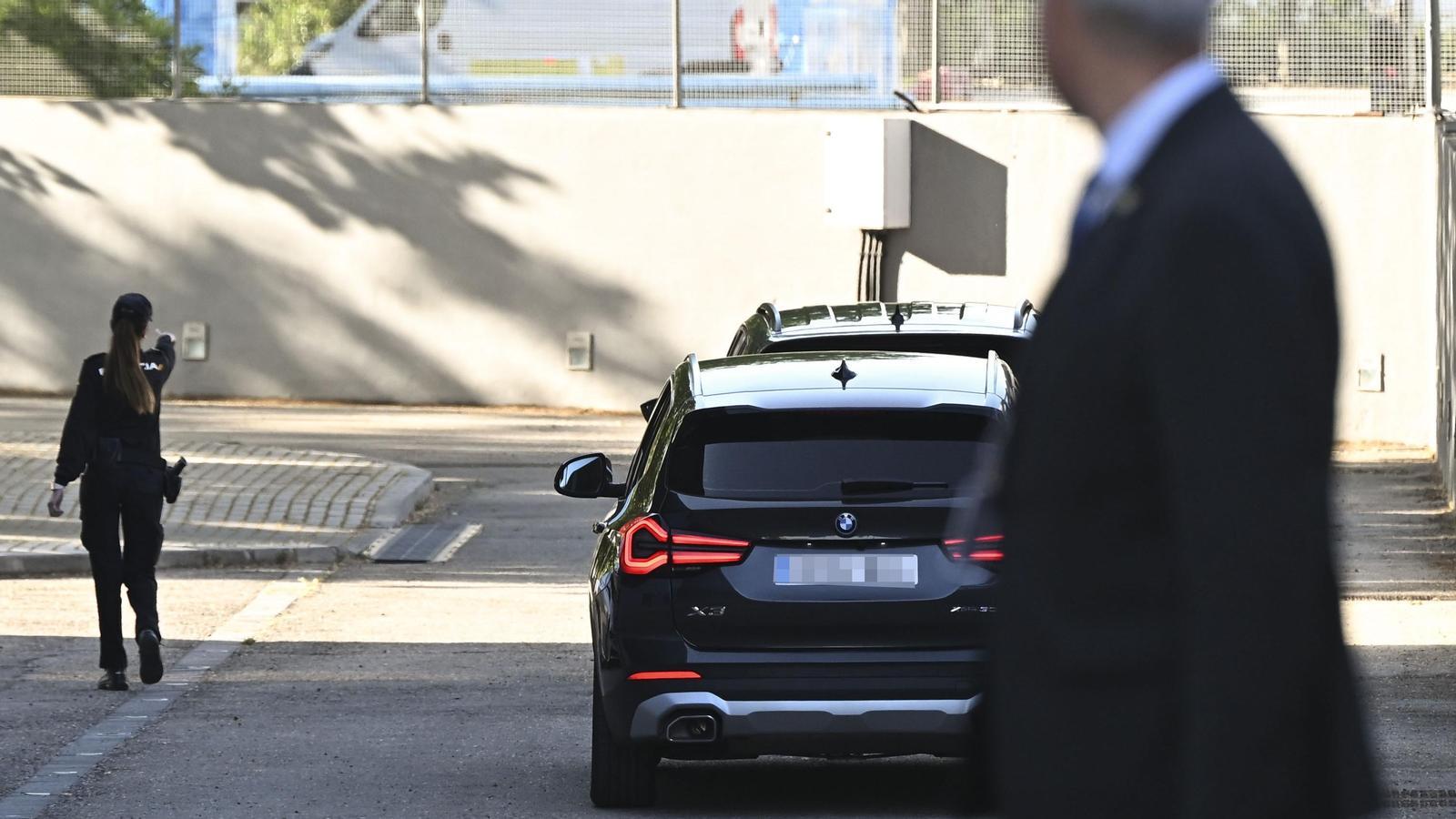
Former president Pujol arrived at the headquarters of the National Court in San Fernando de Henares just minutes after 9 in the morning. He did so in a car with tinted windows and through the parking lot, so he was not seen entering the court's premises. In his most recent public appearances, he had been seen moving with great difficulty. But not only was he not seen upon arrival, but he also did not appear in the judicial facilities where the rest of the accused, lawyers, and journalists were waiting. The Court kept him away from the public spotlight at all times.
How was the procedure? After arriving, Pujol was examined behind closed doors by a forensic doctor, who checked him both physically and mentally. In this regard, there were no surprises: the doctor determined that he was not fit to testify and defend himself. At one point, according to family sources, he could not even remember the name of one of his children. "He had a lucid day, despite that," his circle points out, as he was able to have a coffee before entering the examination and always showed himself willing to testify and defend his innocence. In fact, his personal doctor, Jaume Padrós, stated the following in a recent interview in ARA about this willingness: "He has always said that he wants to defend his innocence [...], but we others have the obligation to protect him because one of the characteristics of advanced cognitive disorders is anosognosia, which is the inability to assess the dimension of your deficits and how far your difficulties extend. He is not aware of these deficits," he stated.
With the National Court's decision, Jordi Pujol's legacy is in the hands of political interpretation. Without a conviction or declaration of innocence, his legacy will depend on how history explains his key role in understanding contemporary Catalonia, but it will forever coexist with a darker side, which the slowness of the investigation will make impossible to clarify.
