Estefania Molina: "The housing problem is not solved because the 'boomers' already have their house paid off"
Journalist and author of 'Els fills dels boomers' (Destino)

-
CAT -
CAST
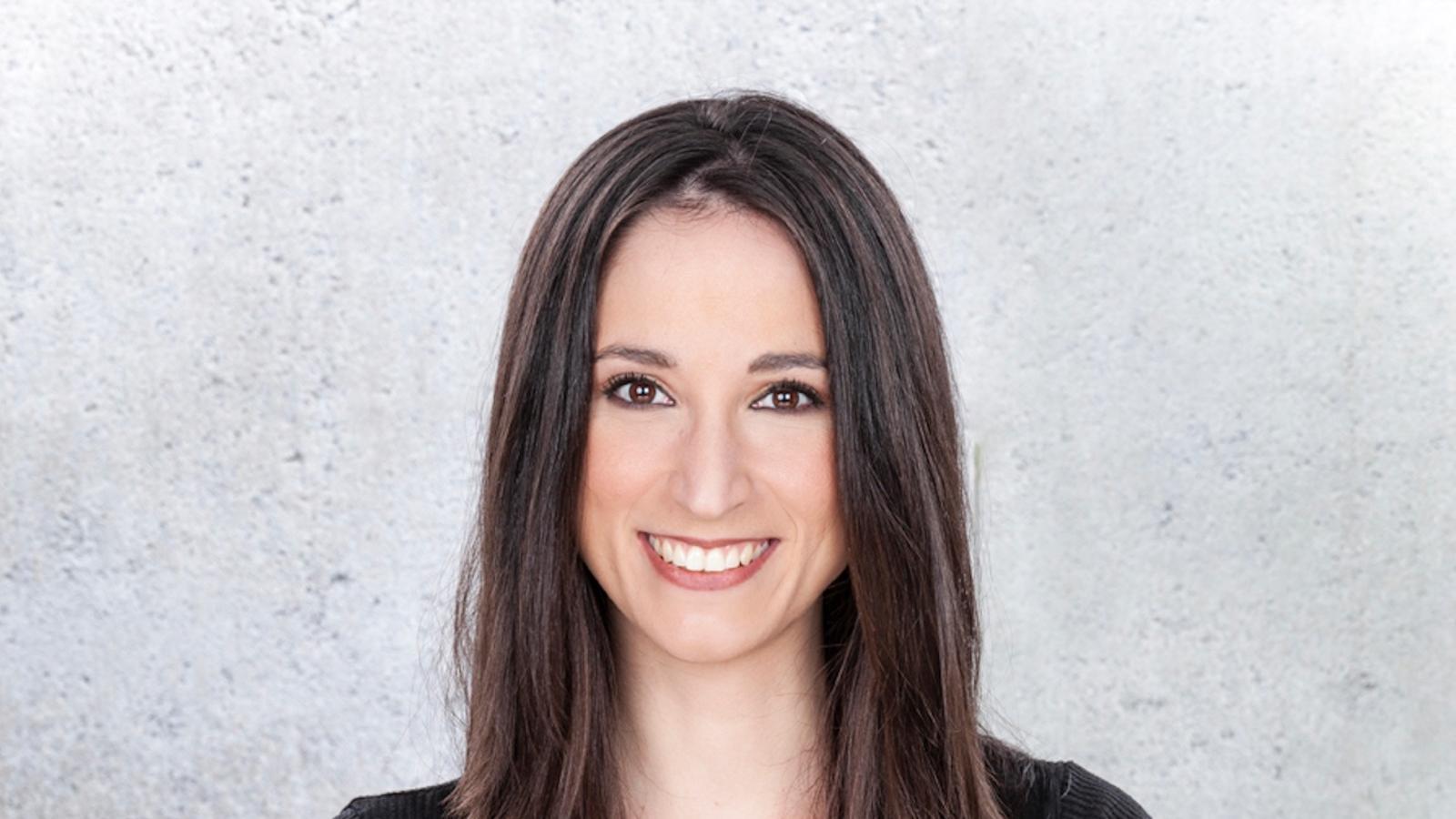
MadridThe journalist and political scientist Estefania Molina (Igualada, 1991) speaks to ARA after publishing Els fills dels boomers (Destino), in which she points out the baby boom generation as the only leg supporting the system: it acts as a plaster to prevent social unrest and, at the same time, prevents, she believes, political reform. A commentator in media such as La Ser or El País, she admits that with this book she wanted to go beyond analysis and take sides.
You present a thesis in the book about the growth of the far-right and, in particular, of Vox in Spain.
— Yes, the far-right is growing due to the generalized impoverishment of the population, especially the middle classes. Vox started as a party for affluent classes and linked to the identity issue due to the Catalan independence process. Now they have made a Falangist and working-class turn where they seek to absorb the vote of the system's losers: middle classes and young people. There is a generational protest, young people perceive a lack of opportunities and a system dedicated to the needs of their parents.
Focus the rise of the far right on material conditions, but isn't there a relevant part of culture war?
— I believe that far-right parties could grow to a certain extent by focusing on going against wokism... their leap comes when they begin to point out that the welfare state doesn't work. With the identity issue alone, they would cover a small percentage of the population. The possibility of them replacing the classic right comes when they talk about material issues.
How can traditional parties defend themselves?
— Vox is growing on the back of a generation raised in discomfort, it is no longer the generation that has sustained the bipartisanship of the PP and the PSOE, which tended towards the center because democracy gave them results. Now young people have low wages, without the possibility of owning a home and with frustration, which leads to values of less democracy, less taxes because the State gives them nothing... on this Vox is sustained.
In her book she is critical of current politics because she believes it only benefits the 'boomers'.
— Current politics in Spain is directed towards the groups that vote the most. It rewards the baby boom generation. The housing problem is not being corrected because the boomers already own their homes or have them paid off. For the same reason, pensions are also being increased, which serve for parents to help their children. In the case of Pedro Sánchez's government, there is an excess of "electioneering" towards the elderly: the revaluations for pensioners have cost a lot of money and have not been progressive: there are people with high pensions who do not need it, and, on the other hand, people with small pensions do.
But pensioners are a group of the population who no longer have the possibility to earn a living through the labor market and who have contributed throughout their lives. Are they really the most privileged group to be singled out?
— Surely there are people who earn more, but pensions are one of the state policies that cost the most money and are not progressive. Revaluations are not a right and the question is whether it is fair for them to lose purchasing power compared to the rest of the population. My book is not against the boomers, I am only pointing out the trap of these policies: politicians gain votes by focusing on pensions which, at the same time, act as a cushion for the young people in many families. There is no social explosion because of this: because the boomers help their children with their properties, pay bills, look after grandchildren... and with this Spain has stopped providing well-being to young people. And this model will not be eternal because one day we will wake up and the boomers will no longer be here.
What is your message, then, to the boomers?
— Let it be clear, I'm not attacking the boomers, I'm just saying the system uses them to avoid change. The boomers must take into account that the generation that is rising doesn't care as much about the welfare state, they have authoritarian values and one day an ultra-right party could win the elections and shatter all consensuses. They won't always be the winners of the system.
Should boomers be afraid?
— They should be afraid that this generation, raised in hardship, will overthrow what they have built. If this has not yet happened, it is because they are still demographically significant. They should fear that their children will overthrow the democratic model they have known.
What sacrifices do you believe must be made?
— The first is to accept the generational gap. Be aware that their children have grown up in a much more complicated context and be more demanding of the political system.
Are you sure they have had an easier life than their children?
— I wouldn't say easier because surely many people couldn't study, there wasn't access to so much information, nor did they have the same rights and freedoms. But they did have the possibility to move up. My ideology is that of the aspirational middle class, the one I lived at home, the one of working hard to have a better life. Before, working hard had a reward and now it doesn't: that's what's breaking democracy. Now perhaps there's an easier life, but in terms of economic results, no.
In his first book, Berrinche Político, he analyzed the irruption of 15-M. Now he goes one step beyond analysis and makes a kind of call to reaction... a political manifesto.
— My first book was more institutional, a kind of manual on how things work, drawing on my experience covering political information. Now I've wanted to take a stand, a kind of awareness has been awakened in me because I see that people are having a hard time and I want to contribute critical thinking.
He is telling me that he has awakened a political vocation.
— There is a combative political vocation. My proposal is to raise the middle class. I wanted to connect with the discontent, I think if I didn't, I would be far from my readers. Now I'm no longer afraid of being pigeonholed.
After this, an offer to do politics always comes. What would I say?
— My political objective would be to rebuild the middle class, that we are a leading country... that from the bottom one can progress with effort, but I wouldn't know how to choose a party because my freedom of thought is very important.
