The father of a large family who harangues against immigration dressed by his wife
The trajectory of Santiago Abascal is marked by the fight against ETA and the break with the PP
-
CAT -
CAST
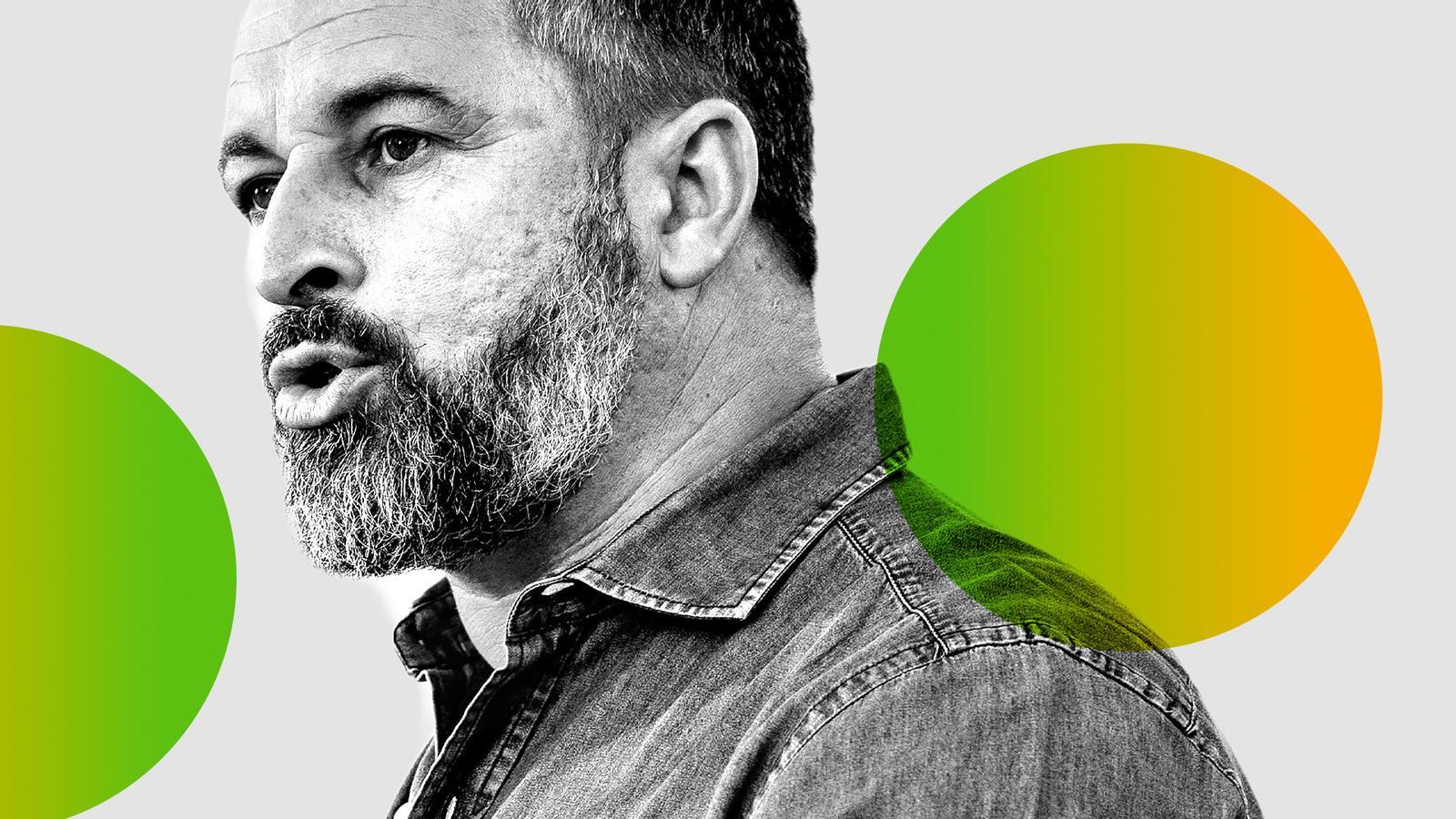
MadridThe political and life trajectory of Santiago Abascal (Bilbao, 1976) is deeply marked by the armed conflict in the Basque Country. The rejection of ETA's violence was what, as he explains himself, awakened his political vocation at only nine years old. He has been dedicated to it professionally since he was 23, when he was elected a PP councilor in a town in Álava, Llodio, a few kilometers from his own, Amurrio. Thirteen years after tearing up his Popular Party membership card and at the start of his sixth campaign as the Vox candidate for the presidency of the Spanish government –he first ran in 2015 and obtained representation in Congress starting in 2019–, he once again used his heritage as a target of the terrorist group as his calling card. Not only in the first person but also as the son and grandson of a political lineage. “I stood up for my father. A simple, hardworking, and honest man who had two passions and two ideas. Spain and freedom,” he declared from the Plaza de Colón in Madrid.
In a long conversation with the writer and journalist Fernando Sánchez Dragó, collected in the book Santiago Abascal. España vertebrada (Planeta, 2019), the president of Vox attributed precisely to the “context of war and persecution” in which he grew up –as the grandson of a Francoist mayor, as the son of a municipal and provincial leader of the Basque PP, and as a young militant of the Spanish right– the “bellicose” tone that characterizes him. Still with ETA on the tip of his tongue, Abascal now centers his attacks on immigration, Islam, and Pedro Sánchez. However, ahead of November 29th, he has parked the “conqueror” symbology that he has used in the last decade, in which he projected an “epic” image riding a horse or wearing a warrior helmet, for that of a sensible and institutional politician in a suit, shirt, and tie. The strategic decision taken in the last regional electoral cycle to enter into PP governments in Extremadura, Aragon, Castile and León, and Andalusia has softened Abascal’s manner, even if the core remains the same.
“I am still here for Jaime, Adriana, Jimena, Santiago and Hernán,” he stressed at the same rally in reference to his five children, from two different marriages. The three youngest are the result of his relationship with Lidia Bedman (Alicante, 1985), his current partner, who is influencer of fashion and, on her Instagram account, she also shares with her more than 300,000 followers content with her family and in support of Vox and Abascal. Bedman has been present in the campaign in the form of controversy, when it was discovered that she is a beneficiary of the thermal social bonus for vulnerable people due to being a large family, and also more indirectly, when her husband has served as a model for her to promote his brand of men's clothing. “The speech is his, the shirt, mine,” she posted about the attire of the Vox leader at the event in Cornellà de Llobregat, which has not been the only one where he has been dressed by his wife. Abascal’s family bond with fashion also extends to his father, who died from a long illness in 2017, and his mother and sister, who continue to run the Abascal family business, a clothing store in Amurrio open since 1946.
A store that, according to what Abascal’s wife posted on the same social network, has “bulletproof glass” because “in 1999 it was burned down by the same people from ETA.” She denounced it in a post at the end of 2020 after graffiti appeared in Basque against the far-right leader. Abascal’s posts with his family in the mountains are also recurring, two elements that structure the politician’s life. “If I had to say what my homeland is, besides Spain, I would say it is the Sierra Salvada, which is where I have been happiest, in the mountains, with my cousin, in places where we didn’t run into anyone,” he stated in the same book. Fond of ornithology, bonsais, and motorcycles, Abascal often mentions his Catholic faith and has publicly positioned “loyalty to Spain” as a red line that, if his children were to cross, he would experience as a “betrayal.”
“He is a different person”
In the last three and a half years, since the general elections of July 23rd, betrayal and intrigue have haunted Abascal, who has ended up estranged from the rest of the visible faces that had accompanied him in the first stage of Vox. “I thought I knew Santiago Abascal well, but he is a different person,” stated a few months ago on COPE the former parliamentary spokesperson of the far-right party, Iván Espinosa de los Monteros, who reproached him for not accepting internal dissent and for having taken refuge in a “minuscule group” of loyalists. A criticism repeated by other founders of Vox such as Javier Ortega Smith. Other former party leaders, such as Juan Jara, have gone even further in their disqualifications and accused Abascal in an interview with El Plural of being “lazy.” “He likes to live well, but he doesn’t like to work,” he said.
It is precisely one of the labels that left-wing parties use against the leader of Vox to attack him. Abascal argued, at the beginning of 2019, that politics is much more than day-to-day management and is also symbolism and grandiloquence. “It is not just the urban planning scheme, nor the school schedule, nor the street lighting. All of that, to me, has never interested me, even though I was a councilor for eight years,” he confessed to Sánchez Dragó. Besides being a councilor, he was also a PP deputy in the Basque Parliament and regional president of the youth wing of the party until 2013, years after having founded the Denaes Foundation, a prelude to his split, he left the party due to disagreements with Mariano Rajoy. He accused the former Spanish president precisely of “betrayal of the principles” of the PP, but now Abascal finds himself forced to come to an understanding with him.
