Russian drones and missiles that strike Ukraine still have Western components
Kyiv has identified more than 16,000 foreign components in weapons launched by the Russian army against Ukraine since the beginning of the war
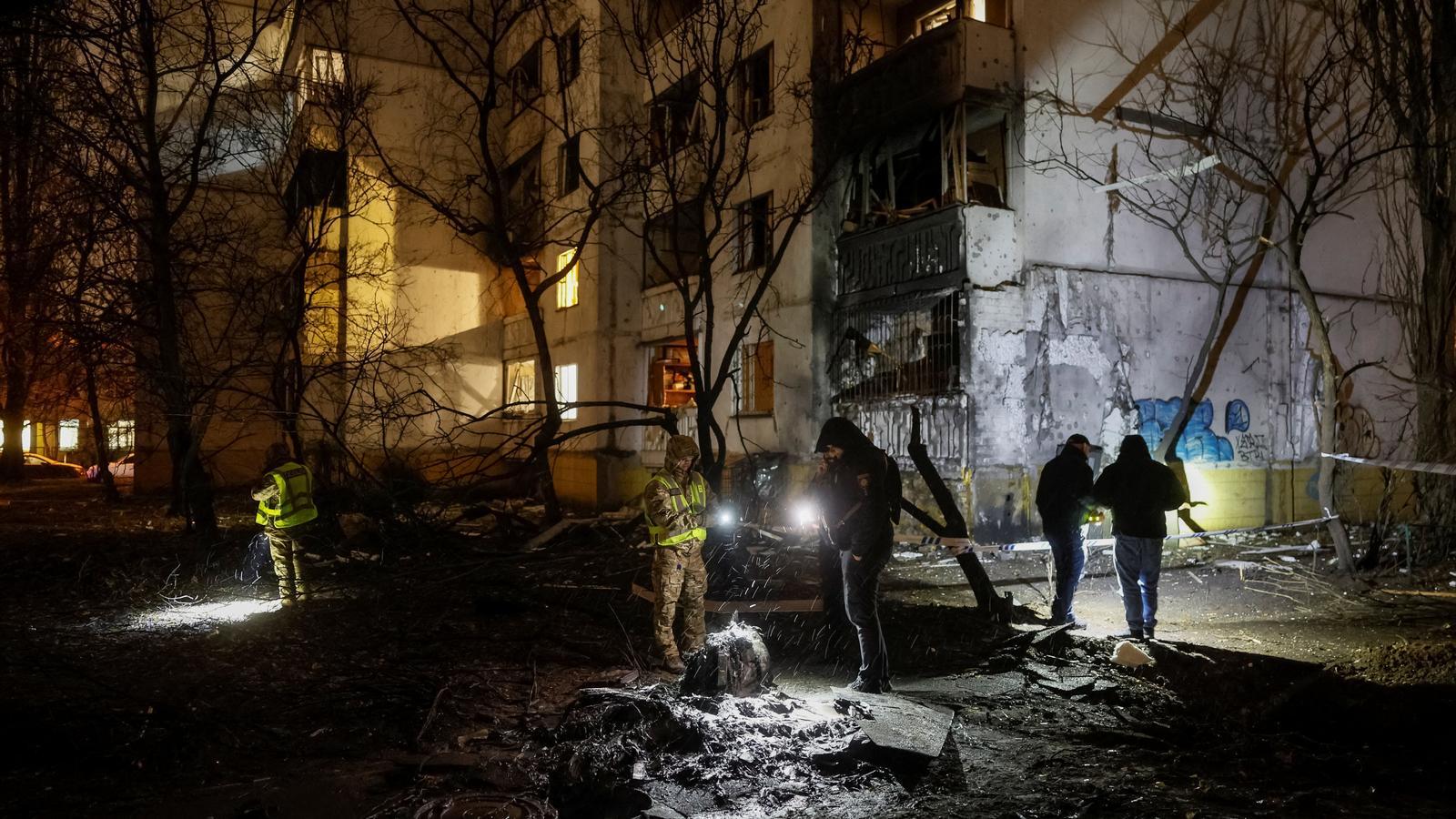

BarcelonaSince Russia launched its full-scale invasion of Ukraine, Europe and the United States have approved numerous sanctions packages and have restricted trade relations with Moscow to try to reduce its ability to attack the neighboring country. But after almost five years of war, various investigations show that Russia still depends on components produced in Western countries to manufacture the kamikaze drones and missiles that daily terrorize the Ukrainian rear.

Camera
China
Mesh modem
China
Anti-jamming
system
China
Turbojet engine
China
Transceivers, controllers,
converters, memory chips,
microcomputer, digital signal
processor and more
United States
Germany
United Kingdom
Taiwan
Japan
Switzerland
Camera
China
Anti-jamming system
China
Mesh modem
China
Transceivers, controllers,
converters, memory chips,
microcomputer, digital signal
processor and more
United States
Germany
United Kingdom
Taiwan
Japan
Switzerland
Turbojet engine
China
Camera
China
Anti-jamming system
China
Mesh modem
China
Transceivers, controllers,
converters, memory chips,
microcomputer, digital signal
processor and more
United States
Germany
United Kingdom
Taiwan
Japan
Switzerland
Turbojet engine
China
Since the beginning of the war in February 2022, Ukrainian authorities have identified more than 16,000 foreign-made components in Russian drones, missiles, and other weapons, according to data from the Prosecutor General of Ukraine published this week by the Organized Crime and Corruption Reporting Project (OCCRP) in a joint investigation with four other media outlets. Among the identified parts, there are some manufactured by European companies this very year, which highlights that technology continues to reach Russia despite Western sanctions.
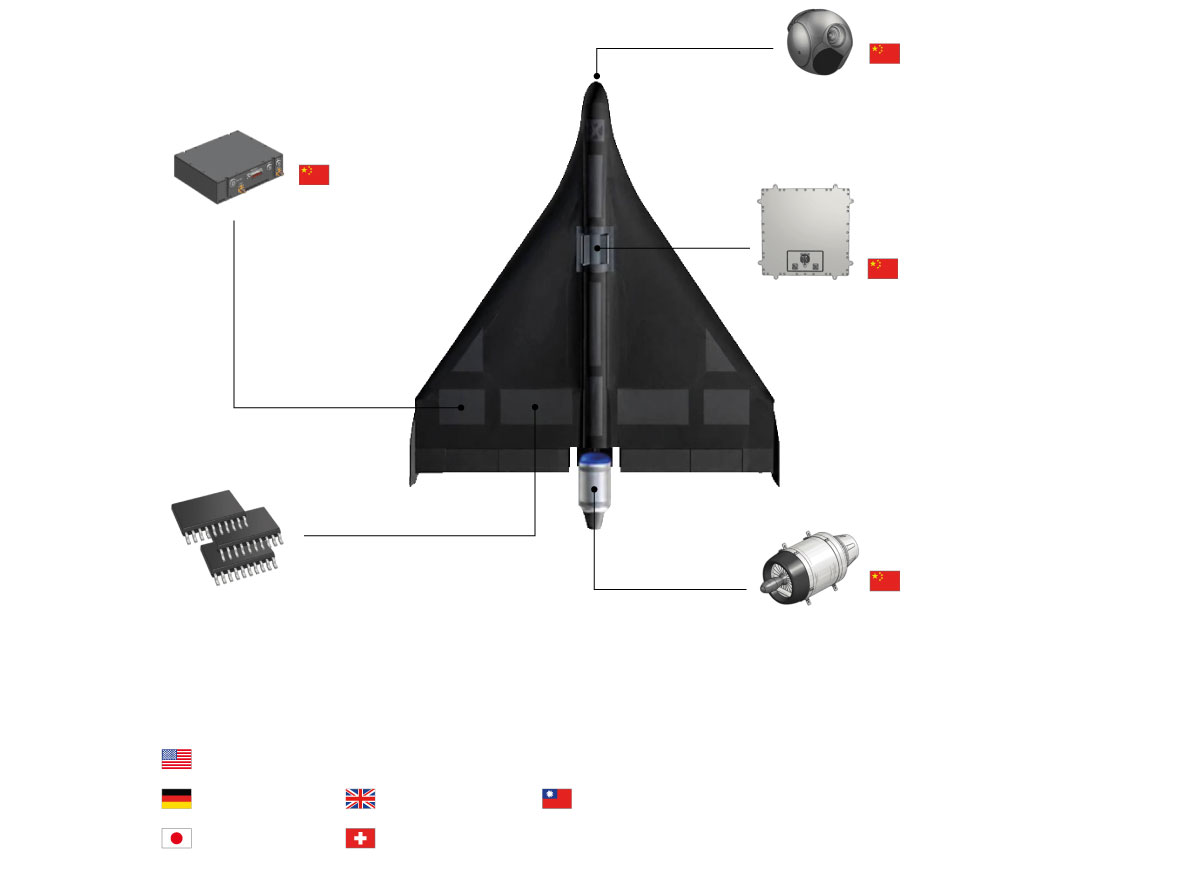
At the beginning of the war, Russia took advantage of its alliance with Tehran to massively use Iranian Shahed drones to attack Ukrainian cities. Later, it began manufacturing the Geran-1 and Geran-2 models in Russian factories, which were adapted versions of Iranian kamikaze drones that were cheap but slow, meaning Ukrainian defenses were capable of shooting them down widely. Russia has been improving the technology of its drones and, by the middle of this year, began using the Geran-4 and Geran-5, which have a key advantage over the previous ones: a jet engine that makes them faster and more difficult to intercept, which has turned them into one of the most lethal weapons in recent months' attacks on Ukraine. In addition, they have more complex navigation and anti-jamming tools.
In October, Ukrainian intelligence (HUR, for its acronym in Ukrainian) identified 74 components from seven countries among the parts of the downed Geran-4s. The majority (36) were from U.S. companies, followed by those from China, which supply the engines, among other components. Components manufactured in Japan, the United Kingdom, Germany, and Taiwan were also identified, according to the Ukrainian media outlet Frontliner. The main source of foreign parts, with thirteen different components, is the American company Texas Instruments. This company's products are also found within other Russian weapons, such as the Filin cruise missile, the Iskander missile system, and the Kinzhal aeroballistic missile.
Using the latest data published by Ukrainian military intelligence, the five media outlets have identified European and American components in Geran-4 drones. Among the remains of one of these devices shot down near Kyiv last August, a hundred foreign components were found, many of which are attributed to various technology companies in the United States.
The same drone contained a microcontroller –a mini-computer that combines a processor and memory on a single chip– manufactured in February 2026 by the Franco-Italian semiconductor company STMicroelectronics, based in Switzerland. A company spokesperson assured the media outlets that published the information that it does not operate in Russia and fully complies with Western sanctions. But according to the identification number, the microcontroller was assembled in Malaysia, where the company has a final assembly plant, and within months, it ended up inside a Russian drone that attacked Ukrainian targets.
In this same device, a transistor was also identified with the markings of the German chip manufacturer Infineon Technologies, dated June 2025. And in another Geran-4 that crashed in Ukraine, a chip dated July 2025 from the British company Future Technology Devices International was found.
The media also examined photos of eight SIM cards recovered from Russian drones and traced them to Pildyk, a prepaid brand of the Lithuanian mobile operator Tele2 Lietuva. The company has said that it only sells the cards in Lithuania and suspects that specialized groups buy them, activate them, and resell them, which can lead to them ending up in the hands of criminals, smugglers, and Russian agents.
Export ban
In an attempt to stop the production of Russian weapons, the European Commission banned in 2022 all exports to Russia and Belarus of “dual-use goods”, that is, products, technologies or software designed for commercial applications, but which can also be used for military purposes. The United Kingdom and Switzerland, which are not members of the EU, implemented similar restrictions. In 2024, the European Commission added a new layer of legal responsibility by requiring EU companies to include a “no re-export to Russia” clause in contracts with foreign clients.
But the analysis of the drones shot down in Ukraine shows that Russia continues to find ways to obtain Western technology by circumventing restrictions. Texas Instruments, for example, asserts that it does not sell its products to Russia. Nevertheless, the Russian company Premier Komplekt Servis is listed as an official distributor for the American firm in Moscow.
In addition to these types of intermediaries, Russia accesses restricted products through third countries that have not joined the sanctions policy, such as India, Turkey, and the United Arab Emirates, which buy dual-use products and resell them to Russia. However, some of these cases violate sanctions or export control regulations, especially if acquired for military purposes, as the final destinations should be known by the initial seller. Even so, these are complex networks with many steps. Western manufacturers sell large volumes through independent distributors and online platforms, which prevents their traceability.
In an article published in May, the think tank American The Center for European Policy Analysis (CEPA) recommended, for example, creating a shared database of high-risk components, integrating Ukrainian forensic findings. It also suggested creating a transatlantic working group to prevent sanctions evasion, focused on detecting third-party vendors in Central Asia and the Caucasus. Furthermore, it warned that manufacturers must also take on more responsibility and formulate harmonized obligations to know their customers.

