The director of the Spanish police denies that the report on the massive entry into Ceuta blames Morocco
Ensure that no document exists that attributes the "planning or execution" of the events to the Moroccan security forces
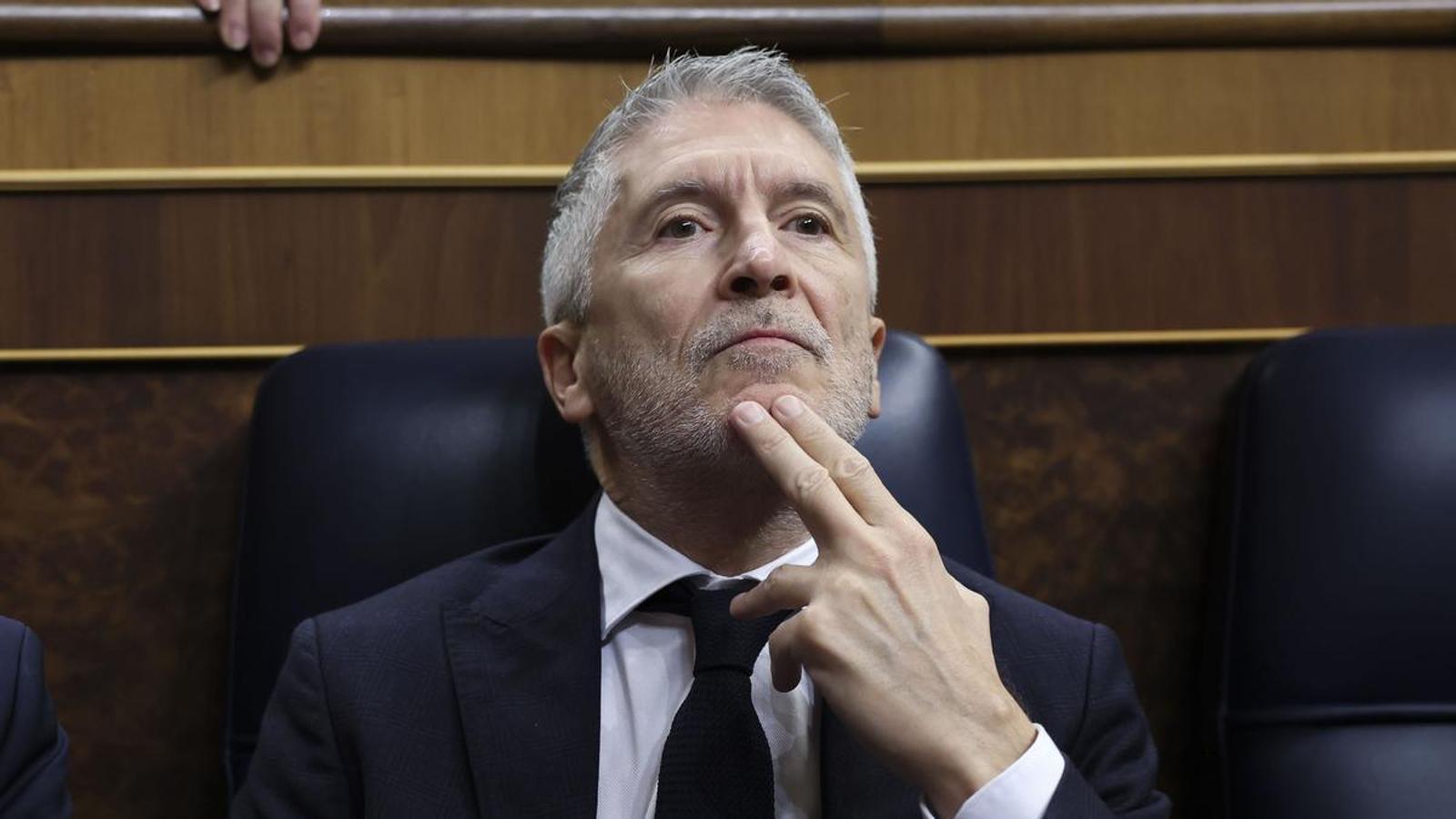

MadridA report that the National Center for Immigration and Borders (CENIF) has sent to the National Court regarding the massive entry of migrants into Ceuta at the end of July has thoroughly shaken political news. As reported by "Spanish, the document states that Moroccan gendarmes gave migrants instructions to head to certain areas to access Ceuta. In addition, other individuals not in uniform monitored the process in order to direct immigrants towards El Tarajal. After the news became known, the Minister of the Interior, Fernando Grande-Marlaska, sent a letter to the Director General of the Spanish Police, Francisco Pardo, asking for explanations about the “veracity” of the report, alleging that it is “essential” for the Spanish government to be able to “adopt appropriate decisions”. “This would be information that must be immediately made available to the members of the National Security Council,” Marlaska reproached him.
The director general of the Spanish police replied that it was the judge of the National Court who has the case on her desk who gave orders to the investigators not to provide any information to their superiors about the preparation and content of the report. That is why he had no prior knowledge of it. Now María Tardón has authorized access to it and, despite what has been revealed Spanish, sources from the Ministry of the Interior assure that Francisco Pardo has communicated to Fernando Grande-Marlaska that “there is no police report” that “attributes” the “planning or execution” of the massive entry of migrants to the Moroccan Security Forces.

The case that originated this report, which the judge requested at the beginning of August, was born out of a complaint from Iustitia Europa. The Prosecutor's Office, which is the only one that has had access to the document, still has to position itself on whether the National High Court is competent to investigate the facts. After the public ministry's pronouncement, the judge will have to decide whether to formally open a criminal case. The PP and Vox have appeared as popular accusers in the proceedings, where the complaints from Manos Limpias and Hazte Oír have also been accumulated. For the moment, the judge has not yet resolved it. It is also awaiting a report from the Civil Guard on whether the armed institute received “any information in the preceding days” that “could have alerted” to the massive entry.
“We are the first interested parties in knowing what happened”
During the morning, the Minister of the Presidency, Justice and Relations with the Courts, Félix Bolaños, assured that Moncloa became aware of the report through the press: “At this moment we are analyzing the details, we do not want to anticipate events,” he said at a press conference. And he recommended “maximum caution” regarding the content of the document until they know it “in detail and in depth”. He stressed that the Spanish government are the “first interested parties” in “knowing what happened” and wanted to deny that Pedro Sánchez's executive had hidden information – “not at all,” he affirmed – while boasting of having “informed citizens in real time” with the “reliable and objective information available to them”.
In parallel, oblivious to the political storm unleashed by the Spanish police report, Pedro Sánchez shared a brief video on X on the occasion of Ceuta Day expressing his “conviction” that the autonomous city “will emerge strengthened” from this crisis and that next year it will be “stronger and more prosperous”. “I understand that until normality is restored, the State's response is insufficient,” he admitted.
Meanwhile, the PP has lashed out at the Spanish government demanding explanations. Alberto Núñez Feijóo has accused Pedro Sánchez of “not being in a position to guarantee Spain's security” and proclaimed that “the only way out” is to call immediate elections. And the popular party's number two, Miguel Tellado, has called for Fernando Grande-Marlaska's resignation for “shamelessness, incompetence, and lying”. Likewise, the president of Castilla-La Mancha, Emiliano García-Page, has asked himself if “a judge had to be the one to request a report on what happened” and “no one else had requested or proposed” that the facts be reported.
Sumar boasts that the report would support its position
After the Spanish police report's findings became known, Sumar has rushed to reiterate its suspicions about Morocco's role: “Continuing to say it had nothing to do with [the Ceuta crisis] is becoming increasingly difficult,” said Sumar's spokesperson in Congress, Verónica Martínez Barbero. She has called for “clarity and transparency” from the Spanish government and has demanded that the Ministry of Foreign Affairs, if confirmed, “urgently summon” the Moroccan ambassador to Spain to “demand explanations.”
For their part, the Minister of Culture, Ernest Urtasun, has insisted that it is “obvious” that Morocco has “some responsibility, by action or omission” in this crisis: “It seems like common sense,” he stressed. The Minister of Health and leader of Més Madrid, Mónica García, believes it is “undeniable and indubitable.” Finally, the federal coordinator of Esquerra Unida (IU), Antonio Maíllo, recalled that he has been saying for weeks that it was “a mistake not to consider” Morocco's responsibility: “You cannot look the other way,” he concluded.
An alert at border posts the day before the massive entry
The CENIF sent on July 29 a notice to the border crossings of Ceuta and Melilla. The document, which ARA has accessed, explained that a “potential risk of irregular entries” had been noted for the next day and pointed to the “possible consequences arising” from the Supreme Court’s ruling on hot returns. And it indicated that there was an “extreme risk” of coordinated entries by swimming and fence jumps. Now, the director general of the Spanish police has explained that it was a “frequent risk alert” that “did not include any allusion” to a “possible massive entry”.
