The CNI warned Morocco and the Spanish government on July 29 about massive calls to enter Ceuta
The army and the civil guard point to a "passive attitude" of Morocco on the most critical day in Ceuta
MadridThere were indeed warnings: at the very least, the CNI alerted both Morocco and the Spanish government about mass calls on social media to enter Ceuta. This is what can be gathered from the reports and communications that the Council of Ministers agreed to declassify this Tuesday and which it published through the Moncloa website this Wednesday starting at 5 p.m. There are a total of 40 documents dating from July 1st to August 1st, among which is an informative note from the CNI on July 29th warning of Facebook and WhatsApp groups calling to cross the border, by sea or by land, on the day of the Moroccan Throne, taking advantage of the fact that border security forces were being moved to other locations. Highlighting, furthermore, that these were groups on social media with a great capacity for dissemination.
Consult the documents hereAccording to the Moncloa website, the CNI sent an informative note to the Moroccan intelligence services the day before the mass crossing of the border in Ceuta, in which they warned them of a "possible entry" of migrants into the Spanish autonomous city. According to this document, titled "irregular immigration. Early warning. Possible entries into Ceuta during the week of the throne festival", the CNI alerted that there were "especially active" profiles calling for mass entry: they refer to a WhatsApp group "Assault on the Ceuta fence" that was allegedly preparing an entry attempt on July 30th. The CNI specifies that the group administrator has two phones, one Spanish and another Algerian, in addition to a Facebook group with 60,000 followers and another with about 22,000 members named Hraga Ceuta.
The intelligence services highlight some posts made on these social networks, such as: "Whoever wants to cross has one last chance at the throne festival at 8. The authorities are distracted with celebrations and parades". Or also: "Castillejos-Ceuta. The whole week is fine for those who want to pass, this is the opportunity. May God facilitate it".
On the same day, the National Center for Immigration and Borders (CENIF) warned of a "potential risk" of irregular immigrant entries, as a consequence derived from the Supreme Court ruling of July 8th that rejected summary returns if one entered by swimming. Thus, they propose the "need" to foresee three scenarios, defining as "high" the probability of an entry of people swimming; as "medium" an entry of people by sea and jumping the fence; and as "medium-low" a coordinated action. Mind you, it warned that if this last scenario occurred, the risk would be "extreme". "It cannot be guaranteed that [the entry of migrants] will occur, but when this type of activity has been detected on social networks, it has sometimes materialized," the report says.
WhatsApp conversations
On the website published by La Moncloa, conversations between the ministries and also the Spanish government with Ceuta are also reflected. In this sense, a conversation on the same July 29th between the executive's delegation in Ceuta and the CNI stands out; as well as another between the CNI and the Civil Guard in which they inform them of the call for entry into Ceuta, especially highlighting the "scope of the reach" they could have. We reproduce the dialogue below:
CNI: On social media, there is a call for an assault on the fence and the sea tomorrow at 8 p.m.
CNI: Taking advantage of the Feast of the Throne and that their security forces will be busy.
CNI: There are two different groups with a total of 180,000 people.
CNI: To give you an idea of the scope of the reach.
Delegation: Susris [and subsequently it is reflected that there is an 11-minute call]
You can also read another WhatsApp conversation from the UCE-3 of the Civil Guard with the CNI in which the intelligence services warn of the same thing: "We have information about an attempt to enter by swimming and jumping the fence for tomorrow [July 30th], the day of the Feast of the Throne". The Civil Guard responds with the contacts they have on the ground on those dates, since the interlocutor from the armed institution who speaks with the CNI admits that he has had to go away. Subsequently, a seven-minute call is reflected.
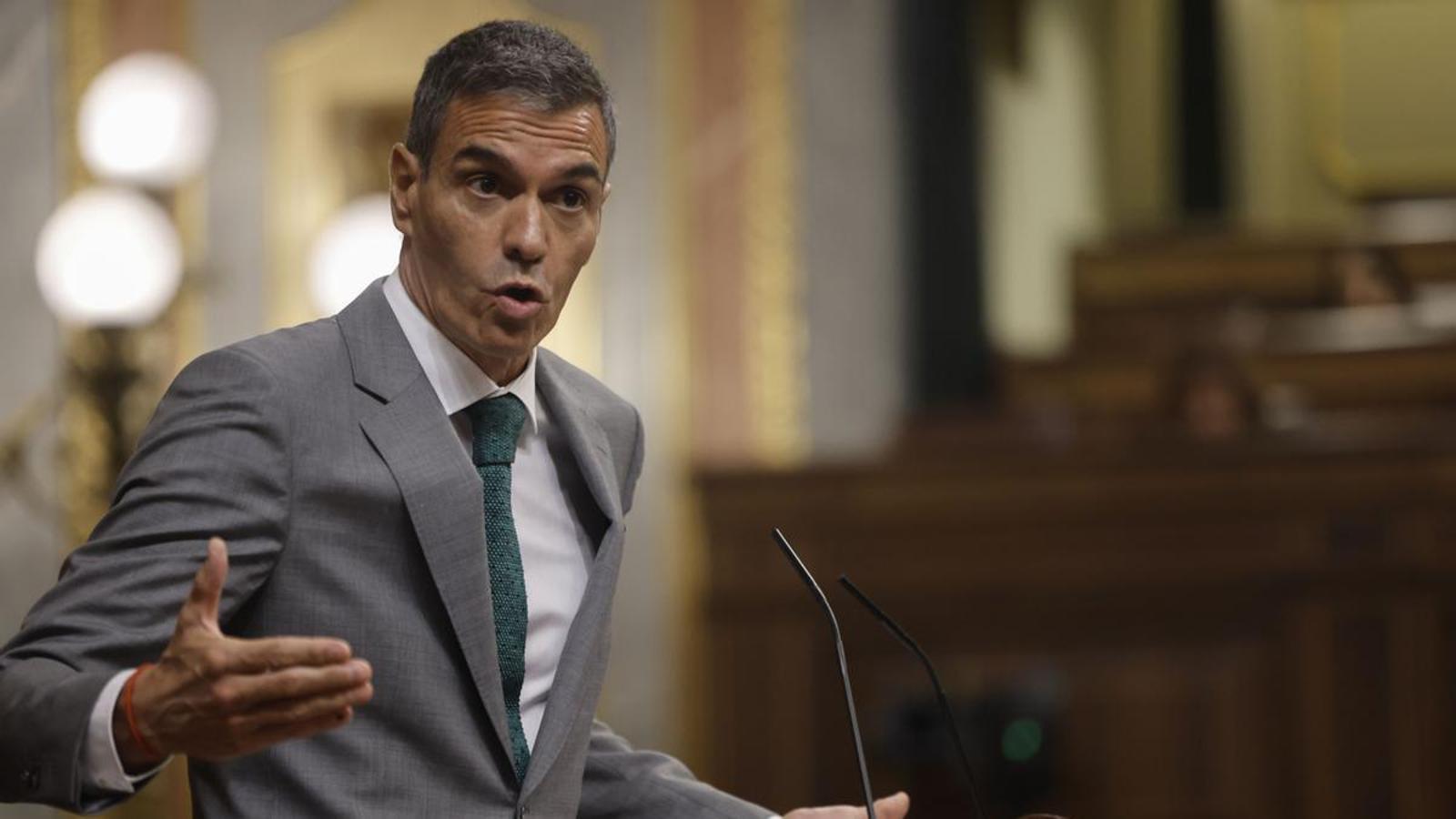
The move to publish all these now-declassified reports on Ceuta comes after the clash of versions within the executive about what was known and what was not before the massive entry of migrants on July 30th, basically between the Ministry of Defense, which says there were indeed warnings, and the rest of the ministries, which claim they had no indication of the magnitude of the crisis. This Wednesday, Pedro Sánchez in an interview on Mañaneros on TVE reaffirmed himself: "Without detracting from the professionalism of the intelligence services, a massive arrival of so many migrants was not foreseen at all". However, once all the reports were published, it is confirmed that there were warnings of calls on social media with a great capacity for reach:
The role of Morocco
On July 30th, the situation was already one of overflow, as shown by various declassified documents from both the army and the Civil Guard. In fact, on the morning of July 30th, it was stated as "highly probable" that an attempt at a "massive entry of irregular migration would occur, taking advantage of the Throne Day festivities in Morocco," as reported by the Army to the Armed Forces Intelligence Center (CIFAS). The situation was one of "migratory chaos" and "saturation" of the army. The Civil Guard expressed itself in the same direction.
Regarding the role of the Moroccan authorities, the army highlighted on the 30th that it "was probable" that they were not actively favoring the wave of entry; however, it did point to a "negligent and passive" performance. They said it was probable that they would increase their presence at the border starting on the 1st, when the Throne festival ended, since until then they had displaced part of the army and police from the border to other points. In fact, a Civil Guard report notes that Morocco "wanted to reinforce the border, but that during the 30th a "passive attitude" was detected.
In one of its reports, the National Police recalls that around Moroccan festivities, which coincide with the summer, there may be an increase in entries, citing the 2018 precedent. It sees a "geopolitical pattern": on one hand, migrants know that there is a temporary "permissiveness" at the border around the Throne Day; and, on the other, coinciding with King Mohamed VI's speech, Morocco conveys that Spain and the European Union have a "dependency" relationship on the Alawite regime's migration control. However, this report does not warn of an imminent danger. In fact, on July 28th, they issued one specifying that the Supreme Court ruling rejecting "hot returns" if entering by swimming is not a "relevant trend" on social media and speaks of a "limited reach" of the profiles encouraging entry into Ceuta. Nevertheless, the same National Police corrected itself just the next day, July 29th: they issued an update to the same report in which they warn of a "slight increase in Facebook posts about the sale of wetsuits and fins" and also "internal communications in migrant groups in which they organize massive entries on the night of July 29th using the land route and swimming to cause the greatest possible collapse". For all these reasons, they advised maintaining "reinforced and continuous monitoring throughout the summer" of the border.

