The number two of the Civil Guard denies pressures to stop the investigation of Sánchez's environment
Manuel Llamas frames the internal proceedings that were opened and which led to his imputation within normality

-
CAT -
CAST
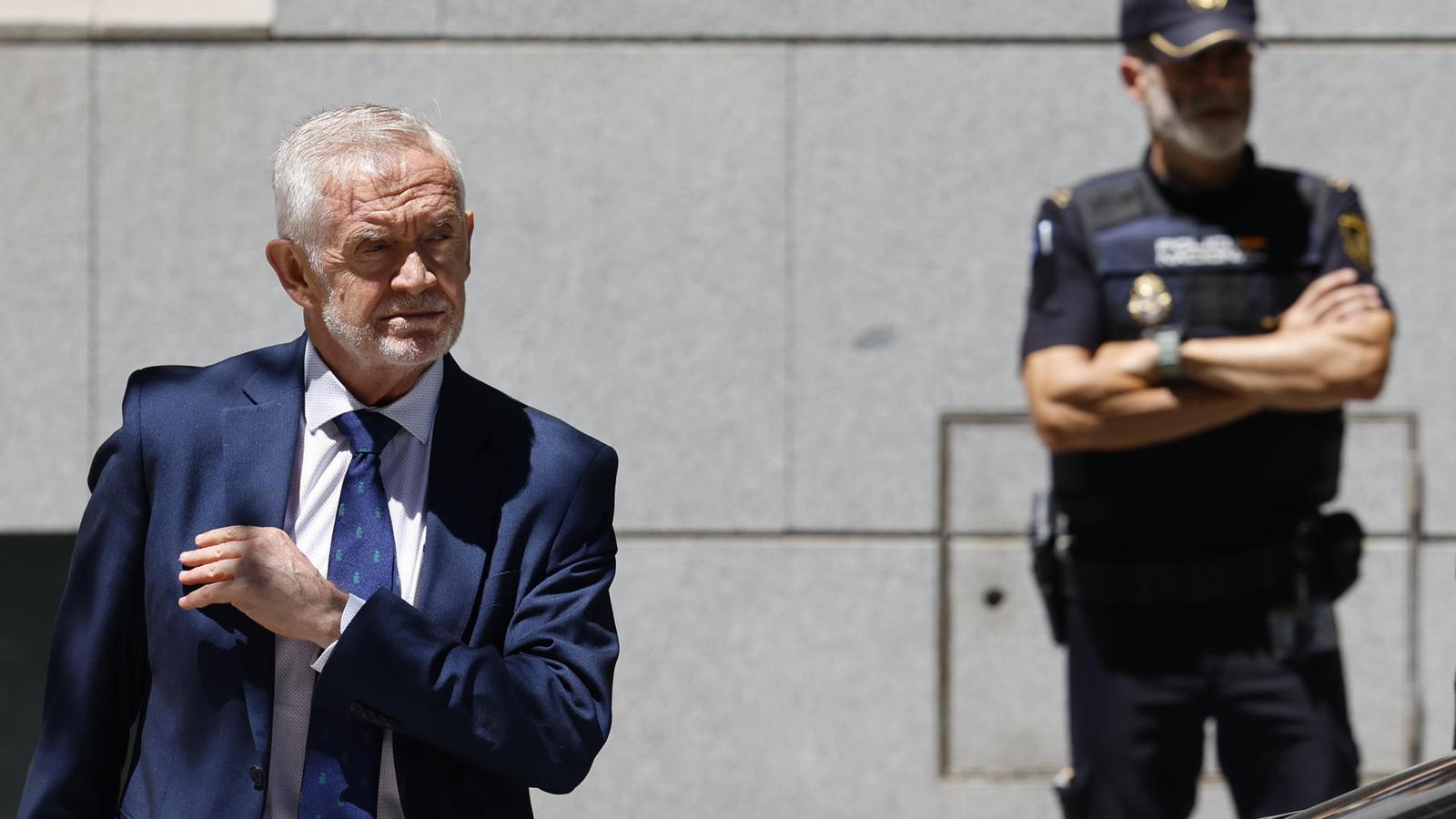
MadridNo pressure or orders not to investigate Pedro Sánchez's circle. The Deputy Operational Director (DAO) of the Civil Guard, who is being investigated for prevarication and obstruction of justice within the Leire Díez case, has defended himself before Judge Santiago Pedraz. The former head of the Central Operative Unit (UCO), Rafael Yuste, assured that in July 2024 he urged agents to "step aside" in judicial cases with political implications and urged them not to be proactive and to cede the lead in driving cases to the judges. Manuel Llamas has been testifying for over two hours and has denied any maneuver to torpedo or obstruct investigations: he assured that at no time did he say they should step aside and denied any kind of pressure.
Furthermore, he revealed that the Director General of the Civil Guard, Mercedes González, told him on May 5, 2025, that she knew Leire Díez. This was a few days before an internal investigation was opened into the leak of WhatsApp messages between Pedro Sánchez and José Luis Ábalos and before they both activated automatic deletion in their conversation. In a somewhat tense interrogation, according to sources present in the room, Manuel Llamas answered all questions and admitted that he does not get along very well with the UCO agents.

In relation to the files that were opened and that were one of the main reasons for the Anti-Corruption Prosecutor's Office to request his indictment, he has framed the internal investigations as normal. One of those under scrutiny is the one opened on December 4, 2024, following a screenshot with Begoña Gómez's email that appeared in a UCO report in the investigation of Pedro Sánchez's brother. The Prosecutor's Office emphasized that the internal investigation advanced even though the DAO knew it had been an agent's error. Fifteen days later, the file was closed with a proposal for a reprimand.
Manuel Llamas arrived at the National Court at 9:40 a.m., 35 minutes before he was scheduled to appear, accompanied by his lawyer, Edmundo Bal, who was Ciudadanos' number two in Congress last legislative term. Nine minutes later, the director of the Guardia Civil, Mercedes González, arrived, defended by Rosa María Seoane, who was one of the State's lawyers in the trial of the Process.

Postponed declaration
Mercedes González was also scheduled to testify this Thursday morning, but she will have to return to the National Court in 24 hours because she hasn't had time: Manuel Llamas has been testifying for so long that the judge has been forced to postpone the second interrogation. According to the Anti-Corruption Prosecutor's Office, the director of the Civil Guard facilitated an “instrumental use” of disciplinary records as a “pressure mechanism” towards the police investigators of the cases involving Pedro Sánchez.
She began to be in the eye of the hurricane because the so-called plumber of the PSOE boasted that she "dealt" with her and that they had a "very good relationship". The UCO discovered three meetings between the two: on September 30, 2024, December 20, 2024, and April 2, 2025. She has acknowledged two meetings, but has reduced them to a "simple contact" over an unimportant coffee. Both knew each other from when Mercedes González was the delegate of the Spanish government in Madrid, a position she held from 2021 to 2023.
Despite Mercedes González's meetings with Leire Díez, the Anti-Corruption Prosecutor's Office requested her indictment, focusing on the internal files that were opened in 2024 and 2025: the prosecutors believe that the "real purpose" of the three was to generate an "intimidating effect" to "condition the development" of the investigations: "They became an instrument used to exercise intimidation".
