Ana Pastor: "Terrorism and violence against women have been the two scourges of Spain"
Former PP minister and former president of Congress

-
CAT -
CAST
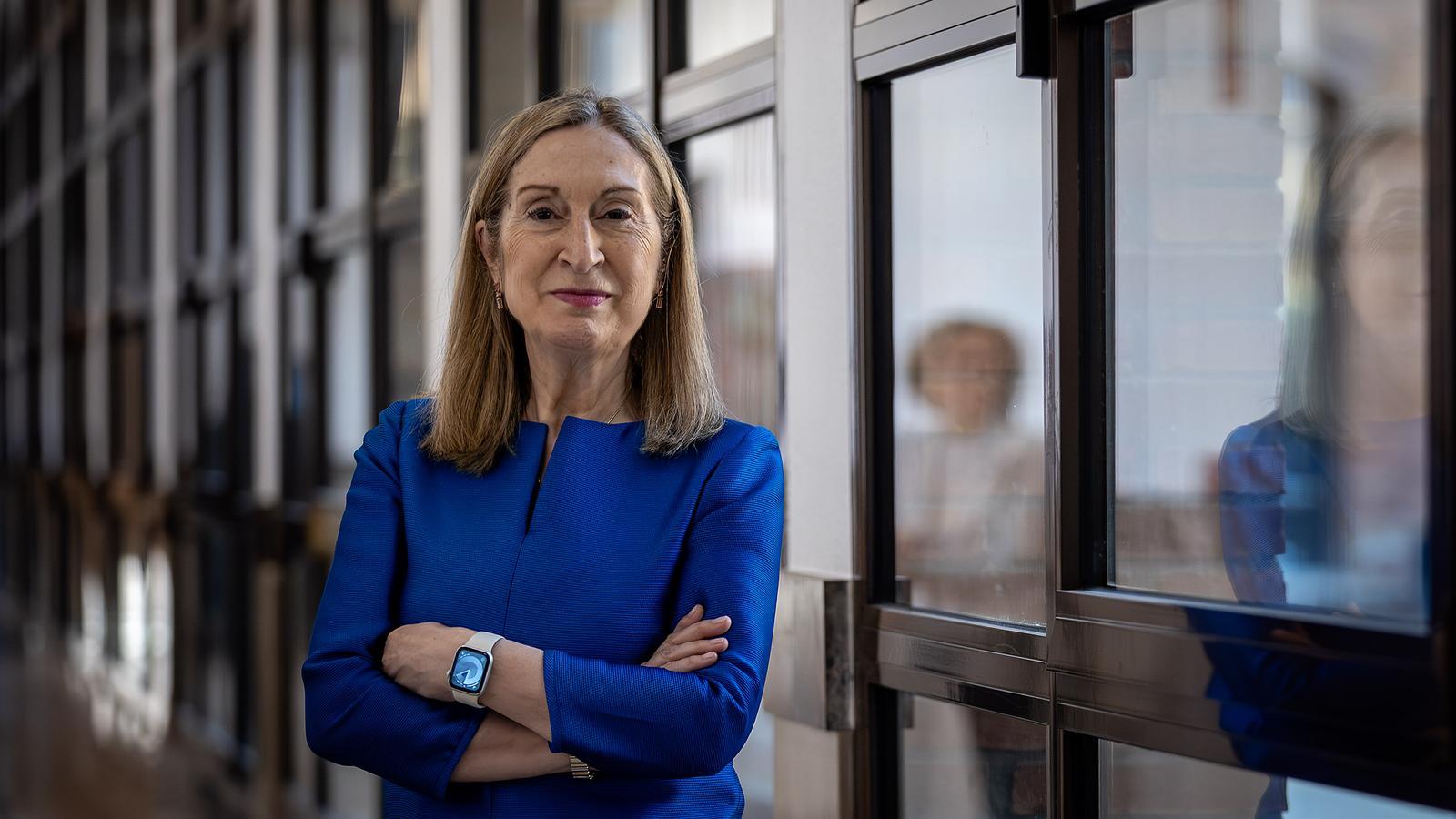
BarcelonaThe Abat Oliba CEU University invested the former minister and former president of Congress Ana Pastor (PP) as doctor honoris causa on March 25, in recognition of her career. Taking advantage of the opportunity, the former politician, who accumulated two and a half decades of political activity in Spain until 2024, speaks to ARA.
You have had a political career of three decades with numerous positions. What do you keep and what do you miss?
— I have a wonderful and excellent experience as a public servant, I am originally a civil servant of the State. Throughout this period, I never thought I would be in politics, but, honestly, the truth is that I have learned a lot, I have tried to serve my country and the general interest always, and I would say that I am very grateful.
And what remains of this stage?
— I have learned a lot about how consensus and agreements can be reached that are very important; for example, in health matters, the fact of approving three laws that are still in force today with the support of all political parties was a real satisfaction for me. And I would also like to highlight the day I said goodbye to the Congress of Deputies, with a unanimous applause that I will never forget. I believe that politics and building a country must be based on reaching agreements without losing, and this is very important, your principles, your values.
Great agreements of bipartisanship, of the PP and PSOE?
— No. Great agreements, in the case that I tell you, with the support of all political groups. Because I believe that it is the way to advance in society.
You, as a convinced feminist, how do you see the current moment of the movement?
— One of the great scourges, along with terrorism, that we have had and is violence against women. I believe that we must all be united to make it possible that there is not one more victim. In terms of equal opportunities between men and women, much progress has been made, but there is still a long way to go. Therefore, all policies to make work and family life compatible, and I also say personal life, are fundamental. I believe that there is still a culture, a certain macho streak in part of our society and that, therefore, we must continue fighting.
In gender violence there is a party, as is the case with Vox, that denies it.
— I will not answer this.
Today there are parties that have a divergent thinking on sexist violence.
— I am not currently active in politics, as everyone knows I am from the PP, I continue to support my party. And, as President Núñez Feijóo has always defended, we convey our principles and values to the citizens, also in matters of equality.
You were Minister of Public Works. You know that in Catalonia there is a problem with budget execution and infrastructure investments.
— I will not answer this.
You lived through a period with the Aznar government, also with the Rajoy government. There was a time when there were CiU-PP pacts...
— I will not answer this.
About the health collapse. As a former Minister of Health, what has not been done well?
— We have a good healthcare system and it is based on the fact that we have excellent professionals. But we must take great care of our professionals. They are logically raising a fundamental point, that you cannot work 24 hours and continue working. Therefore, we must take care of them, pamper them, we must develop a true professional career, we must do good human resource planning and the system has many challenges ahead. It was designed precisely for acute pathology and now we have chronicity, many elderly people, multiple pathologies. We have very good drugs and very good technology, which are costly but very effective. But all this we must balance by creating a system that has more continuity of care, enhancing care for the elderly and allocating the necessary resources.
With public-private collaboration?
— What I said, I said.
