The PP and Vox agree on "national priority" to limit migrants' rights and Ayuso opposes it
Extremadura intends to exclude from public aid those who do not demonstrate "roots"
-
CAT -
CAST
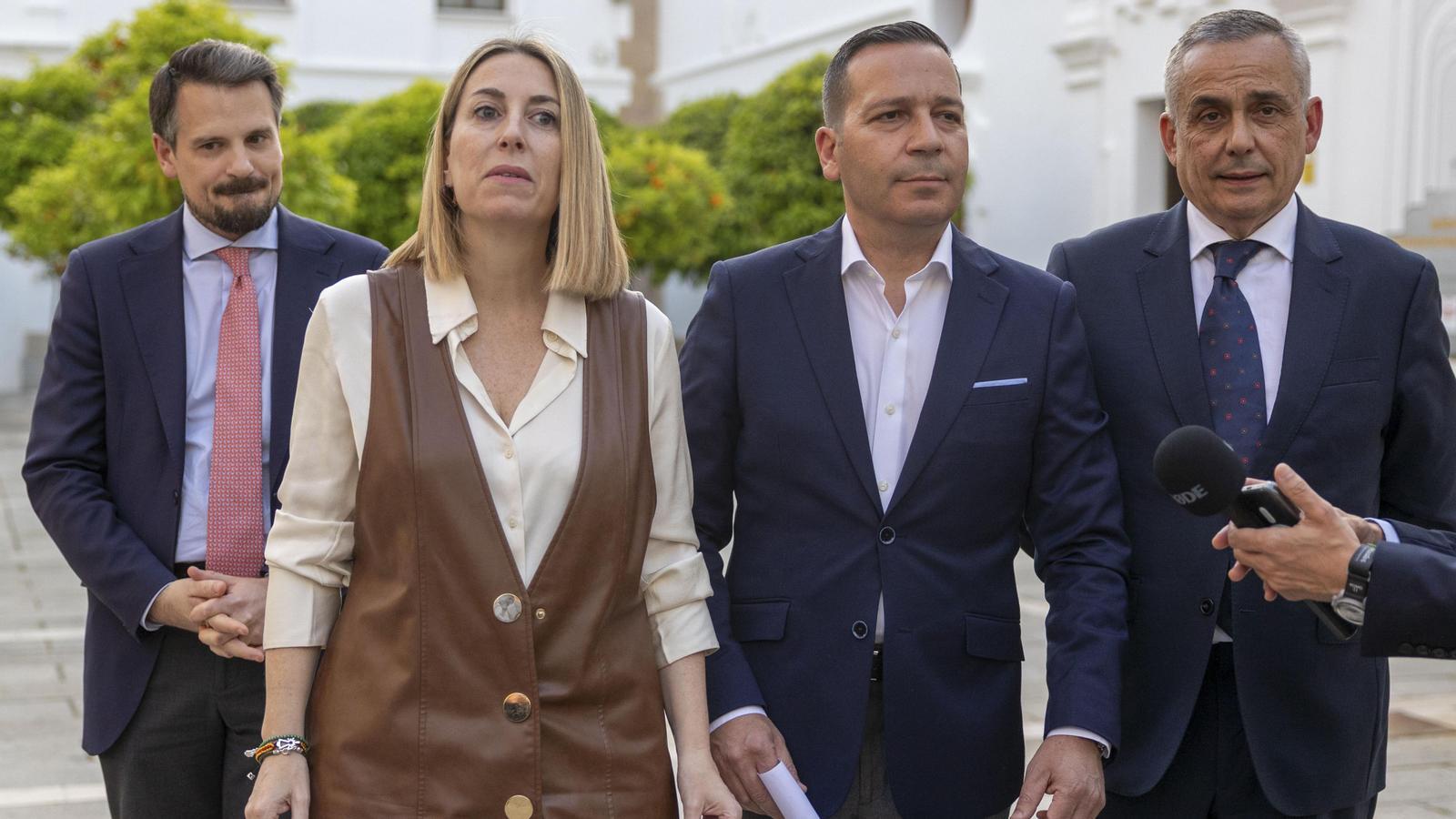
Barcelona / MadridVox left all the regional coalition governments with the PP in the summer of 2024 in protest because the Popular Party accepted the arrival of 400 minors from Ceuta and the Canary Islands. It is not strange that, two years later, the immigration folder has been key to resuming the alliance with the PP, for now, in the Extremadura executive. Four months after the elections, the PP has agreed with the far-right to limit the rights of immigrants, starting by committing to reject the arrival of irregulars by all means, "legal, juridical and political", whether they are minors or adults. The government of María Guardiola will not offer new places of reception and will try to empty the current ones "working actively to return unaccompanied minors to their countries of origin". A clear declaration of intent, despite the fact that Extremadura does not have the powers to expel people from its territory.

The agreement signed by the two far-right parties in Mérida is not limited to discussing irregular immigration. One of the key principles that will inspire the new government of Extremadura will be "national priority" for granting "all public aid, subsidies, and benefits", also to migrants with papers. What does it mean? Although they do not go into detail, the PP and Vox emphasize that they will establish a "reinforced minimum period of residence, registration, and connection with the territory" and that, furthermore, they will link access to aid to the "contribution record, permanence, and contribution to the system" of immigrants. For the popular party, the crux of the matter with this measure is residence – and not nationality –, a tenet they claim to have already defended: "It changes nothing, it is a positive assessment," emphasize voices close to the PP leadership. On the other hand, the president of the Community of Madrid, Isabel Díaz Ayuso, has distanced herself: "You cannot illegally exclude anyone from requirements for which they have rights," she stated this morning from Brussels. These words come 24 hours after the Madrid PP opposed in a vote in the regional parliament the "national priority" in economic benefits for maternity. Vox is proud of a "very important milestone" for having achieved "national priority" as an "essential requirement" in social aid and housing access: "It will be a strategic axis, not only in this government, but in future ones," stressed the Secretary General of Vox, Ignacio Garriga.
From Génova, they attribute this expression to the "narrative" of Santiago Abascal's party and present it as a "slogan" of the far-right formation: "It does not bother us," emphasize voices from Feijóo's circle. The PP sees it as an inspiring principle – more narrative than pragmatic – and celebrates that Vox has conceded on this conception of the agreement without demanding that it be put into practice to the utmost consequences, which would clash with the Constitution.
Another of the points of the agreement stipulates that people in an irregular situation "are excluded" from structural social benefits and services, such as health, "and their access is limited exclusively to vital emergency cases". The PP and Vox will also create a unit responsible for verifying if there is fraud in social benefits and in the census, once again specifically aimed at immigrants, and, among other things, the teaching of Arabic in public schools will be suspended.
A Francoist monument as a cultural asset
Beyond immigration, tax cuts – despite Extremadura being one of the communities that receives the most resources from the regional financing model–, the fight against housing squatting, the defense of the "family," and nostalgia also feature in the agreement. For example, Vox had been very belligerent in defending that the Francoist monument of the Cross of the Fallen in Cáceres be declared an asset of cultural interest. The far-right has gotten its way, and the PP has agreed to protect it. In the agreement, however, there is no reference to violence against women, which generated so much controversy two years ago due to Guardiola's refusal to accept Vox's proposals.
La Moncloa will be "vigilant"
The person in charge of reacting to the agreement on behalf of Moncloa has been Félix Bolaños. "The Spanish government will be very vigilant about the implementation of this ultra pact and we will take to the courts, and in particular to the Constitutional Court, anything that is discriminatory and constitutes cuts in rights," he warned in an interview with La Sexta. Pedro Sánchez issued the same warning from Barcelona, where he appealed to resort to "all the strength of the rule of law" to "defend the freedoms of the Extremadurans." The Spanish president believes that the agreement "betrays the history" of Extremadura – a "land of migrants" – and represents "blockage, hindrance, and regression" for the region. For his part, the minister of the Presidency, Justice, and Relations with the Courts regrets that the PP has "completely bought into all the ideological frameworks of the far-right" with a pact that includes "absolutely inhuman" things within a "xenophobic, racist framework contrary to the development of rights".
