"I have met many women in my life": this is how the six months of the Pujol case trial have gone
17 accused, 200 witnesses and 38 sessions for the National Court to issue the final verdict

-
CAT -
CAST
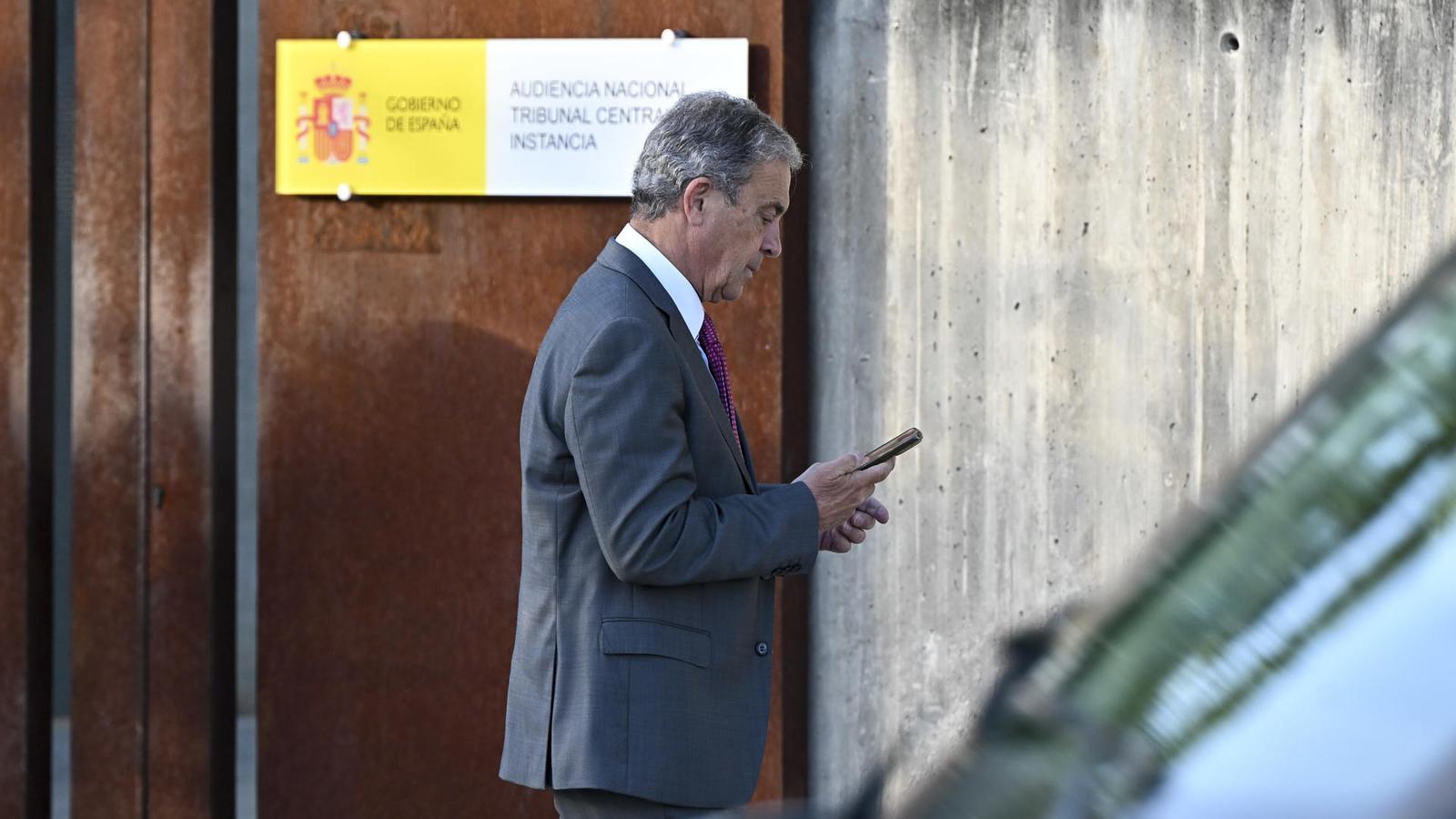
Madrid4,311 days after Jordi Pujol's confession, the trial against his family has been postponed for sentencing. In between, there has been an arduous judicial investigation that lasted six years, an eight-month stay in prison for the eldest son of the former President of the Generalitat, and a sum of 80,000 pages. On November 24, 2025, the National Court kicked off the trial: 38 sessions, 200 witnesses, 17 defendants defended by the elite of Catalan criminal law, and two accusations. Three judges and one question to answer: was the fortune the Pujol family had in Andorra an inheritance or was it the fruit of corruption? These have been the best moments at the National Court.

Grandfather Florenci's legacy
What the Pujol family defends – since the former President of the Generalitat confessed it in July 2014– is that the money they had in Andorra came from grandfather Florenci's inheritance. It is an extreme that was central to the interrogations of all the children. Mireia Pujol recalled the "confrontations" they saw over "how he used" the money: "My grandfather was very worried about my father's true obsession, Catalonia".
For his part, Oriol Pujol, who was general secretary of Convergència, admitted "discomfort" at having money abroad and in 2009 sent it to his older brother. To support this thesis, the family's defense has insisted at all times that grandfather Florenci was convicted of currency trafficking in Tangier and contributed a book about his economic profile.
Who also declared was Josep Maria Pallerola, the Pujols' first bank manager in Andorra. He acknowledged that, "jokingly," they nicknamed him "the priest" because he had "the face of a priest." He is the one to whom Marta Ferrusola sent the famous manuscript asking him to "transfer two missals." He also testified that the eldest son had told him that the money they wanted to deposit in Andorra came from an inheritance.
The eldest son's business
The main protagonists of the trial have been the multiple and varied businesses of Jordi Pujol Ferrusola. Many of them were without a contract, an extreme that both the Prosecutor's Office and the State Bar have used to cast a shadow of doubt and that some witnesses have justified because there was a previous "trust".
The accusation for corruption
While the Pujol family refers to grandfather Florenci's inheritance and argues that the money from Andorra multiplied for a decade thanks to "financial sheets", the hypothesis of the Anti-Corruption Prosecutor's Office is that the former Catalan president wove a "clientelistic network" to inflate his assets thanks to illegal commissions in exchange for influence and public works. Fernando Bermejo considers that there was an "organized system" to originate a "deferred remuneration" to have "advantages in contracting" from the Catalan administrations.
On the other hand, the lawyer for the eldest son, Cristóbal Martell, maintains that there has been "nothing" that has proven this accusation: "One expects to know which tenders were bastardized and which awards were traded. Not a single mention that responds to this serious statement".
Without former president Pujol
Since the days before it began, the trial has been marked by the state of health of the former president of the Generalitat Jordi Pujol. Despite reports advising against it, the court refused to exempt him at first. When it was the turn of the accused to testify, he was forced to go to Madrid to be examined. And, after the visit of the medical expert, the court decided to exclude Jordi Pujol i Soley from the case due to his inability to defend himself. The Audiencia Nacional must, in this regard, issue an order to formally dismiss the case.
Under the presidency of José Ricardo de Prada
The person in charge of leading the trial has been José Ricardo de Prada, president of the chamber and of progressive tendency. With exquisite punctuality and good treatment with all parties, he has also been the author of some stellar phrases. "You don't need to give us legal lessons, we are experts in law", he reprimanded the UDEF investigator. Just like Oriol Rusca, lawyer for Mercè Gironès: "The court knows how to distinguish between affirmations and objective facts, it is part of our job". To Cristóbal Martell he said –with a certain slyness– that the court was "impatient" for his questions and celebrated that one of the experts who spent hours and hours testifying was "well-provided" with water.
Technical problems
Over five months, the vast majority of the 200 witnesses who have testified have done so remotely, which has led to moments of confusion, frustration, and misunderstandings. José Ricardo de Prada even recommended sending out an "instruction manual" to facilitate connections. "What a heavy day of technology," lamented the judicial support officer.
When it wasn't a muted microphone, it was a phone that didn't focus on the face or a reverberation or an echo of the voice. "Fuck, man. There's interference now," protested prosecutor Fernando Bermejo one day. Problems with the camera or sound were commonplace for weeks. And they shared daily life with the forgetfulness of many of the witnesses, who couldn't remember events from more than twenty years ago. So long ago, by the way, that more than one has died along the way.
A witness who didn't know if the room was watching her confessed that she was going to smoke a cigarette, but the judge invited her to leave it for after the statement. Another complained about the time they had made her wait. And the farce was sealed when a teacher from the public school who had nothing to do with the facts declared.
A UDEF investigator with "animus"
The longest statement in the trial was that of Alberto Ibáñez, the head of most of the UDEF reports, which lasted three days. Right at the beginning, he admitted to having a "personal animosity". Later he qualified it and pointed out that he was referring to the lawyers because they had taken legal action against him. Both the prosecutor and the president of the court ended up downplaying it.
The "original sin" of Operation Catalonia
The trial has also allowed us to focus on the influence of Operation Catalonia in the Pujol case. In the inaugural session, the defense of the Pujols presented it as the "original sin" of the investigation. The Prosecutor's Office denied that it had any incidence, but the court agreed to summon the leadership of the patriotic police.
However, the heads of the State's sewers turned a blind eye. For example, retired commissioner José Manuel Villarejo denied knowing Vicky Álvarez, Jordi Pujol Ferrusola's ex-lover, who made the initial complaint in the case and received secret funds.
However, the directors of Banca Privada d'Andorra attested that they were coerced into filtering information about the pro-independence leaders.
