Guide to understand what is happening to the left of the PSOE
The deadline to present the coalitions ends Friday and the Broad Front and Podemos continue negotiating

-
CAT -
CAST
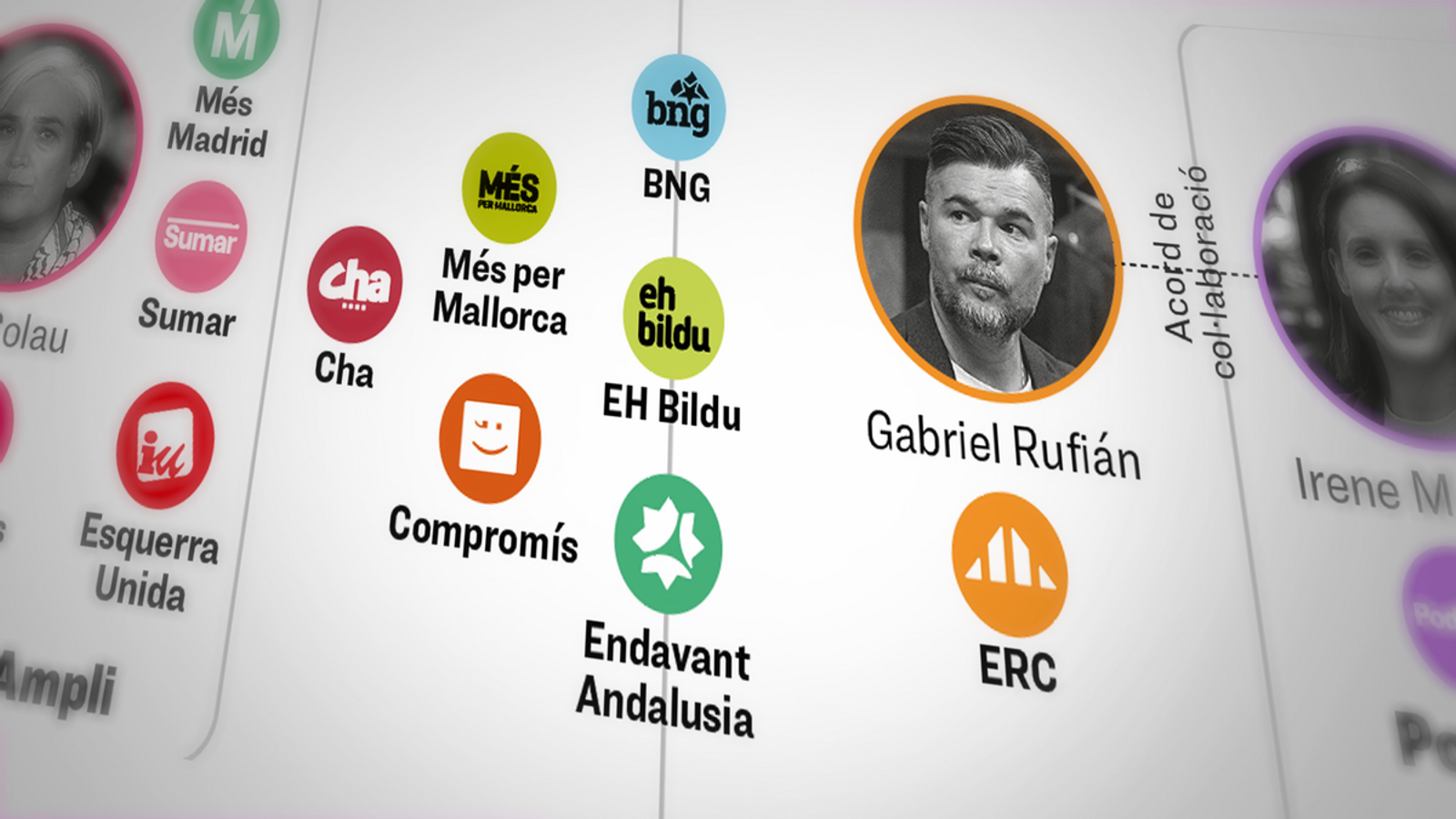
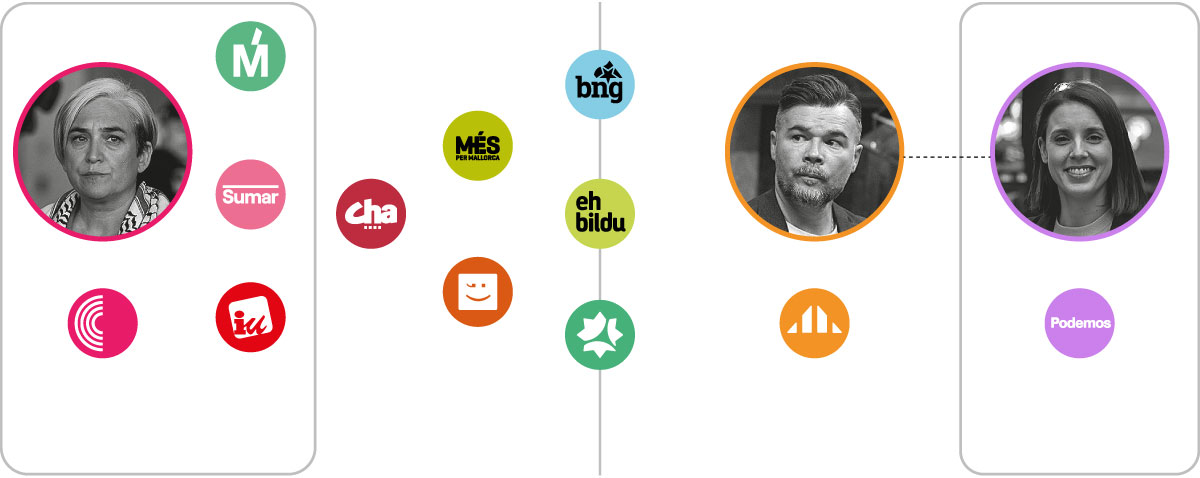
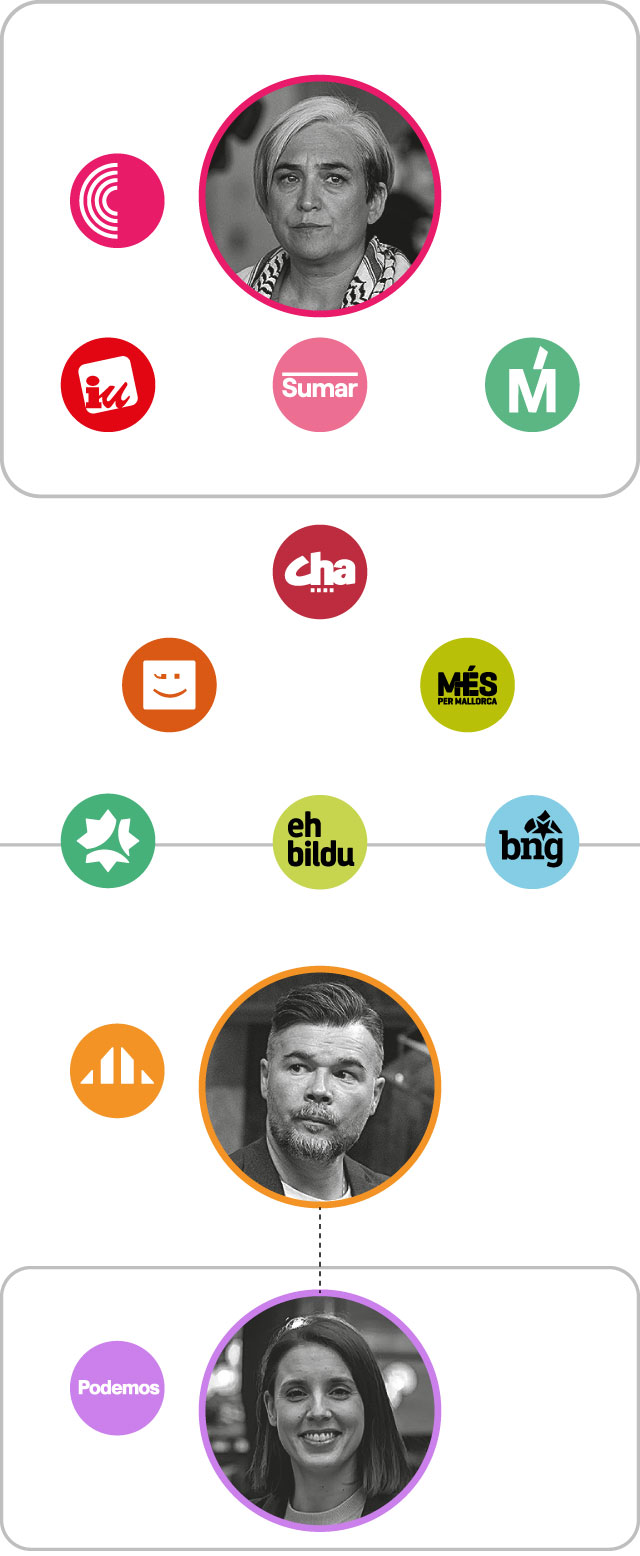
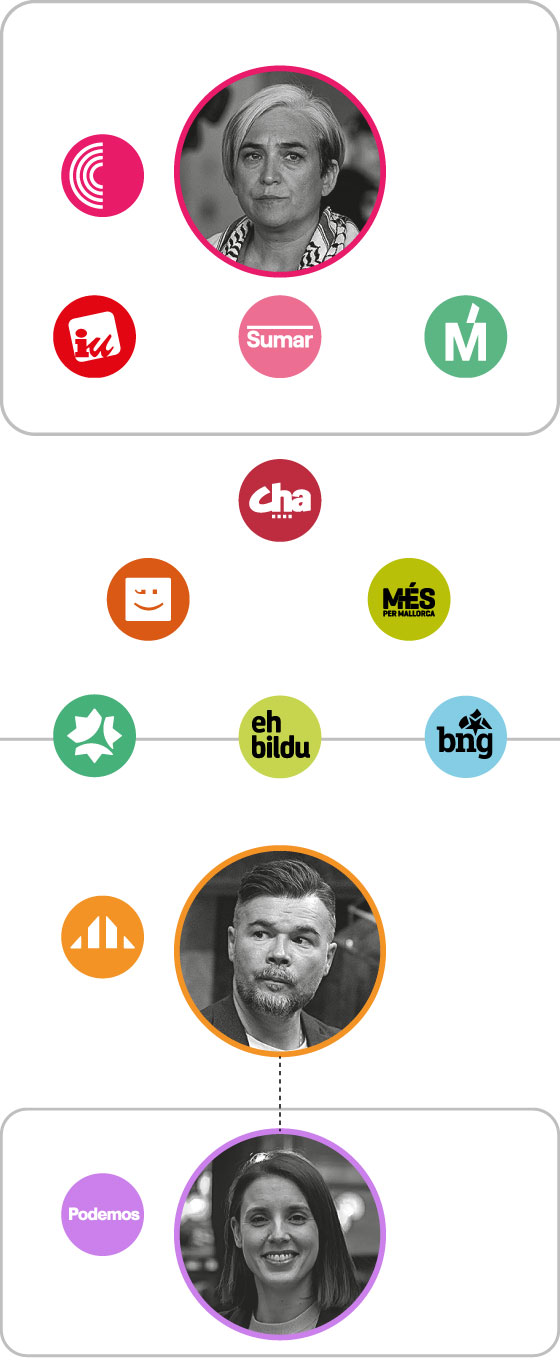
BarcelonaFriday is the deadline to present the coalitions for the next general elections and, as of now, negotiations between the parties to the left of the PSOE remain open. In 2023, the agreement to configure Sumar arrived at the last minute (with Podemos inside, despite the veto on Irene Montero) and, this year, it is on its way to being resolved for better or for worse also at the last minute. In fact, the obstacle is once again how to unite the parties that make up the Broad Front –Moviment Sumar, United Left, Más Madrid and Comuns– with Podemos, which right now would run alone. The purple party, however, has sought an alliance with Gabriel Rufián and ERC, which they want to be a catalyst and a way to put pressure on the Broad Front in the negotiation. Are there possibilities for a joint candidacy? What would happen with ERC if Podemos integrates into the Broad Front?

More
Madrid
Collaboration
agreement
BNG
Més per
Mallorca
Sumar
Irene Montero
Ada Colau
Gabriel Rufián
Cha
EH Bildu
Compromís
Esquerra
Unida
Comuns
ERC
Podem
Endavant
Andalusia
Broad Front
Broad Front
Ada
Colau
Comuns
Més Madrid
United Left
Sumar
Cha
Més per Mallorca
Compromís
BNG
EH Bildu
Endavant
Andalusia
Gabriel
Rufián
ERC
Collaboration agreement
Irene
Montero
Podem
Broad Front
Ada
Colau
Comuns
Més Madrid
United Left
Sumar
Cha
Més per Mallorca
Compromís
BNG
EH Bildu
Endavant
Andalusia
Gabriel
Rufián
ERC
Collaboration agreement
Irene
Montero
Podem
Between the Broad Front and Podemos there is still a whole series of parties that orbit without joining either of the two blocs for the moment. There is Compromís, the CHA, and Més per Mallorca, which three years ago joined Sumar and now prefer to use their own acronyms and try to reach agreements with the main actors to configure the candidacies in the Valencian Community, Aragon, and the Balearic Islands. And there are other left-wing formations consolidated in the territory, such as the BNG, Bildu, or Adelante Andalucía, that do not want to know anything about state-wide alliances.
Ada Colau, the candidate confirmed to lead the Broad Front, made an appeal this Tuesday to continue negotiating with Podemos to bring it closer to the coalition. In fact, the same Irene Montero, candidate for Podemos, assured that contacts with the new Sumar continue and did not consider the negotiations broken. However, the purple party is moving forward with its open primary process that it launched last week and which ends this Thursday. It is the method that Podemos has defended to negotiate with the Broad Front: that everyone presents their own candidacy and that the citizens decide who they prefer as a candidate. A path, however, that its interlocutors reject.
What would happen if the negotiations finally end in an agreement? Then there would be a single candidacy throughout the State, although it would remain to be seen if this would be replicated in all provinces, that is to say, if in Madrid, for example, the agreement would mean having two candidacies, one from the Broad Front and another from Podemos with Irene Montero at the head. In fact, this is one of the theses that Pablo Iglesias defended this week on TVE: that in large provinces like Barcelona or Madrid, the union of the left is not as essential as in small provinces, because the electoral system does not penalize having two candidacies.
In the Spanish capital, Podemos and Más Madrid have had a broken relationship for some time. In fact, Mónica García's party is a splinter group of the 'lilacs'. This weekend, the Minister of Health announced a step back and gave up being the candidate for the Broad Front in Madrid, instead delegating the position to Emilio Delgado. He is a person from the critical wing of Más Madrid and with whom Gabriel Rufián held his first event to defend a unitary front a few months ago. The choice of Delgado must also be read as an attempt to get closer to Podemos, like the choice of Ada Colau as a presidential candidate, due to the relationship of respect they maintain with Irene Montero.
And Compromís or Més per Mallorca?
Three years ago, Sumar brought together Esquerra Unida, Comuns, Més Madrid and also, in a last-minute pact, Podem –in exchange for Irene Montero being left off the candidacy–. The coalition, in addition, also incorporated other sovereignist left-wing formations such as Compromís. Now, however, the Valencians are negotiating a single candidacy with the Esquerra Unida and Podem federations of the Valencian Country, but the party will not be part of the state coalition. Més per Mallorca and the Chunta Aragonesista (CHA) are in a similar situation, having for the moment rejected joining the Broad Front –unlike what they did in 2023–.
Neither will Endavant Andalusia be there, which split from Podem years ago and ran alone in Andalusia in the last elections. The party that Teresa Rodríguez led gathered the left-wing Andalusianist vote in the last Andalusian elections held last June and finished ahead of the coalition between Esquerra Unida, Podem and Sumar. It will also run alone this November 29th, just like EH Bildu and the BNG. In fact, the Abertzales will once again repeat the alliance with ERC in the Senate.
How would ERC end up if there is an agreement between the Broad Front and Podem?
While waiting to see if the talks between the Broad Front and Podemos come to fruition, the party that the purple party has indeed signed an alliance with is ERC. It is not a coalition, but a "collaboration" pact – as described by both groups – so that Podemos does not run in Catalonia, in exchange for the republicans incorporating people from Podemos into their list. In addition, Rufián and Montero will hold joint campaign events in Madrid and Barcelona. If the purples end up reaching a pact with the Broad Front to run together, ERC will have to assess how this affects their agreement with Podemos. Would they allow Rufián to campaign hand-in-hand with Colau in the rest of the State when they would be facing each other electorally in Catalonia?
On the other hand, Rufián has once again called for his party to reach an agreement with the Commons in Catalonia to run together. A scenario that ERC completely rejects, and also rules out joining the Broad Front. The Commons do not see the union with ERC as a good idea either. Their spokesperson in Parliament, David Cid, insisted on this Tuesday, making it clear that his party will run under its own brand in Catalonia. Cid, however, has assured that he maintains the hope of uniting the parties to the left of the PSOE at a national level, reports Gerard Fageda.
