From the legalization of the PCE to Feijóo's 'whatsapps': politics is also played on holidays
Political leaders seek the silence of the holidays to minimize the impact of the most controversial decisions
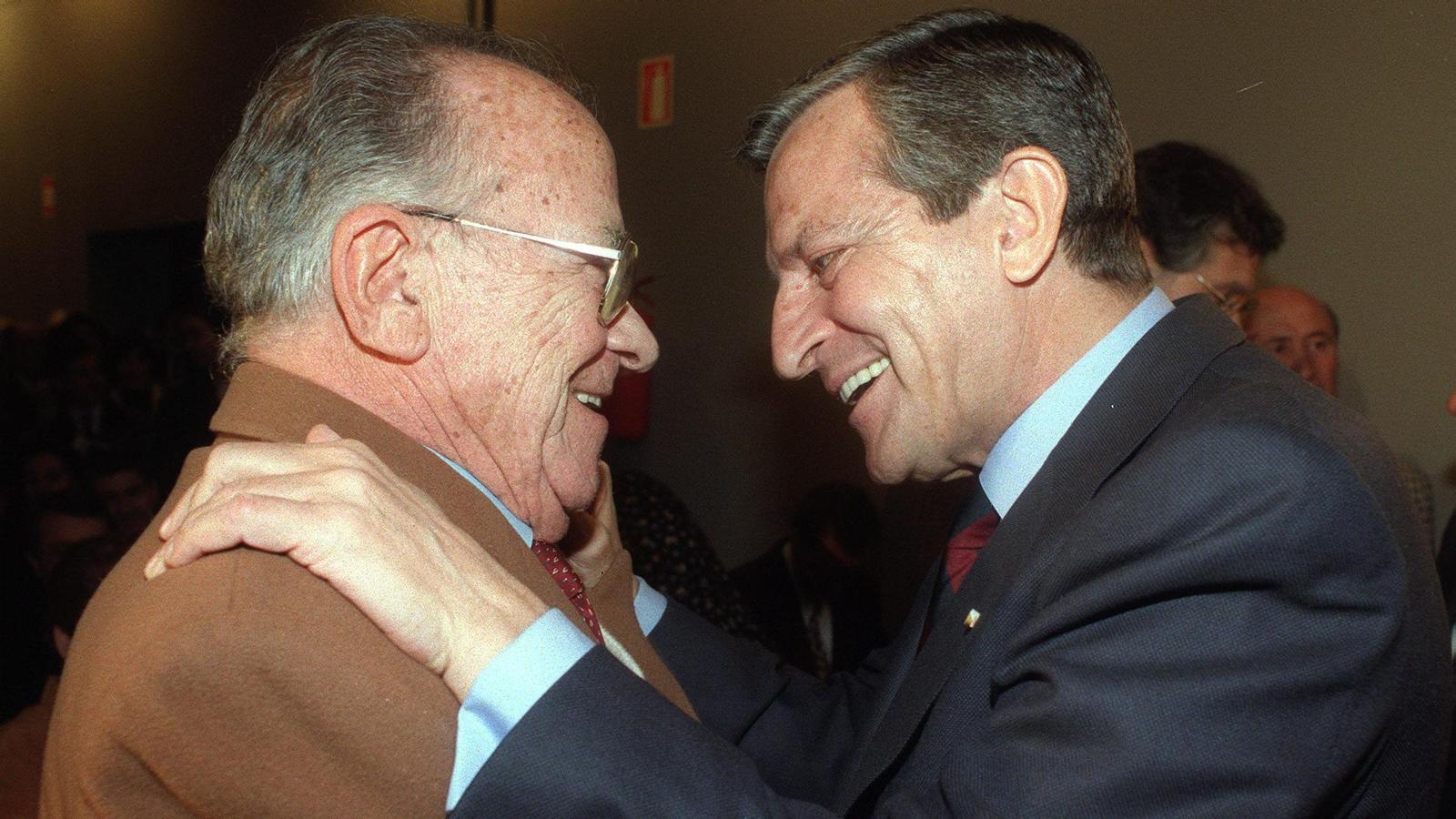
BarcelonaHoly Saturday. A day that in the liturgical calendar invites recollection and silence, but which in the political history of the Spanish state evokes one of the most audacious chess moves of the Transition. Precisely on a Holy Saturday like today, almost 39 years ago – April 9, 1977 –, the government of former Spanish president Adolfo Suárez shook the foundations of the State with the legalization of the Communist Party of Spain (PCE). In a context of maximum tension with the Army and with the figure of Santiago Carrillo, general secretary of the PCE at that time, still in the shadows, Suárez strategically chose a day when, traditionally during Francoism, practically nothing could be done and administrative and media activity was at a minimum. “It is about looking for significant dates when people look the other way”, explains, in conversation with ARA, Salvador Martí, professor of Political Science at the University of Girona. Specifically, in that era when "there was no fax and the information lag was very large", Holy Saturday was an ideal day to avoid an immediate reaction from the establishment, states the expert.
This strategy of "calming the fire" through the calendar is not a relic of the past, but a living practice in current political communication. The most recent example is found in the president of the PP, Alberto Núñez Feijóo, who chose last December 24, 2025, on Christmas Eve, to make public the messages sent to the judge of the dana, clearly seeking that the controversy would be diluted among nougat and family celebrations. It is not an isolated case: the reform of the crimes of sedition and embezzlement was approved on December 22, coinciding with the Christmas Lottery draw, a day when the country's attention is fixed on the lucky draws and not on the Penal Code.
In the Catalan context, we also recall the suspension of the President of the Parliament of Catalonia, Laura Borràs, on July 28, 2022, just before the summer break, or the constitutional reform of Article 135 of the Magna Carta approved by the Congress of Deputies in August 2011 to limit the deficit, the result of European pressure that forced structural change and cut Spanish economic sovereignty, while citizens were at the beach. Practice, however, crosses borders: in the United States, "Christmas Eve Pardons" have been systematically used by presidents like Bush or Trump to release political allies with little media cost. A tactic that has also been replicated by countries like Brazil with former president Jair Bolsonaro.
The art of tiptoeing around reality
Salvador Martí points out that, although today we live in a hyperconnected society, the logic of distraction still works due to our cognitive saturation. "Human usefulness is limited; when there are more than two or three events, people get complicated," states the professor, recalling that communication experts know that citizens cannot be aware of more than two or three things on the media agenda at the same time. However, Martí highlights, if 40 years ago the challenge was total disconnection, "there were no mobile phones, no internet, not even fax," today the problem is informational "noise": a controversial news item is launched with the confidence that "people will forget about it in three days" in the face of the avalanche of new inputs.
In academic literature, this management of silence and attention is a fundamental pillar. Manuel Castells, professor of sociology, in his book Communication and Power, already warned that the media agenda is deeply "performed" by those who have the capacity to manufacture reality. As Martí concludes, sometimes these are issues relevant to daily life that "pass by the agenda lightly" because we have been programmed to look elsewhere.
