The parakeet novelist obsessed with footballers' rights
The coach and former Espanyol player Jaume Sabaté lifted the first Copa del Rey with Betis and founded the AFE

-
CAT -
CAST
BarcelonaAt 17 years old, Jaume Sabaté (Badalona, 1947) was forced to abandon his electronic engineering studies because of football. His family had a lampshade business, but as he played defense for Badalona in the Second Division and was tired of traveling back and forth, he didn't have time for books. It was the 1960s.
“Football was very different. Look, I remember that at Badalona I had a thigh injury and the masseur started rubbing me with an empty bottle of Anís del Mono, which had raised lettering. «What the hell are you doing?», I said to him. And he replied that he was the inventor of anisotherapy”, Sabaté explains, laughing. This is one of the autobiographical anecdotes that appear in Misterios en el palco, the latest work by the former player for Betis and Espanyol, the two teams of his life, who face each other this Saturday in Seville (6:30 p.m., Movistar+).
It is a novel, Sabaté's first, set in the Spanish professional football of the 70s and 80s, which he knows so well. “There are real estate dealings, corruption, illegal betting, and murders,” adds the Catalan ex-player, who hasn't stopped since retiring: “Watching TV sitting on the sofa or investing in the stock market isn't for me. That's why I started writing. I also learned to play the piano.” Six years ago he published his first work, AFE: creation and birth, in which he recounts the founding process from within the first players' union in Spanish football, born in 1978.
“They hit me everywhere”
“It all started with an Atlético de Madrid goalkeeper, a certain Zubiarraín, who wasn’t getting paid. There were non-payments, the right of retention existed... and a widespread discontent began to grow that ended with the creation of the footballers’ association, which defended the players’ rights”, explains Sabaté, who was then playing for Betis and served as union delegate in Andalusia, and became one of the pioneers who founded the AFE.
“I was present at all the meetings from the beginning; the Diario Pueblo, Abc, Suroeste... they attacked me everywhere for being a unionist. Franco had recently died and the structures were still Francoist”, reveals Sabaté, also a protagonist in the first Spanish football strike, in March 1979. “First and Second division matches were postponed for a week. Betis was playing against Murcia and the coach didn’t put me in as a starter because the crowd would have booed me as a hero. But it turned out my substitute got injured and I had to come on after halftime. The entire stadium started shouting at me and giving me a hard time”, comments the former player from Badalona, who was accustomed to receiving insults and threats at the time.
A cigarette at halftime of a final
Shortly before, in June 1977, Sabaté lifted the first Copa del Rey in democracy with Betis after 40 years of dictatorship – until then, it was called the Generalísimo Cup–. “It had political connotations. The media considered Bilbao the winner, but since ETA was assassinating many people, in the final people were rooting for us,” reveals the defender, who took the sixth penalty in an eternal shootout that decided the champion.
“21 were taken because the referee made Chechu Rojo retake a penalty”. It was a very special title for Betis, the second in their history, after the 1935 League, and in 2023 Sabaté dedicated a book to it: Secrets of a historic final. The first Copa del Rey. “It’s a work that portrays what we players experienced, with first-person accounts. One of the things I explain is that at halftime a teammate smoked a cigarette in the restroom,” describes Sabaté, who played more than a hundred matches in the First Division.
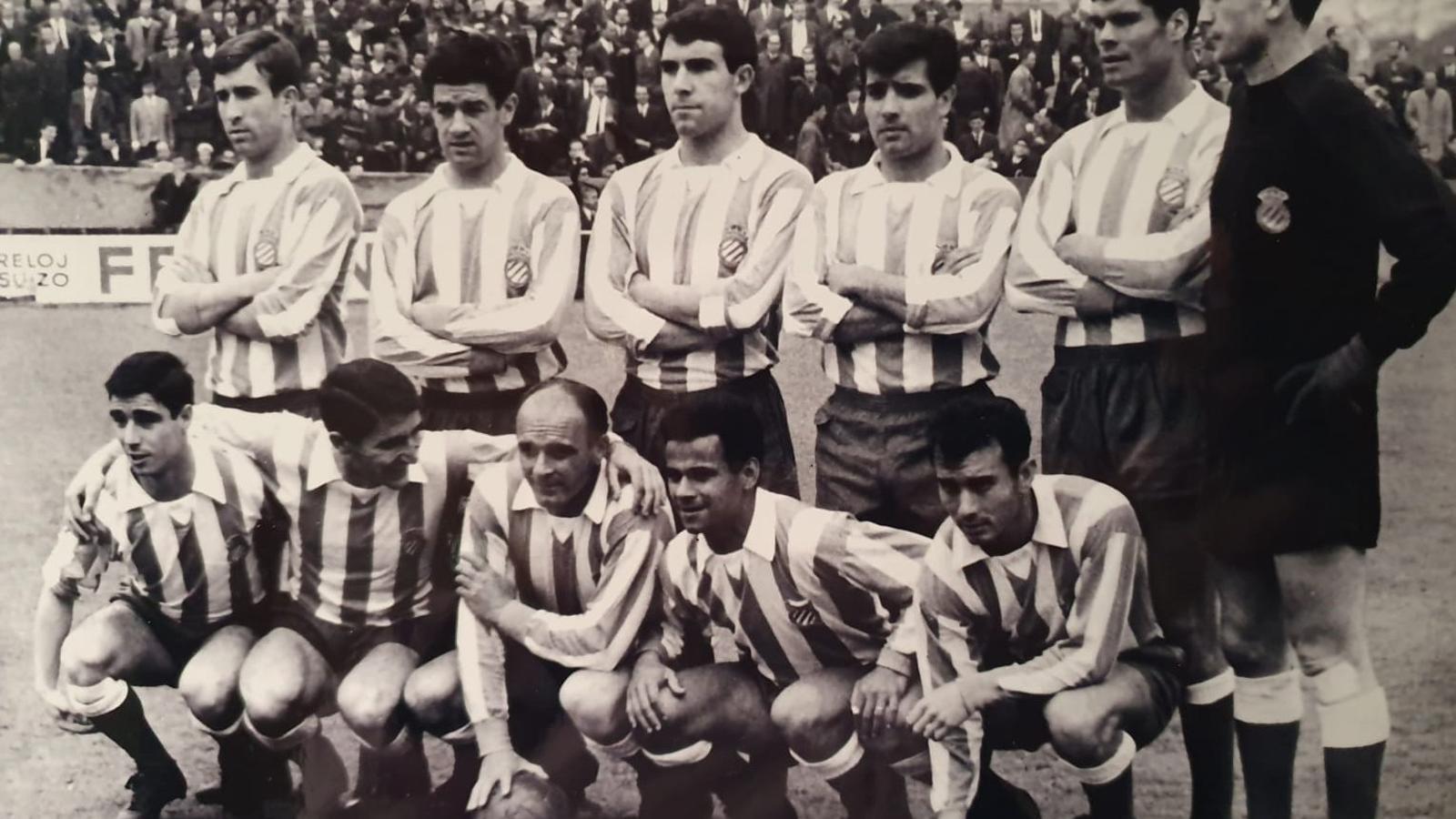
The first ones were with Español, who had signed him from Badalona in 1965 after convincing Ladislao Kubala, the periquito coach, in a trial they gave him at the Olympic Stadium. Military service, which forced him to go on loan to Lleida and Olot, and a run-in with coach José Emilio Santamaría prevented him from making a place for himself in the team of his heart.
Returning from Andalusia, in 1980 he hung up his boots at Badalona, and shortly afterwards he moved to Ripoll to manage a bank branch and coach the local team, in Primera Regional: “They were my practice sessions to get my degree.” The versatile Sabaté went through the benches of Badalona, Sant Andreu, and l’Hospitalet before taking a leave of absence from the bank to coach Español in the 1991-92 season. He was ten games in charge of the first team and, replaced by Clemente, he returned to work until he retired and became a writer.

