The disarmament paradox: many Lebanese no longer believe in Hezbollah or the state
The ceasefire between Israel and Lebanon is prolonged, but the country continues to be a war zone

-
CAT -
CAST
BeirutWhile the Lebanese and Israeli delegations have met again in Washington for a new round of direct talks, and have agreed to extend the ceasefire, international consensus seems clear: the war has weakened Hezbollah and opened an unprecedented opportunity to advance towards its disarmament. But on the ground, especially in southern Lebanon and the southern suburbs of Beirut, the reality is much more contradictory.
Although the Shiite group has lost political support after months of destruction, displacement, and a new war with Israel, the continuation of Israeli bombings, the partial occupation of the south, and the inability of the Lebanese state to protect the population are eroding precisely what Washington and Israel need to impose disarmament: Lebanese internal consensus.
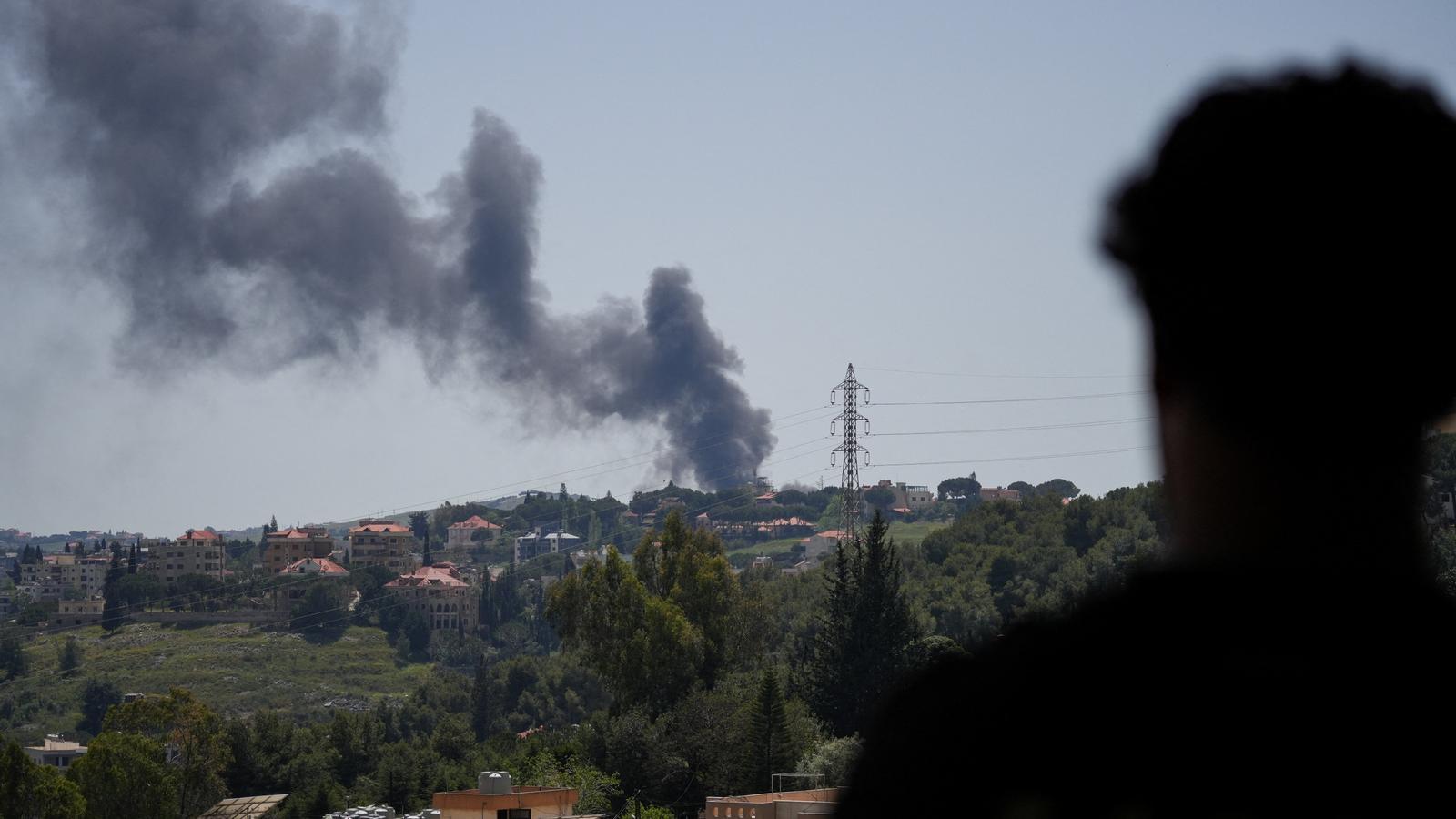
On paper, there has been a ceasefire since April 17, but in practice, southern Lebanon continues to function as a space of open warfare. Israel maintains almost daily attacks, targeted assassinations, and limited ground operations. In recent days, the Israeli army has again crossed the Litani River and claims to have expanded its operational control within Lebanese territory. At the same time, bombings continue over Nabatieh and other towns located both south and north of the river. In many border areas, the so-called “yellow line” – a strip where Israel exercises constant surveillance, restricts movements, and maintains an operational presence – has become de facto a new military border. Tens of villages remain practically empty or under constant fire.
. For many inhabitants, the state has not only been unable to prevent the war, but also to alleviate its effects.
Deep distrustBut this pressure clashes with a much more complex reality within Lebanon itself. Although Hezbollah has lost much of its political support, the debate over its disarmament continues to be far from generating consensus. A recent study by King’s College London reflects this contradiction: only 18% of Lebanese people claim to give political support to the group, but nearly half consider it premature to talk about its disarmament now.
In Beirut, this contradiction appears constantly in everyday conversations. Many residents of Dahieh –the southern suburbs of Beirut– openly criticize Hezbollah for dragging the country into another devastating war. But at the same time, few believe that the Lebanese state can replace it while Israel continues to bomb the south and maintain a military presence within Lebanese territory. “I don’t want another war, but I also don’t see who would protect us if Hezbollah disappeared,” summarizes a shopkeeper from Haret Hreik, in Dahieh, while several destroyed buildings continue to be covered by black tarpaulins months after the Israeli attacks.
The perception has deepened with the continuation of attacks and destruction. Since October 2023, schools, hospitals, municipal infrastructures, and entire neighborhoods have been devastated in the south and in the southern suburbs of Beirut. For many residents, the state has not only been incapable of preventing the war but also of alleviating its effects.
Deep distrust
This distrust goes far beyond the current conflict. The banking crisis, the economic collapse, political corruption, and impunity after the Beirut port explosion remain present in the collective memory. In this context, the idea of completely entrusting security to a state perceived as weak or absent generates rejection even among sectors politically distant from Hezbollah.
The paradox is increasingly evident. Hezbollah has emerged politically weakened from the recent months of war. But Israel, by maintaining military pressure and the partial occupation of the south, is simultaneously weakening the conditions necessary for a part of Lebanese society to accept disarmament.
Hezbollah's own leader, Naim Qassem, hardened his discourse on the eve of the talks in Washington. In a recent message, he stated that the group's weapons "are not part of the negotiations with Israel" and conditioned any internal discussion on the end of Israeli attacks, the complete withdrawal from the south, the return of the displaced, and the reconstruction of the destroyed areas.
Meanwhile, negotiations are progressing under a contradiction that is difficult to resolve. The United States and Israel believe that Hezbollah's military weakening opens a historic opportunity to change Lebanon's internal balance. But on the ground, each new Israeli incursion, each bombing, and each dynamited village reinforces the perception that the Lebanese state continues to be incapable of replacing it. Many Lebanese no longer believe in Hezbollah as a political project. But they also do not believe that the state can take its place.
