The monumental and mysterious portal of Sant Pere de Rodes returns to the monastery virtually
The project 'The Eyes of History' reconstructs the Romanesque masterpiece of the Master of Cabestany plundered in the 19th century
-
CAT -
CAST
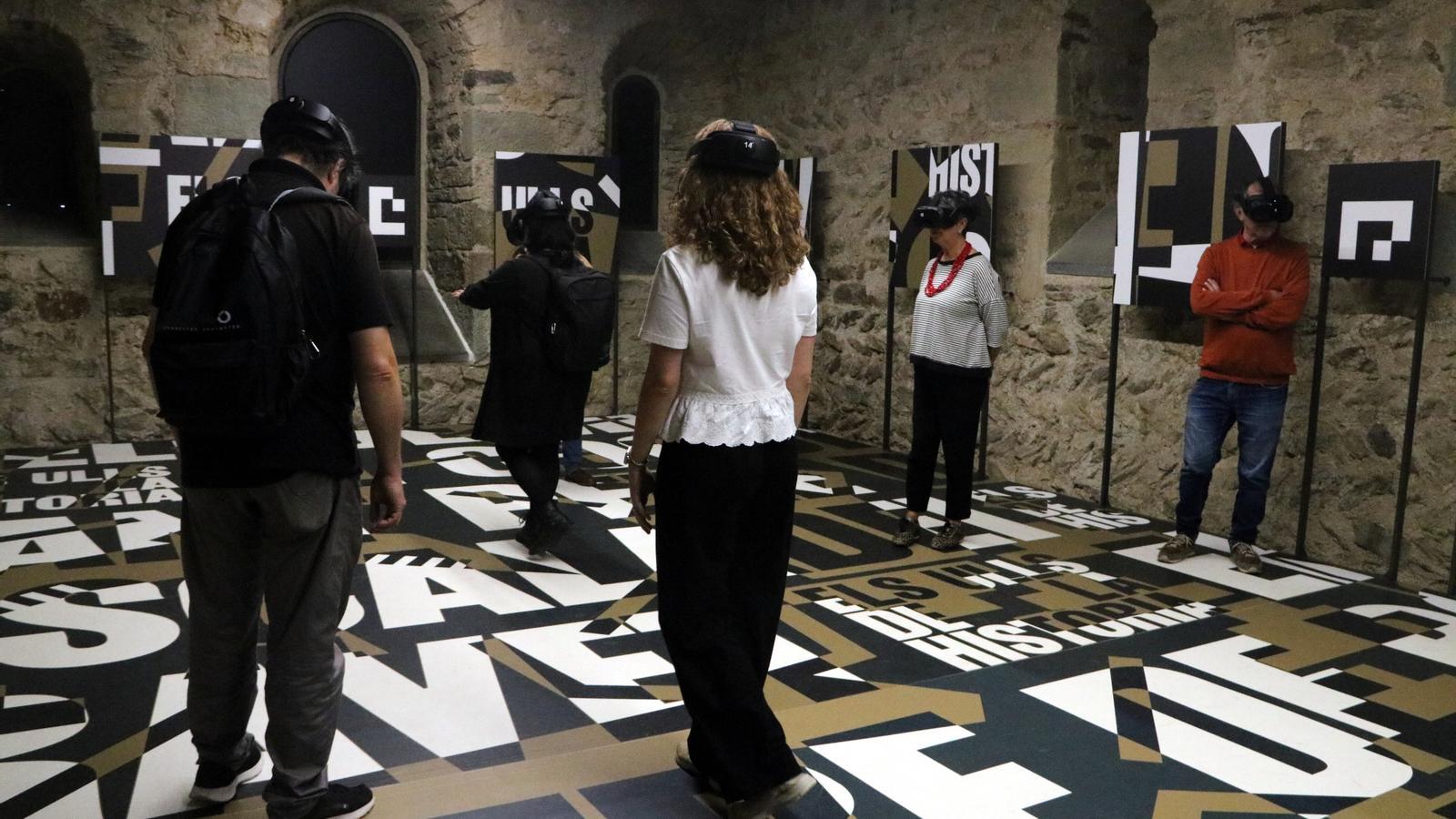
BarcelonaThe medieval monastery of Sant Pere de Rodes, in Cap de Creus, has managed to revive one of its greatest lost treasures: its 12th-century marble portal. Through the Eyes of History, an audiovisual project, the monument has recreated the original composition of this Romanesque gem, accompanied by an immersive experience that transports the visitor directly to the feudal era.
This installation is the result of historical research, which can currently also be seen at the exhibition the exhibition Sant Pere de Rodes and the Master of Cabestany. The creation of a myth at the Museu Nacional d'Art de Catalunya (MNAC). The workshop of the mysterious Master of Cabestany, an artist surrounded by many enigmas, sculpted the portal between 1160 and 1170. The work was very ambitious, as the Empordà monastery wanted to present itself as a "second Rome" for pilgrims who could not travel to the Vatican. In 1832, shortly after the monks abandoned the monastery, the portal was looted. The inhabitants of the surrounding villages, dissatisfied by vassalage or by greed, took almost all the pieces. With no original drawings preserved, many ended up serving as boundary stones, cemetery crosses, or decoration in gardens and private homes in Llançà, la Selva de Mar, and El Port de la Selva.
While the MNAC exhibition has been responsible for physically reuniting scattered pieces of the Master of Cabestany for the first time, the project Eyes of History creates a virtual reproduction. The proposal evokes both the monumental composition and the fragmentation process that the portal underwent.

In addition to the audiovisual proposal, visitors can step into the shoes of a 14th-century pilgrim through the immersive virtual reality experience The Day After the Wedding. This recreation allows you to tour the monastery and the neighboring village of Santa Creu de Rodes (precipitously abandoned between the 15th and 16th centuries) through the everyday stories of inhabitants and real characters of the time. The visitor discovers how the monastery worked and what its relationship with the community was like. "Behind this there is a great deal of research. We are talking about real characters," assures the Minister of Culture, Sònia Hernández.
