An estelada, an aggression and the chain reaction that the independence movement seeks

-
CAT -
CAST
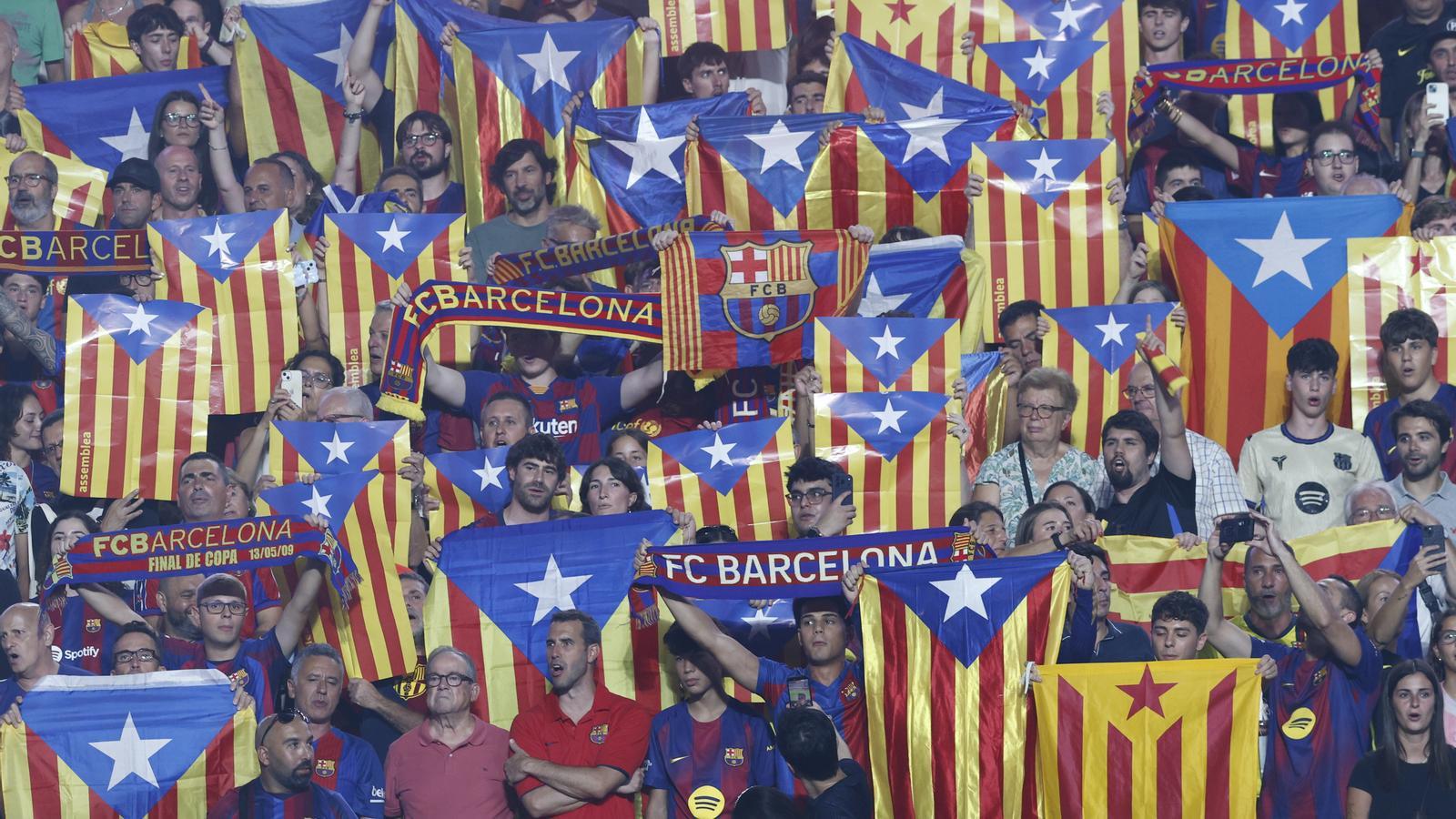
BarcelonaAlthough it was not seen on television, the estelades filled the stands of the Camp Nou in the match two weeks ago against Athletic Club. An image that had not been seen in the blue and garnet stadium for some time and that the independence movement has claimed as one of the green shoots of a new beginning that some of its ideologues are beginning to glimpse in the short term. The latest barometer from the Center for Opinion Studies (CEO), published in June, broke a worrying dynamic for the yes vote: it marked the best percentage (45%) since March 2019, six points more than a few months ago. And this same week, all the presidents of the ANC have put aside their disagreements to be photographed together, claiming a Diada of unity.
The fact is that all of this arrives without the movement having undergone a collective catharsis. Political parties remain divided and confrontational, the capacity for mobilization has drastically reduced since the peak years of the 'Procés', and there is no common project that inspires confidence. In fact, the protest vote towards Aliança Catalana –with whom neither Junts nor ERC nor the CUP are willing to make a pact– does not stop growing and polls already place it with options to be second in the next Catalan elections. And how is it that this optimistic wave is arriving? Carme Forcadell summarized it this week by saying that the independence movement is starting to emerge from a long period of mourning.
The tectonic plates of politics are moving and nobody knows exactly what the landscape will be like in a few months. The key will be the next Spanish elections. The left and also the independence movement are preparing to resist the likely arrival of the PP and Vox at the Moncloa. And Catalans, whether pro-independence or not, are specialists in resisting, as is claimed precisely for the Diada. In a way, they have already started to do so, without having anything much prepared, reacting to small injustices that, being so evident, quickly unite the citizens.
And it is here that the action of a couple or three national police officers, assaulting a young Barça member in Elche who was carrying an 'estelada' flag, has started a chain reaction that could lead the independence movement to save face this September 11th. That aggression was understood to be directed against an entire movement. Even the young man's attempt to revolt against those police officers has been interpreted in some forums as the capacity of Catalans to stand up against abuses of power (they have even gone so far as to make t-shirts about it).
What were the most relevant images of the October 1st referendum? There will be those who say it was the ballot boxes or the polling stations full of voters and they will have reasons to defend it. But surely the most repeated and shared ones are those of the violent police charges against people who simply wanted to vote. An injustice capable of uniting the country beyond political colors.
Resistance
Anti-Catalanism continues to be a powerful electoral weapon in Spain. The PP and Vox, but also part of the PSOE and even Podemos, lash out against the "privileges" of a Catalonia where trains do not work and where healthcare and education are strained. An "unsympathetic" Catalonia that has no right to manage its own taxes, despite living with large pockets of poverty. Salvador Illa could soon become the only socialist president in a State that has been shifting to the right for some time. And his ability to recover the unity of Catalanism—as this Diada demands—will also determine the options for the independence movement to articulate a response.
For the moment, the 'estelades' (pro-independence flags) were already anecdotal again at the next Barça match at the Camp Nou, against Rayo Vallecano.
