Abascal's dilemma: to be or not to be Feijóo's vice-president
Vox reject to anticipate the decision and demand from the PP not to be confident assuming they would add up to oust Sánchez
-
CAT -
CAST
MadridThat Vox returns to govern in four autonomous communities, in coalition with the PP, is one of the novelties of this political year. After the elections in Extremadura, Aragon, Castilla y León, and Andalusia, the balance for the far-right is that it has obtained four vice-presidencies of autonomous executives, to which five more ministries must be added. This has meant a new strategic turn for Santiago Abascal's party after the decision to abandon governmental responsibilities two years ago. The opposition stage to the Popular Party, which has seen Vox's electoral growth, has given way to a new phase in which the party is committed to governing. The possibility now opens up for them to apply their policies in the areas they have secured from negotiations with the PP, such as agriculture, livestock, forest management, social services, family, tourism, culture, and, newly created applying their own framework, deregulation.
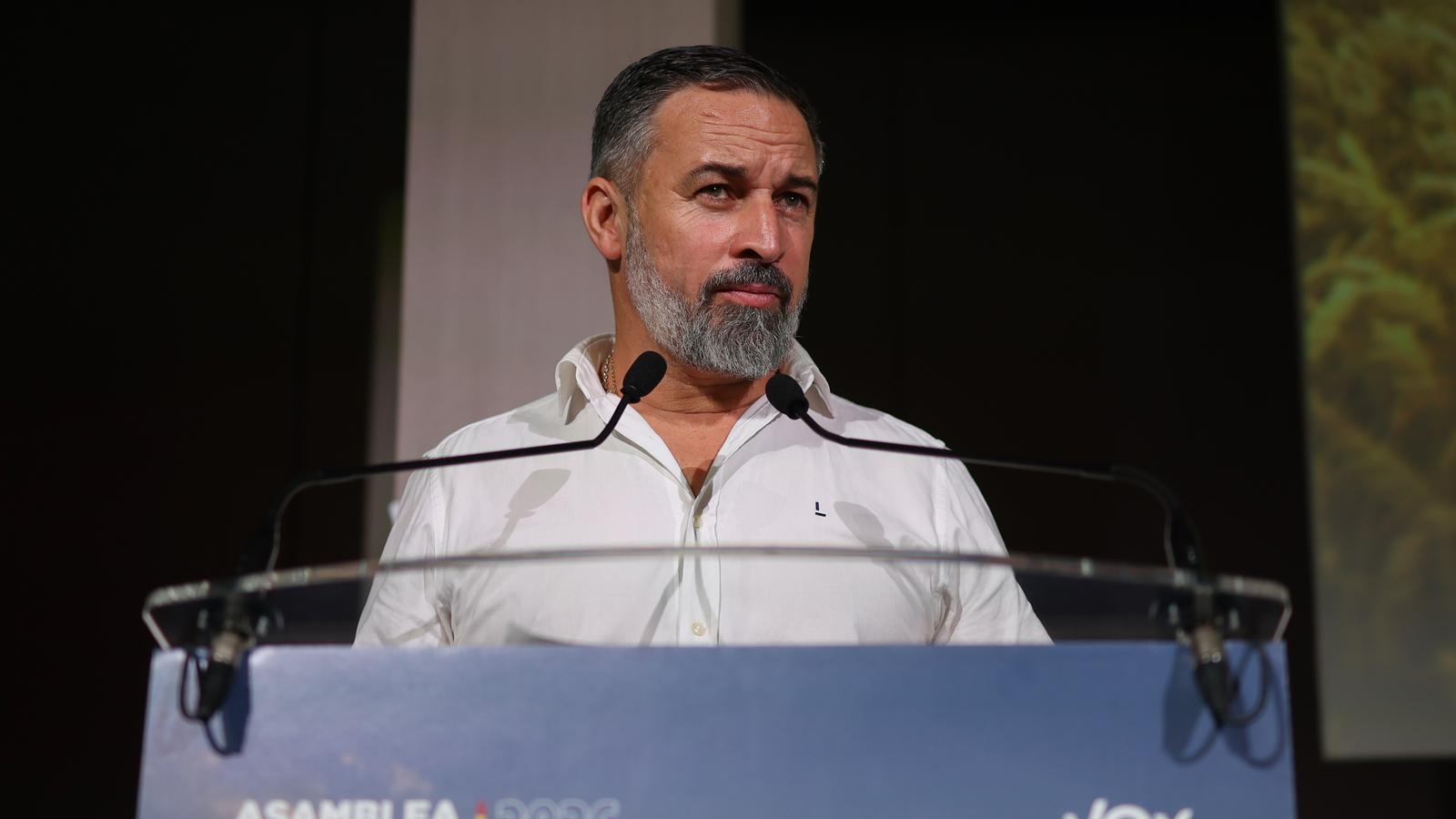
However, this also implies the challenge of making the positions profitable, which carry the risk of generating frustration depending on the results of the management and of being relegated to a secondary role, as minority partners, in relation to the Popular Party. In the party's general assembly, held a month ago, Abascal proclaimed this change of cycle for the party. "The hour of truth has arrived, to govern, to put into practice," said the leader of Vox, who stated that it is an "important and decisive" stage. In this context, everything suggests that, in the hypothetical case that the PP wins the next Spanish elections and achieves an absolute majority with Vox, one of the conditions for making Feijóo president would be for Vox to enter Moncloa with Abascal as vice-president. Is this the desirable scenario for Vox?
Both the PP and the far-right party have assumed that, for now, they are condemned to understand each other. In the review of the political year that Feijóo gave this Wednesday, the popular leader justified the alliances with the far-right and left the door open to governing with Abascal if "the polls so wish". Vox sources consulted by ARA refuse to get ahead of themselves about the possible entry into a state government led by the PP, appealing to prudence: "We'll see when we open the ballot boxes in the general elections". The far-right party maintains that there is a real danger that Sánchez will resist, even using surreptitious means such as the "ley de nets" (clean law), and they focus their message on demanding that the PP not get distracted by talking about positions. "Anything can happen," they say, calling to "not repeat the mistakes of 2023".
In this regard, Vox claims that they are doing the work, with a perspective of growth in the polls, and criticize that the PP is stagnant and is not providing enough opposition to Sánchez – in Génova, on the other hand, they reply that the rise of the far-right is not making them shrink–. The one who has no doubt that Vox will want to enter a Feijóo government, should that be the case, is the doctor in political science and professor at the Universidad Carlos III of Madrid, a specialist in European radical right-wing parties, Guillermo Fernández Vázquez. "When there are plausible options to enter a council of ministers, it is a usual pattern to sweeten the image with the aim of mitigating fear," he reflects in a conversation with ARA about Vox's current situation.
Fernández Vázquez gives as an example the evolution of the Italian president, Giorgia Meloni, or what Marine Le Pen's National Rally is currently doing for the upcoming French presidential elections. "We can expect that, in the coming months, Vox will try to accentuate its image of management and credibility," points out the political scientist, who frames Abascal's gamble as a race to follow the European trail which, in the next decade, implies "eating the conservatives' lunch" through cultural battle, as has already happened in Italy and France, where the far-right is already the leading force at the expense of the conservatives. "I don't see myself as vice-president, I'm running for president," Abascal proclaimed a couple of weeks ago on Telecinco.
The constant threat
"I can much more imagine Vox entering the government, generating noise and then leaving, as it has already done, than saying it will let the PP govern alone with external parliamentary support," points out the professor from Carlos III. Abascal, in fact, warned that the roadmap of governing is not exempt from this constant threat of repeating the move of breaking up coalition executives. In the same speech before his own, the leader of Vox warned that he would have the "courage" to do so in case the PP plays "tricks." The priority is to have "firmness and forcefulness" so that the principles of the far-right are "applied with forcefulness." "We are not here for four friends to sit in seats," assured Abascal, who leaves the door open to reconsider the decision he makes in the face of this dilemma.
