Why Catalan prisons concern me

-
CAT -
CAST
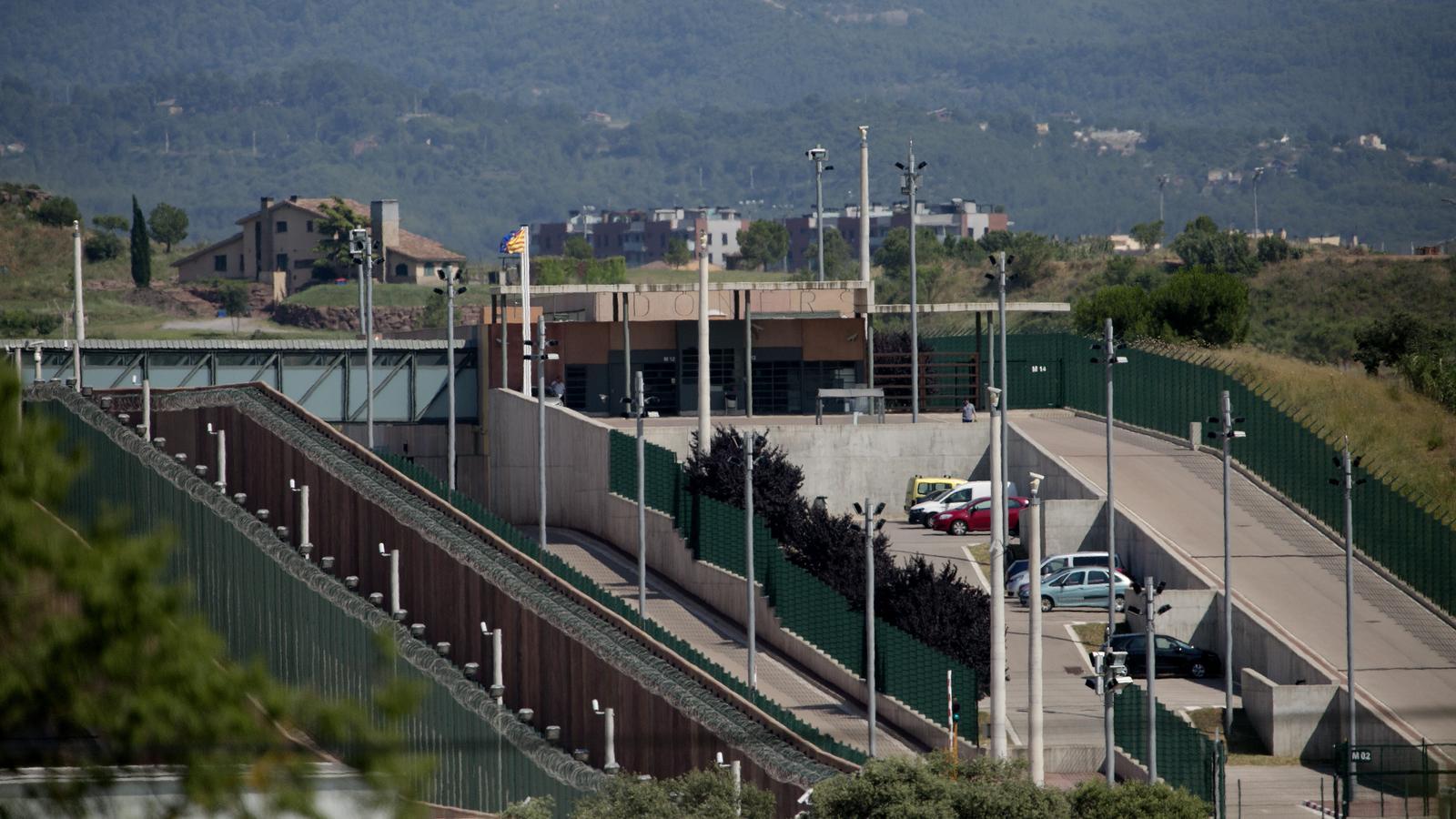
The Parliament of Catalonia has just decided to create a working group on the Catalan prison system that will have a human rights perspective. This is a very necessary and timely initiative. Catalonia has prisons and has prisoners, and the government of the Generalitat configures the public services system that this requires every day. It is already known: the health of a democracy can be measured by the level of respect it has for the rights of its prisoners. Nelson Mandela said a similar phrase.The panorama we face corresponds to a situation of complexity often ignored socially. We continue to have a rate of more than one hundred prisoners per hundred thousand inhabitants (more than 9,000 people); we have a very high length of stay in prison, of 19.3 months (at the forefront of Europe); we have a prison population with an alarming prevalence of mental health issues (close to 5% with serious mental disorders; more than 60% with personality disorders), and data on inmate suicides in constant increase for years.Taking this reality into account, we must look at prisons and ask ourselves if we are doing it right.Ten years ago, Parliament already created a study commission on the initiative of the Committee for the Prevention of Torture of the Council of Europe. According to an agreement of this committee, signed by Spain, the State is obliged to train prison staff in human rights matters, among many other actions. At that time, the initiative was understood in the face of a figure: in 2016, isolation measures were applied on more than two thousand occasions in Catalan prisons. It was necessary to know the causes of such a high use of a measure that, according to international standards, must be used restrictively.I then participated in a training activity for all prison staff. International regulations on human rights in prisons were explained, from the UN and the Council of Europe to the European Union. We have a good handful of norms and duties regarding necessary public actions. When I finished my session, I had to listen to a public employee – what’s more, head of services – who said that the training was a waste of time and a way to squander public money. A public employee belittling basic knowledge, knowledge without which it is not possible to do their job well. I became worried. Perhaps it was an attitude that allowed us to understand the abusive use of such a serious disciplinary measure.Years later, in the terrible spring of 2024, the trade union movement of prison public employees caused a situation of extreme gravity that put very basic public services of the prison system at risk. I still wonder (many of us wonder) how it is possible that the Public Prosecutor's Office did not act to investigate facts that could be constitutive of crimes against public order, by causing, for example, suspensions of trials. It was a shameful and unacceptable episode in the history of the Generalitat administration.
Beyond the procedures and legitimate union demands, the most worrying aspect of that entire situation is, without a doubt, that the collective of public prison employees granted itself the determination of prison policy in Catalonia, of the contents of our model. And this is inadmissible.Firstly, because it is a function and a duty that exclusively corresponds to the government of the Generalitat, which has the democratic legitimacy to do so. Secondly, because the personnel working in the system does not have, nor can it have, the necessary perspective to set the contents of penitentiary policy, a perspective that includes much more than issues of custody of people and security within prisons. Important decisions undoubtedly derive from these concerns. However, it is more important to address the aims of avoiding recidivism, of directing public action towards social reintegration (avoiding marginalization, promoting reincorporation into the social body) and, of course, of guaranteeing respect for the human rights of persons deprived of liberty. It is a minimum.I read in a report that between the year 2000 and the first half of 2025, the number of isolation sanctions increased in Catalan prisons by 61%. This amounts to more than four thousand isolation sanctions in the first half of 2025, more than seven times more than in prisons under state administration, despite the large difference in the number of inmates. We do not seem to be improving, despite the recommendations of international organizations and Parliament itself, or the warnings from experts who link isolation with serious psychological pathologies and suicide.I sincerely believe that, beyond demographic or criminal policy considerations, there is a great tension occurring in Catalan prisons between the Department of Justice and the trade union movement of prison staff. It is not new: for many years, unions have wanted to condition prison policy, imposing the prioritization of disciplinary solutions and blurring the limits of the use of provisional isolation or mechanical restraint, among others. The difference is that the current situation of the system is more serious.The Parliament working group is an opportunity, or the perfect excuse, for the minister Espadaler to demonstrate that he wants to truly assume penitentiary policy, without admitting any conditions or blackmail whatsoever. Real politics must be done. The consequences of not doing so could be very serious.
