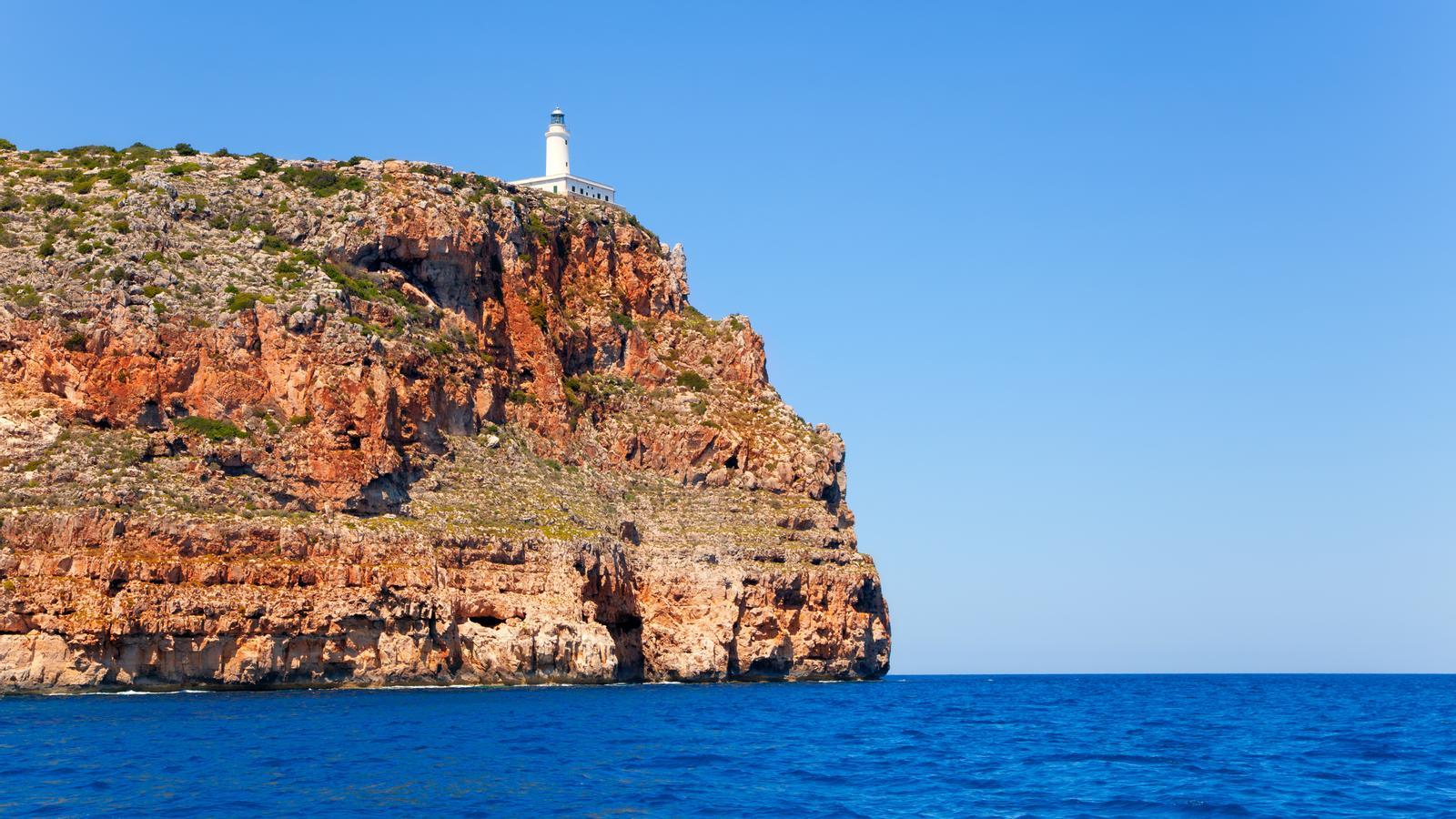

Saint George is also the festival of diversity (and that is why it is called Saint George, and not Book Day or anything else). This means that it is also a festival for books that perhaps are not seen everywhere during the –fierce, let’s not fool ourselves– promotional campaign prior to the Big Day. That they are seen less does not mean they are less good: on the contrary, there are more excellent books that do not become known to what we call the general public, than those that do succeed. Diversity, precisely, occurs within the part of the forest that we do not perceive at first glance. “Oh, if only I had married the lighthouse keeper!” is a phrase that Joan Pons Bover, author of the novel Com voleu, germans, que canti (which takes its title from a verse of a traditional Ibizan song, popularized by the great Uc) heard his mother say on many occasions. The woman was referring to a lover she had, with a profession as literary from the outset as that of a lighthouse keeper in the lighthouse of La Mola in Formentera. Based on this true family anecdote, Joan Pons Bover creates a double narrative in the present, with a brother and sister sharing their old age in a nursing home, and in the past, when he focuses on the youth of these two characters. Published by the Illa Edicions label, Com voleu, germans, que canti is a defense of the value of memory and an exploration of affections as the foundations of people’s identity, as well as an immersion into the recent history, from the War to the present day, of the Balearic and Pityusic Islands, islands that have never been calm and have instead been quite brutal. Pons Bover had already published two very good novels (Un incendi al paradís, in 2016, and Tàni i els vius, in 2019). Crafted with the consciousness and demand of the best craftsmanship, Com voleu, germans, que canti is the best of the three and incorporates well-learned lessons from Antoni Vidal Ferrando (teacher, friend, and neighbor of the literarily prodigious town of Santanyí, where Blai Bonet, Bernat Vidal i Tomàs, and Antònia Vicens also hail from).Primero fueron las estrellas is the first novel by the young Joan Moragues Roca, and it functions as a backbone that links the sleepless story (of love?) between a nurse and a terminally ill patient with the case of the scientist who discovered the applications of mustard gas without being fully aware of its war potential. These main stories accommodate other small and large stories, loose ends or plot points, ideas, and flashes of brilliance, which could have risked dispersion but which take shape and meaning in the reader’s eyes, who is happy to finally read something truly different, thanks, among other things, to a lyrical style that fully embraces confidence in the Catalan language. Published by Angle and winner of the Premi Ciutat de Palma Llorenç Villalonga (an award that Joan Pons Bover also won with Tània i els vius), Primero fueron las estrellas is the debut of an author who can literally do whatever he wants in the future, and then we will be proud to have followed him from the first book.
