To say that you are winning the Iran war when you are losing it
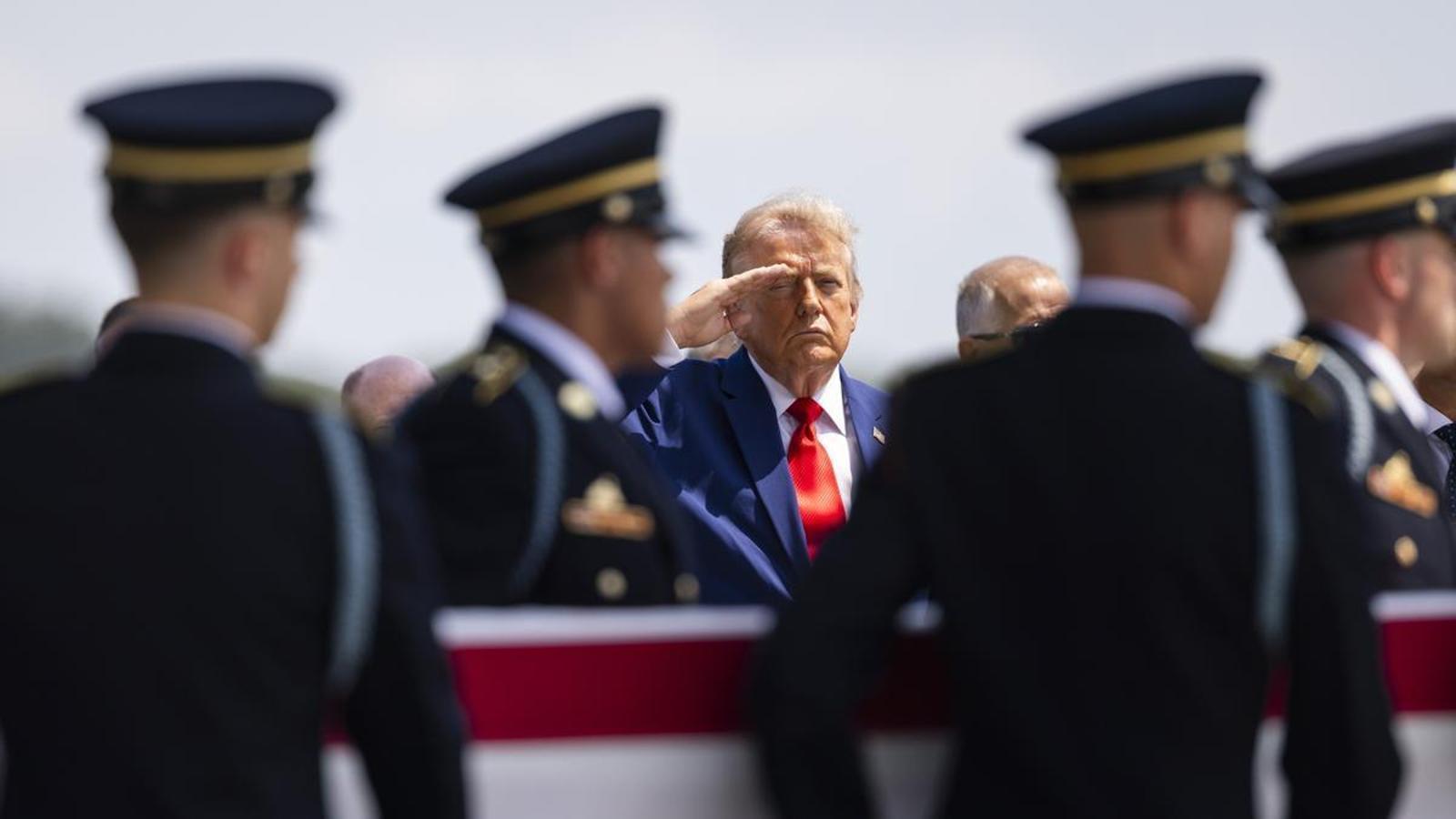

The North American president, Donald Trump, has been weighing the possibility of declaring victory against Iran without achieving a nuclear deal, the "Wall Street Journal" reported Sunday, citing U.S. officials. In reality, he has lost the war and gained nothing, but he must build a different narrative in his favor. It's an old trick we know well.
From the negotiation, this phenomenon is explained by combining several classic concepts: the substantive outcome (what was actually obtained in concrete terms: resources, concessions from the opponent) and the relational or symbolic outcome (how the image and legitimacy of each party is perceived by their audience). When the substantive outcome is nil, the narrative strategy is to artificially inflate the latter to compensate for the absence of the former. To this is added "the commitment effect." Because resources, lives, or political legitimacy were invested in the conflict, admitting that nothing was gained would generate unbearable dissonance, both for the leaders who led it and for the population that sustained it with sacrifice. This is why the outcome is reconstructed to be coherent with the effort made, not with the objective facts. Another key mechanism is the manipulation of the comparison point, so that instead of contrasting the outcome with the initial objective – where the failure would be evident – it is compared with a worse hypothetical scenario ("we could have lost more" or "we avoided something catastrophic"). This comparison is logically irrefutable, because this alternative scenario never existed and no one can prove what would have actually happened.
From communication theory, the central mechanism is framing. Every media narrative involves selecting which aspects of an event become prominent (problem definition, cause attribution, moral judgment, proposed solution). The same material outcome – obtaining none of what was sought – can be framed by highlighting attributes such as "heroic resistance" or "survival against a powerful enemy," instead of attributes like "failure," "human cost," or "unmet objectives." This is reinforced by the concept of second-level agenda setting, which shows how not only is it decided what is talked about, but also what qualities are attributed to that event. Added to this is the deliberate use of symbolic and ambiguous terms –"victory," "triumph," "the enemy did not achieve its objectives"– which lack a single verification criterion, unlike concrete and measurable indicators. This ambiguity allows the discourse to "win" on the symbolic level while losing on the material level, precisely because the public lacks a shared metric to contrast the claim. The systematic repetition of the message (mere-exposure effect) and control of information channels further reduce the audience's critical capacity, which tends to adopt the official narrative when it has no alternative sources or when the cognitive cost of questioning it is too high.
However, this strategy has an important structural limit, as it only works as long as the narrative and material reality do not come into direct and visible contact with the audience. When tangible indicators of failure appear – sustained economic losses, absence of verifiable concessions from the opponent, or simply access to external sources of information that contradict the official narrative – what persuasion theory calls the boomerang effect occurs. At this point, the audience not only rejects the message but also penalizes the sender more severely for the discrepancy between what was promised and what was actually delivered, which erodes their future credibility more deeply than if they had admitted failure from the outset. This is the risk Trump runs with his constant comings and goings and changes of opinion, which reflect nothing more than his profound ignorance of foreign policy.
