
Continuing with my last article, where I argued that Francoism had dire consequences for our cities, I would like to address the poisoned legacy of the mismanagement of power structures, which reacted late and poorly to the miseries of the post-war period, to the drought in the fields, and to the exodus of thousands of people from the countryside to the cities. It is often argued that Franco built many infrastructures (dams, highways, housing). He was also the driving force behind desarrollismo, with serious setbacks in urban planning. What we do not know is what kind of city we would have if the Republic had won. Surely we would now have decent public housing and neighborhoods with a better balance between housing and services, with schools, health centers, and more generous cultural spaces. But since we cannot invent history, I can only imagine. What we do know is that beyond the large estates driven by public bodies such as the Obra Sindical del Hogar or the Municipal Housing Trust, there are only four large private development estates, such as Bellvitge, Ciutat Meridiana, the Ciutat Cooperativa of Sant Boi, and the Santa Elvira neighborhood in Montcada, which have serious deficiencies in services and facilities. In the sixties and seventies, growth was poorly managed, without thought. Where there were garden cities, suburban areas were allowed to grow, as in the case of Calafell, Platja d’Aro, Roses, and Maresme. On the coast, genuine atrocities were permitted due to tourist pressure, such as in Lloret and Riells. And on old rows of houses, blocks were allowed to grow without any integration into the environment. The public sector forgot the constitutional mandate to redistribute part of the increase in value generated by urban transformation so that it would benefit the community, and often promoters were allowed to cede margins or edges of the land as impossible green areas, while the obligation to urbanize streets was ignored.
This is unforgivable, considering that one hundred years earlier Ildefons Cerdà had laid the groundwork for the commercial companies that built the Eixample to freely cede land for streets or facilities and to adhere to simple but equal regulations for everyone. It turns out that a good part of the buildings from the 1970s now appear aged, segregated, and degraded; while the buildings from the 1890s to 1930s in the Eixample withstand the passage of time well with constant small renovations.
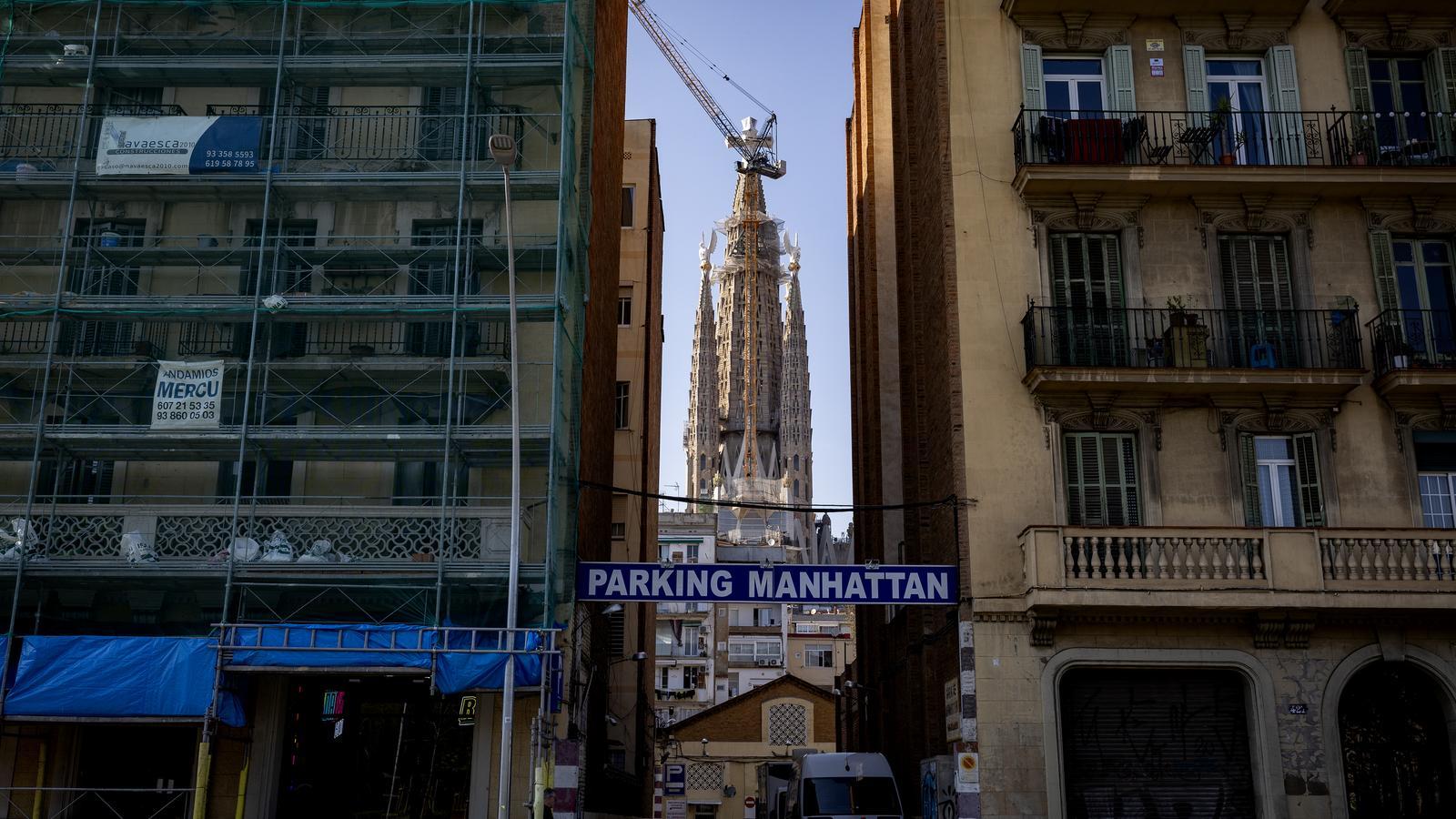
With these two big topics finished, other melons can be opened. The renewal of the legacy of For people to trust institutions again, it is important that cities transform for the better, that it is perceived that when there is a big problem, the mediation of the city councils provides reasonable solutions for all parties, however difficult they may be. The completion of the Sagrada Família is a milestone in this regard, as has been the Parc de les Glòries, which has gone from being a road junction to a green square widely used by residents.With these two major topics finished, other issues can be addressed. The renovation of the legacy of desarrollismo is a big one, and cities are innovating as best they can, but there is no shared instrument. Given the magnitude of the challenge, and seeing that even the Sagrada Família could be finished within the deadline and in the appropriate manner, now it is time to renovate hundreds of blocks, which, with clear rules and a flow of public money with long-term returns, allows for the expansion of public housing and provides guarantees that no one will have to leave after the reforms. The first question to be resolved is complex and must be debated in Parliament: how can hundreds of millions of euros be invested in the rehabilitation of the legacy of Francoism, with aid to individual owners, which must be prevented from being privatized as in the past. In France, it has been successfully done in blocks of vertical ownership by non-profit entities, without increasing residents' rents but with guarantees that they will not profit either; their homes are simply improved so that they can continue to live there for as many years as they wish. Here, if the mechanism is legally protected, it could be done massively in all neighborhoods.
