The fires and the clever
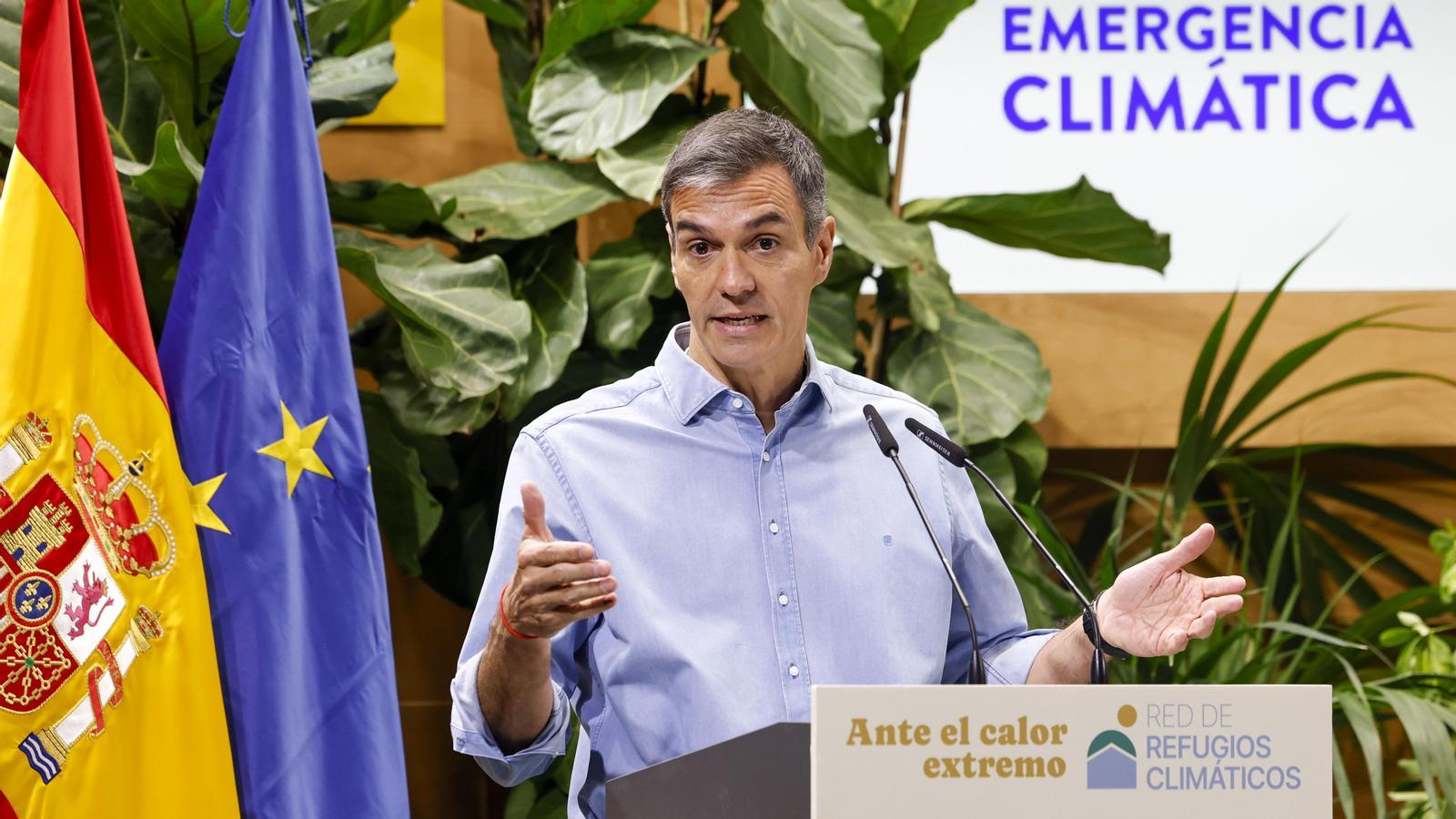

After a minimal truce (we won't call it "courtesy", because that has disappeared), and as expected, the Spanish ultra-nationalist right and Spanish woman has burst out to take advantage of the disaster of the great fires (those everywhere, but especially, as expected, those besieging Madrid) to engage in demagoguery and politicking. You can read the chronicle of Roger Hernàndez Pujol in this diary.More astute and agile, Pedro Sánchez got ahead of them with a proposal: a state pact for the climate emergency, which he had shelved last year. It is true that, to counteract his perennial parliamentary weakness and face the last year of this bruised and fierce legislature, it would be very beneficial for Sánchez to lead a state pact of whatever. But it is equally true that, beyond Sánchez's political conveniences, there is no shortage of areas in great need of major agreements and long-term improvement projects: education – as we are seeing particularly starkly these days in Catalonia –, femicide, alternatives to real estate speculation and mass tourism, boosting research and development, etc. If politics had not turned into a grotesque spectacle similar to Ibai Llanos's that Mònica Planas criticizes in her article, the parties would know how to make these major pacts and, at the same time, maintain the tone and task of the opposition. But this is not the case: it is easier to follow the inertia of systematic polarization and tension, even at the cost of crashing directly into reality: it is what we know as negationism. When Sánchez brings up his proposal for a state pact for the climate emergency, he does so knowing that PP and Vox will not only not sign it, but will reject it with the usual negationist outcry. He also does it to expose them.It is not, however, a minor issue. Global warming reached 1.37 degrees above the pre-industrial era in 2025, and by 2030 it could reach the 1.5-degree increase that the 2015 Paris Agreement set as a limit. We are already suffering the consequences now, in the form of fires and extreme weather phenomena. We do not need to give in to apocalyptic imagination to understand that the lifestyle developed by the West in the last hundred years is not sustainable in the next hundred: not, at least, in the way we know it. Resources, both human and economic, will have to be dedicated to finding alternatives that are, at the same time, environmentally acceptable and do not represent a setback in people's way of life. Some, however, are clear about it: in the Balearic Islands (currently in the news), a denialist government of PP and Vox has legislated to deregulate rustic land and protected natural areas, in order to build and speculate there. The threat of the far-right is against democracy, certainly. But also against nature and people's health, in exchange for the economic benefit not of an elite (a word too prestigious), but of the usual smart alecks.
