The ECtHR and language
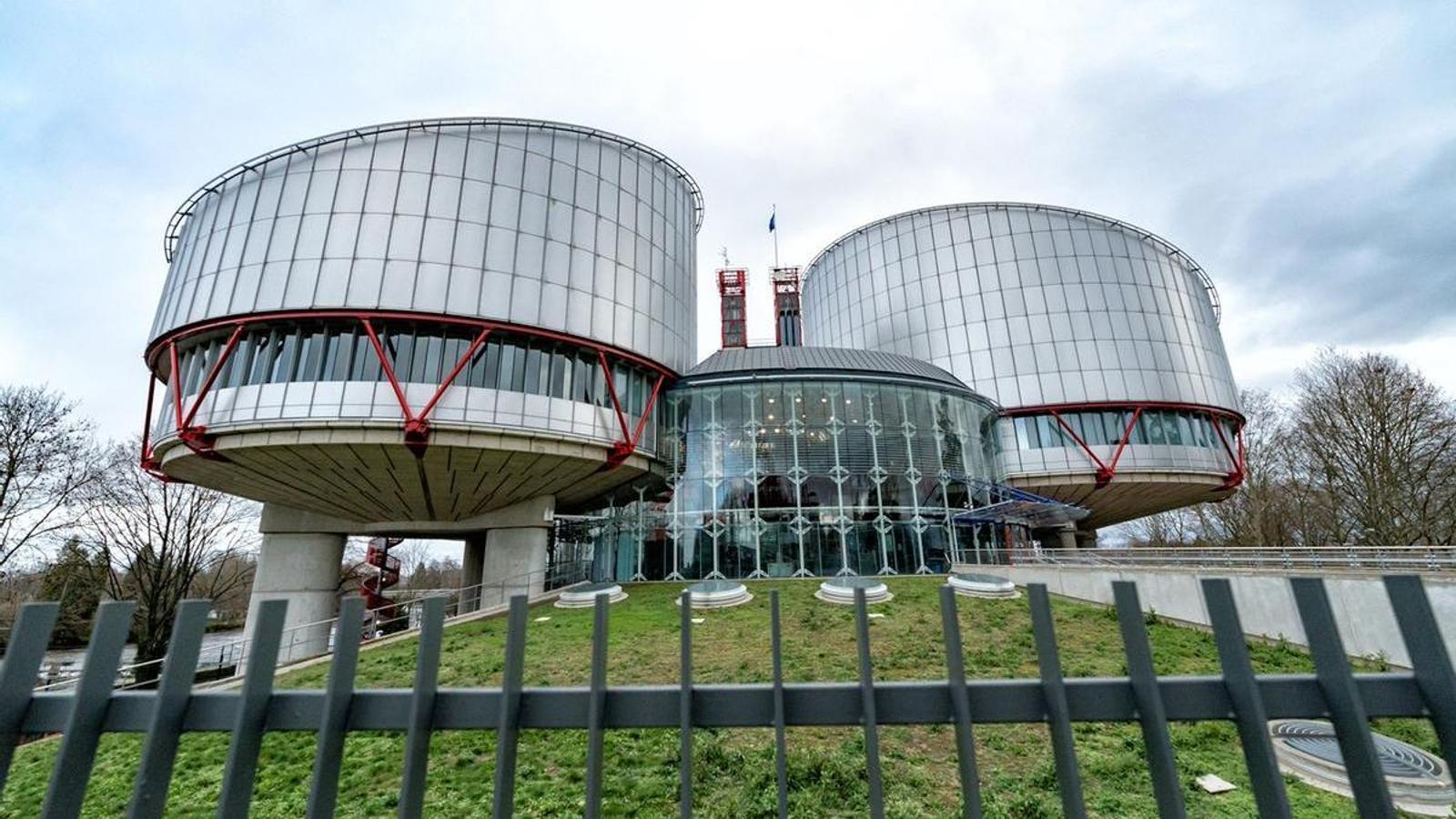

1. The ECHR's decision regarding the presence of the Catalan language in the education system has probably been the hardest blow this issue has received since the TC's ruling against the 2006 Statute.
2. It has not only been a slap in the face, but it also highlights several issues that must be taken very seriously. The first is a decision contrary to what the parties who filed the appeal intended (the parents of the Canet de Mar school, Òmnium). The blow is very significant. Secondly, it allows us to guess the next step: 25% will not be enough. Spanish nationalist entities, political and parapolitical, will continue to push until they achieve 50%. And they will achieve it, protected by the TSJC, the TC, and the ECHR. This path, for the defenders of immersion, of the 25%, of the official institutional line, is completely lost.
3. The ECHR document must be read very carefully, especially its theoretical content. Òmnium and the other parties who appealed will have to openly acknowledge that Europe does not look at us or listen to us. The ECHR's arguments are classic from a manual of the history of nations and nationalisms in contemporary Europe. The ECHR does not defend national minorities; it defends individual human rights, which, as sharp lawyers know, are very different things. National minorities in Europe have no legal-political instance to defend them against nation-states. And the ECHR emanates from these nation-states, not from any confederation of national minorities. Writing about the "national language" (or state language, depending on how you want to understand it: national language) and the "regional language" in a text of this kind is a definitive sentence for the immersion language policy. In other words, in Europe (European nation-states, the European Union, NATO, or Eurovision), Catalonia, as a national political entity, does not interest, does not matter, and is not expected. A definitive lesson from the ECHR and this official Europe.
3. The conduct of the Catalan government is, simply, lamentable. Declaring that the ECHR's decision does not affect the foundations of the system and nothing is exactly the same thing. We all know, and have known for years (with governments of Junts, ERC, or socialist), that every wash loses a sheet. The ECHR document only highlights the institutional anemia of the Government and the most directly affected departments (Linguistic Policy, Culture, Education). Anemia, weakness, impotence. And ostrich policy.
4. Why doesn't the Department of Education make public the map of institutes and schools where it would be necessary to demand that 25% of teaching, courtyard conversations, and office discussions be in Catalan? How many centers would be affected if a 25% Catalan requirement were imposed?
5. Naturally, we can exclaim about the imminent and immediate disappearance-extinction-liquidation of the Catalan language, attacked, assaulted, and, finally, defeated by national-linguistic Spanish nationalism. We have been crying and tearing our clothes for years. We will continue to do so. But it is very stressful, and not just linguistically.
6. 1939, year zero for the language and the country: the lowest point in its history, with real options of disappearing from public life (19th-century French model, with the fascist ingredients of the time). At that moment, everything was indeed playing against it. How do we explain that, from this 1939 until the end of the dictatorship and beyond, the Catalan language survived, resisted, and ended up being, again, the reference language in social, cultural, civil, religious, political prestige (in the anti-Franco camp and grey areas), with a dictatorial regime (Spanish Catholic fascism) that always, always went against it? Who and how made it possible? The answer is as valid for the Francoist conjuncture as it is for now: the most dynamic, intelligent, and willing social sectors of the country. Working against the State, expecting nothing in return other than the satisfaction of seeing the survival and quality gains of a language first persecuted and then despised confirmed. Even our Francoists had to use and claim it (in their own way), because they knew it was the winning card.

7. In 2026 the response should be very similar and, even, more expansive. Offer quality and performance, public success, social and cultural prestige, linked to the Catalan language. However, to achieve this, a radical change in institutional and civil strategies is needed: stop considering the arts, humanities, written and painted culture, humanistic research in general, which have their engine of expression and expansion in language, as something residual (this is the policy of our government and its ministry of Universities) and almost dispensable. If the most active and committed civil society (there is no need to trust our government, as there was no need to do so in previous ones), that which neutralized the threat of 1939, were to commit to the line of what Òmnium has historically done, we would have gained a lot. Perhaps it is worth thinking about it a little.
