The American betrayal

BarcelonaThe war in Ukraine has entered a new stage. Trump is not only distancing himself from Kyiv but is also altering the European strategic balance and recovering a privileged relationship with Putin. His policy responds to a worldview that disdains traditional alliances, but it also responds to the historical fatigue of a society that has paid with lives and money for its status as a superpower.
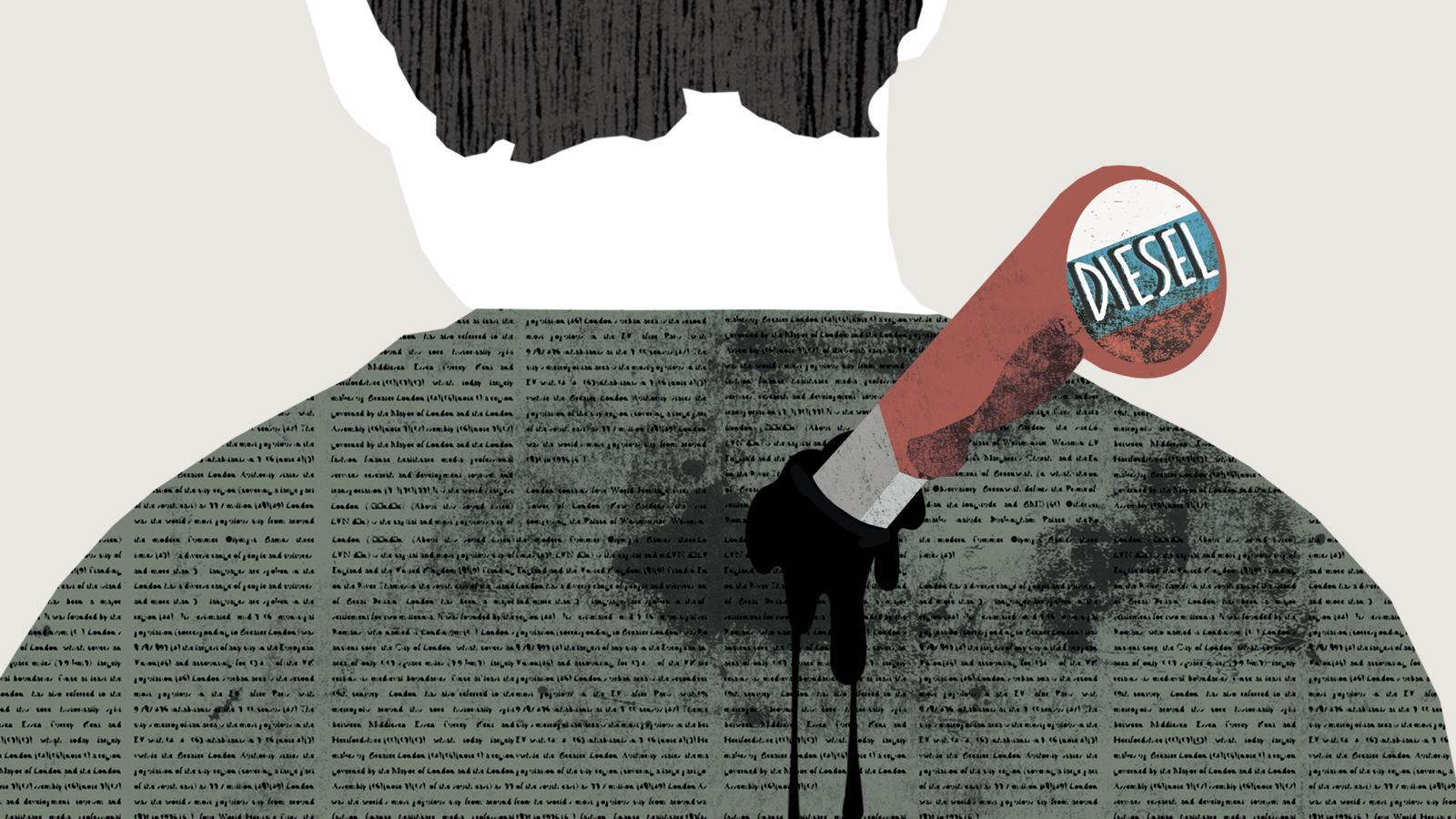
For eight decades, Europe's security has rested on a conviction: the United States could disagree with its allies, demand more responsibilities from them, and impose its own interests, but it would not favor the adversary that threatened their survival. Donald Trump has broken this premise. His agreement with Vladimir Putin to allow the commercialization of Russian diesel, while pressuring Ukraine to stop attacking the refineries that fund the Kremlin's war machine, is a turning point. The question now is how long it will be able to continue resisting if the one who was supposed to sustain its defense uses that dependency to force it to yield.
On October 9th, Trump announced the temporary lifting of restrictions on Russian fuel and the entry into the market of some 300,000 tons of diesel. The White House's explanation was economic: to lower fuel prices in the United States, where prices have soared due to the war with Iran, just weeks before the legislative elections on November 3rd.
What is truly serious is not only that Washington provides additional revenue to Putin and that sanctions are weakened, but that it intends to prevent Ukrainians from destroying the facilities that economically sustain the invasion. Trump has called the attacks against Russian refineries shameful while Moscow continues to bomb Ukraine's energy infrastructure. The two actions are not politically equivalent: one power has invaded the territory of another, which is trying to defend itself. In a further step, Washington favors Moscow by threatening to restrict the supply of intelligence and weaponry to Kyiv if it maintains operations against Russian oil. Ukraine has also reported limitations in satellite communication systems essential for its drones and difficulties in receiving attack alerts. The problem is structural. Europe can provide funding, soldiers for its own defense, and an expanding military industry, but it still lacks alternatives to replace certain American intelligence, communications, and missile defense capabilities. Trump knows this dependence. And so does Putin.
The Washington-Moscow relationship
The privileged relationship between Washington and Moscow responds to an idea of power. Trump conceives the world as a chessboard of great powers capable of negotiating territories, resources, markets, and areas of influence. European democracies, with their procedures, institutions, and demands for respect for international law, are uncomfortable interlocutors for a transactional conception of international relations. Russians and Americans share a contempt for the limitations that international law seeks to impose on force.
But it would be a mistake to explain the American distancing from Europe solely by Trumpist ideology or the president's sympathy for authoritarian leaders. There is a deeper historical reason that helps explain its electoral appeal: the United States' weariness of militarily sustaining conflicts far from its borders.
In the Second World War, 405,399 American soldiers died, according to statistics from the American Congress, although not all in Europe, also in the Pacific. In Korea, there were 36,574; in Vietnam, 58,220. Then came Iraq and Afghanistan, two wars that consumed extraordinary resources without producing the promised political results. The Costs of War project, from Brown University, calculated at about eight trillion dollars the costs and budgetary commitments of the wars undertaken after the September 11 attacks, including future care for veterans.
Behind these figures are generations of families, dead soldiers, wounded, traumas, and a national debate about the meaning of the sacrifices. The United States contributed decisively to liberating Europe from Nazism and subsequently guaranteed the security of Western Europe during the Cold War. However, the wars in Vietnam, Iraq, and Afghanistan fueled a distrust of foreign interventions. It is not the same to remember the liberation of Paris as the fall of Saigon or the shameful withdrawal from Kabul, and in the memory of Americans, all three images exist.
The paradox is that Roosevelt had to take the opposite path to the one Trump proposes. In 1940, a good part of American public opinion was opposed to sending soldiers to Europe, even though it supported helping Great Britain against Hitler. Roosevelt understood that he had to explain to his citizens that the security of the United States also depended on what was happening on the other side of the Atlantic, and the attack on Pearl Harbor transformed the resistance to entering the war into a consensus in favor of fighting.
During the following decades, American leadership was based on that strategic intuition: defending Europe was not just a generous concession to Europeans, but an investment in its own security. NATO was also an instrument of power for Washington, not an act of charity.
Trump reverses the argument. He presents alliances as a bill that other countries must pay and turns war fatigue into a challenge to the international obligations of the United States. His message connects with a part of society that distrusts foreign military adventures and believes that too many resources have been dedicated to protecting other countries while internal problems were neglected.
Europe must understand that American protection can no longer be taken for granted. And that the issue is not only saving Ukraine, but deciding whether Europeans are willing to defend the political order that has made their own security possible.
