Sánchez's agony

1. The Maricarmen case has triggered the emergence of the housing issue on the scene, and has generated an impact on public opinion that has highlighted the abuses and limitations of the market. And now the paradoxical situation could arise where it is the right—an active collaborator of those who speculate with this fundamental right—that capitalizes on it. Sánchez has found himself with his back to the wall precisely when a topic breaks out to which the left should be more sensitive than the right, and the government has not been attentive enough to what should have been a priority of its mandate.
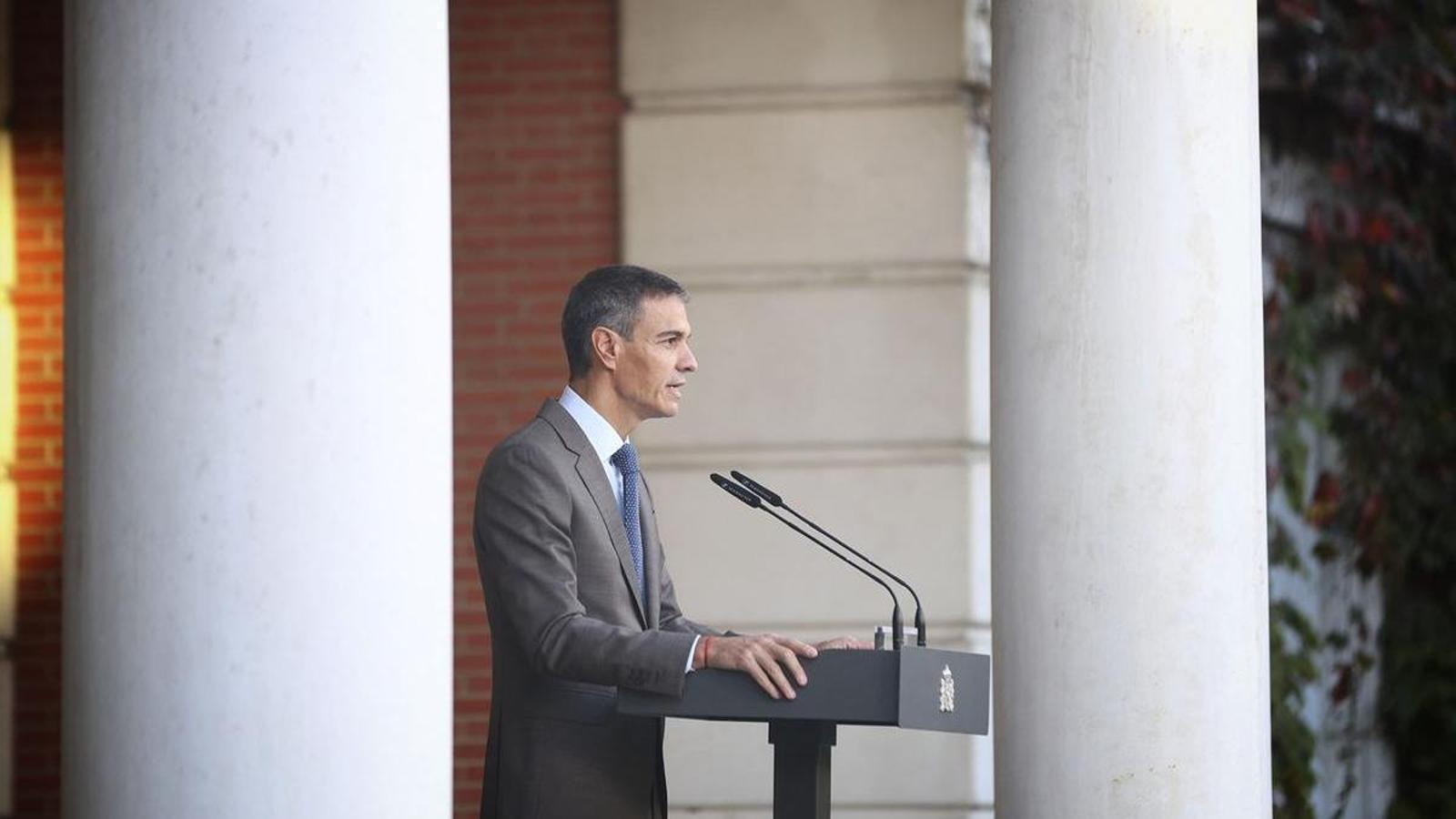
No matter how good an actor one is, or how much craft one has, it is not easy to hide. The Pedro Sánchez who announced the early elections was not the one of the great pushes. Power wears you down and there was a point of rigidity in his staging. A coup de théâtre ceases to be one when the author anticipates it by taking a few days to mature the decision. A sense of opportunity means anticipating what others do not expect. And that was not the case. Neither of the two options he could take, continuing until the end of the mandate or calling elections, had the thrill of surprise. And he has chosen to take a step that has a taste of melancholy for when he used to mark the initiative with unexpected events.
2. After the right rejected the decrees on housing –turned by everyone into the topic of the moment–, the president was left with no room and the most reasonable thing is what he has done: not to prolong the agony. The chances of success are limited, but making it last who knows if it would have led the socialists to look for an alternative candidate and turn the page. He did not want to risk having his destiny marked by others. And he has taken the step: it is better to take the gamble before they kick you out of the game.
The state of opinion conveyed by the polls makes it difficult to imagine that President Sánchez will pull through. But it is true that there are some elements that give him life. The first, obviously, is the image without precise attributes, with the usual sad expression, of the PP candidate. One of the great mysteries of Spanish politics: what godfathers does he have for his party to have lived with this burden for so long? The second factor is that there is only one option for alternation: a PP-Vox majority, with a percentage of the vote for the neo-fascists that to a certain extent is an unknown because ultra parties often obtain better results than those predicted. In any case, Spain, which until now had kept the extreme right at a certain distance, would enter directly into the path of post-democratic authoritarianism that threatens the European Union.
3. Right now we are witnessing a dramatic example of European bewilderment: the failure in France of President Macron, who arrived as the embodiment of a cultured and cosmopolitan right that was supposed to revolutionize Europe, and who ends his term with his tail between his legs, leaving as a legacy a clear path for Marine Le Pen or, in the event that justice prevents it, for Jordan Bardella to occupy the presidency of the French Republic.
Here the fact is that Sánchez has been blurring in his last term. And it seems that he has preferred to gamble with the citizens, still trusting in the capacity for popular reaction that is being expressed these days, in the face of the insensitivity of the PP and the right in general regarding issues such as housing. What is not clear is whether what this hypothesis would require will happen: a citizen mobilization, which, despite the noise in the streets, is not evident now, with the right shamelessly capitalizing on the unrest through the discourse that presents immigration as a threat.
4. In any case, in the coming weeks we will see how far the signs of indignation against social discrimination and the abuses of certain powers that are glimpsed these days will go. And we will also see if the country becomes aware that the right-wing parties are accommodating themselves without any scruples to the reactionary wave that there is no doubt will bring the neo-fascists to power.
Put another way, for Sánchez to succeed, it would be necessary for citizen mobilization to grow, for the PSOE to capitalize on it as a lesser evil, and for the left-wing groups to gain maturity instead of getting lost in the psychopathology of small differences. And at the same time, for the democratic conservative parties to find their voice again, as they seem absorbed by neo-fascism or lost in their obsessions, as is the case with Junts, hanging on to Puigdemont and melancholy.
