Overprotection and disruptive school behaviors
I am very surprised that in the great school debate we have open in the country, the main actors—with the exception of some particular voices—have ignored the decisive role that families play and that, as a consequence, they have also ignored the very serious behavioral problems in the classrooms of our schools and institutes. It seems that everything revolves around changing the Government's educational policies. But the truth is that some of the main difficulties, here and elsewhere, do not stem from the Government, but are related to parents' expectations and attitudes: their role in educational success or failure and, therefore, in students' attitudes in the classroom.
I am not saying that the recent OECD report does not point out relevant issues. In fact, what is most striking about the report is that it was all already known. I don't know if its opinion was necessary, which reveals the Government's distrust of its own experts and its interest in currying favor with the authors of PISA. Proposing more equity and inclusion—not to mention immigration, they write "operating in an increasingly diverse demographic, social, and linguistic environment"—is like discovering America. Not openly mentioning the deep demoralization—and irritation—of teachers and proposing to motivate them with "bonuses" is absurd. That it was necessary to reduce the "administrative burden" or offer "better adaptation of [teachers'] instruction to different classroom contexts"—that is, to point out the serious deficiencies in university training—had already been said. And emphasizing the role of leadership by directors or evaluation is an old—and controversial—challenge. In short, instead of speaking clearly, the OECD is joining the well-known production of harmless pedagogical language, just in case...
On the other hand, the origin of many of the most relevant current educational problems lies in the attitude of families and the school behaviors that derive from it. Obstacles that, no matter how much this may disturb some discourses, are not caused by diversity or inequality — I meant "inequity" — but are transversal to all kinds of social realities and school centers: from impoverished — I meant "vulnerable" — or affluent environments, public or subsidized. See the report Behaviour in Schools (2025) from the Commission for School Reform of the independent Scottish think tank Enlighten, which starts from the solid assertion that the right to education cannot be compromised by anyone's misbehavior. And it refers, unreservedly, to violence in classrooms against students and, above all, against the teaching staff themselves.
According to the report, teachers' unions such as NASUWT or SSTA reported that in the 2024-2025 academic year, 44 percent of teachers had suffered physical abuse or violence, and 90 percent had been verbally assaulted. In 92 percent of cases, classes were interrupted by mobile phones. They cited the study Behaviour in Scottish schools research (2023), which insisted on these disruptive behaviors in the classroom, and how this climate demoralized teachers and was the main reason for leaving the teaching profession. The recommendations of this report have nothing to do with those of the OECD or with those of local pressure groups and unions.
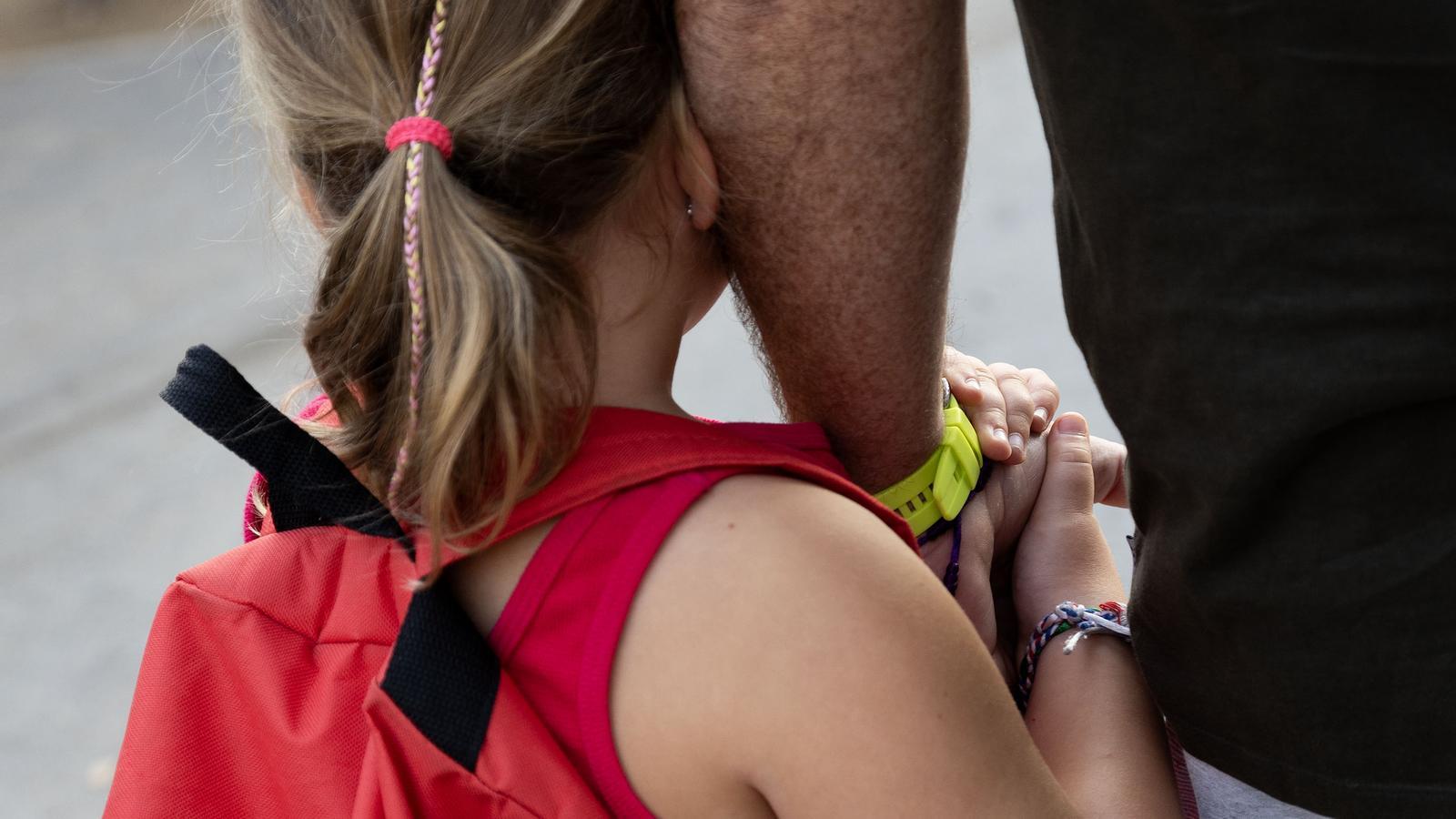
This is because I know the mental framework of our school system well enough to know the degree of resistance to this approach and why it is ignored. We are clearly facing the effects of parental overprotection of children, which conditions the teacher's role, besieged by the stupid idea —often also assumed by themselves— that school must make them "happy" above all else, tolerating their irresponsibility if necessary. A recent symptom of the disorientation regarding the importance of authority and discipline has been the reaction to the possible presence of police in particularly conflictive centers. And I am still indignant at the feigned naivety of those who, if they know what is brewing in classrooms, delegate the solution to the mediation of psychologists, social workers, and all sorts of intermediaries, regulated by the administration, as if it were impossible to imagine the results of a massive hiring of graduates without experience. If even to find new teachers they cannot be asked to know Catalan... Parents pass the educational ball to the teachers, teachers to the psychologists, psychologists to the social workers... and from them, to the pumpkin father. That is, to the Government.
Measuring disruptive behaviors, as they have done in Scotland, would show us the magnitude of the tragedy. And alongside the legitimate concerns of the OECD, equitat.org, unions, and tutti quanti, perhaps a new line of reflection and action would open up that would go to the root of the problem and be more effective.

