'Obsession', 'Backrooms': what are young people afraid of?
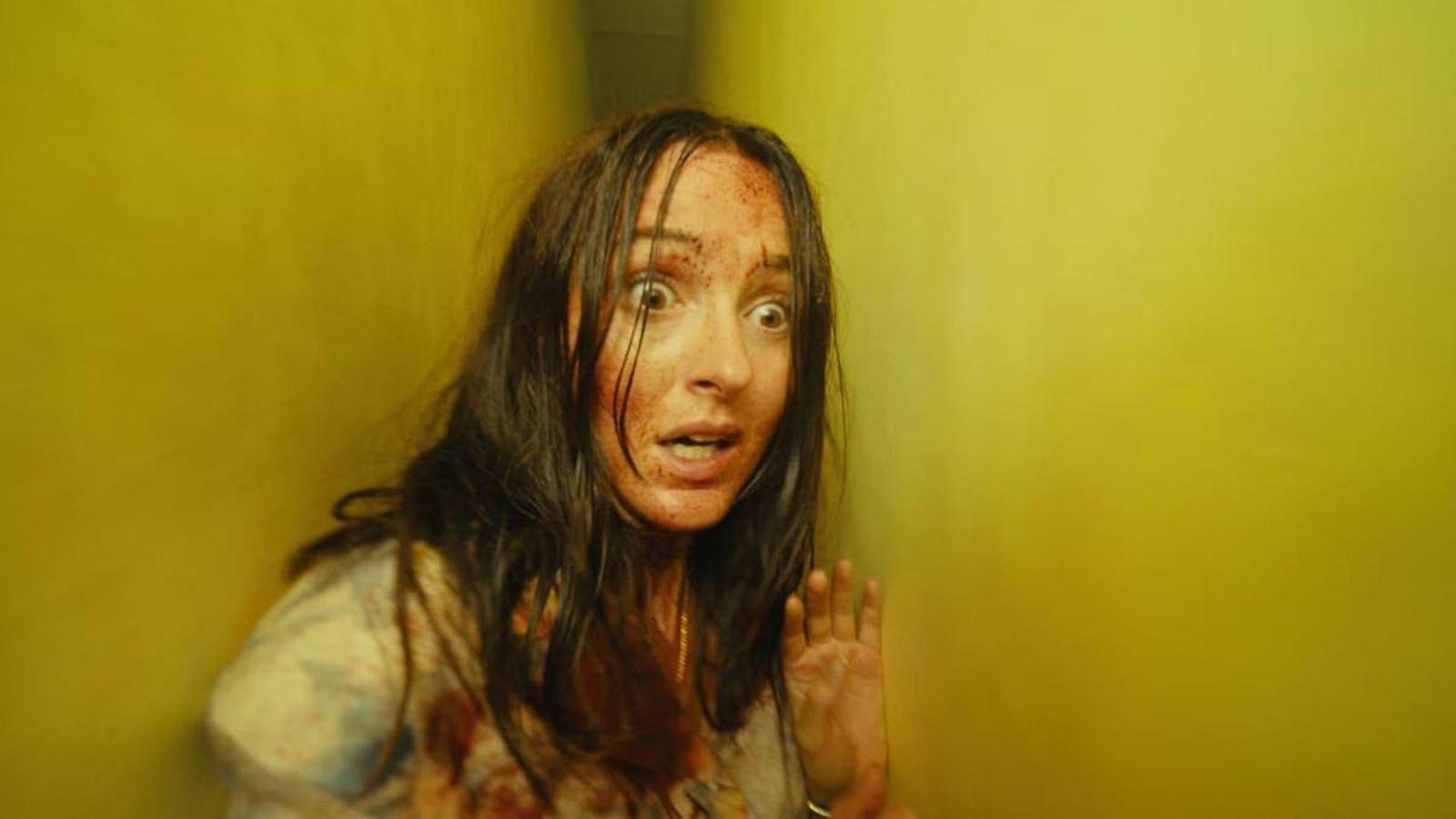

Just as it happened with the summer of Barbie and Oppenheimer, when a couple of films become a mass phenomenon, one cannot resist the temptation to interpret them as a symptom of collective unease. Even more so when we talk about horror cinema: the more it hits the nail on the head in exposing a hidden malaise, the scarier the film will be and, therefore, the more successful it will be. That's why it has always been said that every horror genre is born from social unease: vampire films represent the fear that the rich will suck our resources, zombie films confront us with the impossibility of controlling the masses, haunted house stories exploit the dark side of the nuclear family, and so on. Well, with Obsession and Backrooms, two horror films made by very young directors that in recent weeks have broken all kinds of box office records and have dragged crowds of young people, whom cinema had given up for lost, to theaters, we can say that a new generation is beginning to put a face to its monsters.Although they are very different films, I think both should be read uninhibitedly as an expression of the unease that digital natives feel when relating to the real world in screen time, and that if they have been so successful among young people it is because they have managed to incorporate the anxieties of the internet into the medium of cinema. In other words, neither of the two films explicitly deals with the theme of adolescents hooked on the algorithm with the alarmist tone of a Sense ficció, but rather incorporates the anxieties into the texture of the artistic artifact, achieving that strange privilege that allows metaphors to reach places impossible for explicit language.
Obsession explains the story of a young man in love with a coworker who resorts to a magical object so that she falls in love with him, until the desire twists and love becomes forced and unhealthy. I find it key to combat the interpretation that has circulated the most, which presents this film as a symptom of young people's fear of "toxic relationships". A careful reading reveals that, in reality, the monster is not the girl who becomes so obsessed that she loses her mind, but the boy so obsessed with the fear of rejection that he becomes incapable of acting, and that what should scare us is not ending up like her, but like him. The grace is that, even when magic has already artificially guaranteed love and everything is obviously unhealthy, he continues to speak from a wounded insecurity, as if he needed her to confess that she could have loved him without any trick. Obsession shows that what is truly terrifying is ending up so preoccupied with whether or not we are desirable that we become incapable of genuinely desiring someone else. Which is, needless to say, the kind of narcissistic void that, by design, social networks monetize.Backrooms is stranger: it narrates how a frustrated shopkeeper and his therapist discover that, by crossing certain walls as if the world were a poorly programmed video game, they can escape reality to an alternate dimension. The charm of the spaces we find in this labyrinthine world, the Backrooms, is that they are like a poor copy of ours, in which everything seems normal and at the same time something difficult to define is wrong. Naturally, the Backrooms are a metaphor for the internet: not only is the film inspired by a horror story that became popular on online forums, but everything is conceived allegorically: the Backrooms are a no-place where all content has come out of the real world, but appears decontextualized and without clear order or hierarchy; every piece of information, image, or experience that in its origin made sense, here can be distorted to mean nothing or its opposite. However, the charm of the film is that the protagonists do not feel mere rejection, but rather, in a strange way, this world seems "more real than reality" to them, and they cannot resist the desire to explore it. In one of the best metaphors for the internet conceived lately, Backrooms portrays the anguish of living in permanent contact with a portal capable of taking us to an alternate reality and the feeling that, even though we know that on the other side everything is derivative and controlled by dark forces, we may end up preferring to get lost in the labyrinth than to confront the problems of our reality.Perhaps the most interesting paradox of this double testimony of a new generation of terrors is the cinematic fact itself. Because, ironically, going to see movies requires leaving the solipsistic algorithmic flow, moving to a space with a group of strangers, and confronting a work that forces you to step out of yourself for a while. If the great fear of young people is that the internet will make them incapable of relating to reality, in the elaboration of this fear into something as communal as making and watching cinema there is, undoubtedly, a principle of response.
