More symptoms of illness in the housing market

-
CAT -
CAST
When access to housing is difficult or impossible for a large part of the population, as has been the case for some time, phenomena emerge that can transport us to the past. The growth rate of monthly rents and down payments to buy an apartment that many citizens see as astronomical, especially young people but also many salaried workers whose monthly income falls short, increase inequality. The difficulty of access to housing has become the main problem for reducing social imbalances. On the contrary, the constant increase in the price of apartments only serves to increase the number of those expelled from the market.
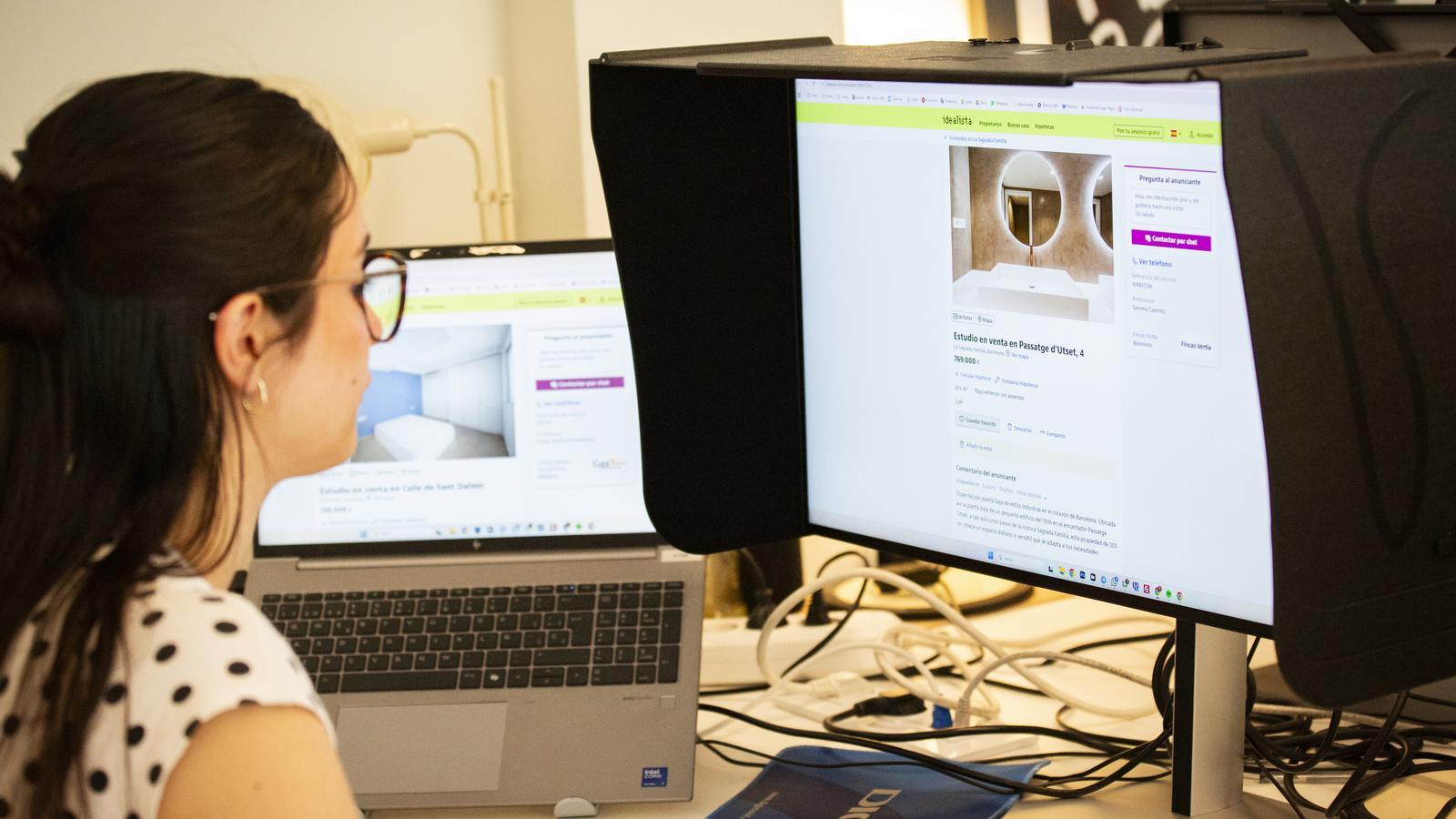
In this context, infra-housing appears, which until a few years ago we could consider a product of the past, or the rental of rooms and even sofas, balconies, or boats, as happens in some areas of the Balearic Islands. Without any record of action by the administrations, which are reluctant to provide data, loftsor studios in ground-floor premises without a certificate of habitability and with prices above the market average are emerging. And this despite the fact that this document – the certificate of habitability – is essential to certify that a space meets minimum requirements for living and is mandatory for registration as such in the Property Registry. Or to obtain a mortgage, unless it is done by simulating that it is for setting up a business. And also for selling or renting it.
The fact is that this is a reality that intermediaries in the sector consulted by ARA acknowledge is growing. It is not an isolated phenomenon. The reason is the scarcity of housing supply in Barcelona and also the closure of businesses that has occurred in recent years. Exploiting these empty premises to live in is a fraud. There is the possibility of a change of use, which is the legal route, but which many try to avoid. Another is to simulate having a commercial premises when in reality a person or family lives there, without meeting many of the requirements that housing must have in terms of health, hygiene, and structural integrity to be used as a residence.
This offer is not aimed solely at vulnerable groups, but also at middle classes. It is usually found on secondary streets and in some cases is advertised without hiding the fact that it does not have a habitability certificate. In other cases, those who offer these ground-floor premises take great care to refer to them without using words such as housing or flat.
Some bodies have proposed transforming premises into housing as a way to increase supply, one of the deficits that causes prices to keep rising. It is another symptom of a sick market, almost chronically ill, that needs effective therapies to lower prices. Therapies ranging from creating more public housing to approving regulations that allow, in certain circumstances and with limitations and habitability guarantees, the transformation of ground floors into housing.
