Middle East, chaotic interregnum or emergent order?
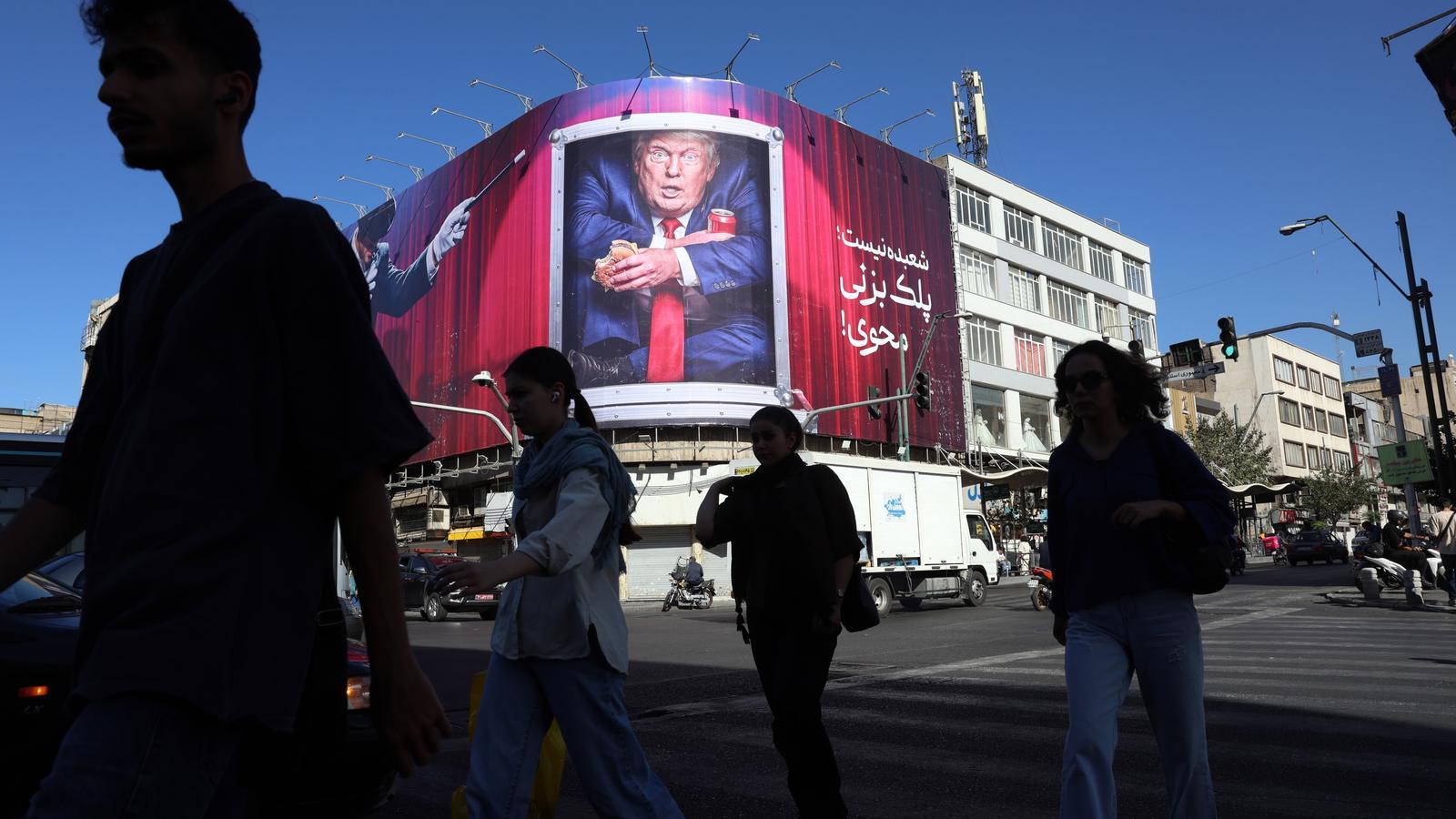

Seven months after the start of a bogged-down war, Iran maintains a strategic advantage over the United States, which threatens the stability of the end of the term of an increasingly weakened Donald Trump, and increasingly strained global energy markets. A barrel of oil remains above 100 dollars. And, despite the impasse on the ground, the Middle East is entering a moment of decisive disorder. The conflicts in Gaza, Lebanon, and Yemen remain open. In recent days, Iran has attacked with missiles the ships attempting to pass through the Strait of Hormuz, which has become the epicenter of the crisis in the Middle East. Diplomatic prospects between Washington and Tehran have faded once again following Trump's latest refusal to reopen negotiations based on the understanding that the United States and Iran signed last June at the Palace of Versailles.
With a United States in retreat, or at the service of the agenda of Israeli Prime Minister Benjamin Netanyahu, the region is reorganizing in search of new strategic balances.
While the Houthis position themselves as a destabilizing actor on a regional scale, Saudi Arabia is betting on the diversification of alliances, after feeling that the United States was disengaging from its security.
The French have reached a military agreement with Riyadh to deploy soldiers and anti-aircraft batteries in Saudi Arabia to contribute to the protection of the Yanbu oil terminal, on the Red Sea. This pipeline is an east-west artery of nearly 1,200 kilometers that allows Riyadh to export crude oil without depending on the Strait of Hormuz. With the Bab el-Mandeb corridor under Houthi attack, this pipeline has become the safest outlet for Saudi crude oil to Europe.
Although more than 80% of the military equipment of the Gulf countries is American, this dependence is beginning to weigh heavily. The region is turning towards multi-alignment. The United Arab Emirates is the clearest example: an approach to the United States and Israel, while simultaneously maintaining partnerships with India, Europe, South Korea, and South Africa.
The Saudis have begun to take note of this strategic ambiguity. And it is in this context that this summer they signed the so-called “Mecca Pact” with Pakistan (a nuclear power) and Turkey, a joint defense agreement which established that any attack against one of these countries would be considered an aggression against all three. Last Friday, precisely, the heads of the Saudi, Pakistani, and Turkish general staffs agreed to begin implementing this commitment “immediately.” Furthermore, the agreement also strengthens Turkey, an actor that is a member of NATO and that can dialogue simultaneously with Washington, Moscow, Tehran, and the Gulf monarchies.
The Gulf countries, having become targets of attacks by Iran and its allies, especially due to the presence of American military bases on their territory, have finally decided to speak with Tehran on their own. In an article published in July in the newspaper Le Monde, the Omani Foreign Minister was already calling for a new multilateral agreement that would bring together the Arab countries of the Gulf with Iran and Iraq to share the responsibility for the region's security. It is not that easy. The political, military, and economic competition between Saudi Arabia and the United Arab Emirates is also being played out in the Red Sea. These rivalries not only reflect different national interests, but also opposing conceptions of how the regional balance should be organized. In recent years, the two Gulf powers have maintained disputes over their position regarding Yemen, Iran, and even the civil war in Sudan.
For its part, Israel is also diversifying its alliances, as demonstrated by the recent agreement with Morocco to appoint ambassadors to strengthen diplomatic relations between both countries. It is a direct consequence of the Abraham Accords that were supposed to normalize Israel's relations with the region, and which Netanyahu himself was responsible for bogging down with the war in Gaza. For the moment, Riyadh refuses to take the step. Gaza continues to be a disputed territory, as demonstrated by the satellite images published by the New York Times, which confirm that Israel continues to expand its control over the Strip, building at least a dozen military positions and fortified barriers beyond the withdrawal line agreed upon in the October 2025 ceasefire.
While wars fuel Netanyahu's electoral offensive, the region has been thrust into a chaotic interregnum that, despite the uncertainty, is redefining the contours of an emerging order in the Middle East. The conflict in Iran has become the definitive accelerator.
