Illa and the educational debate: reactivating politics
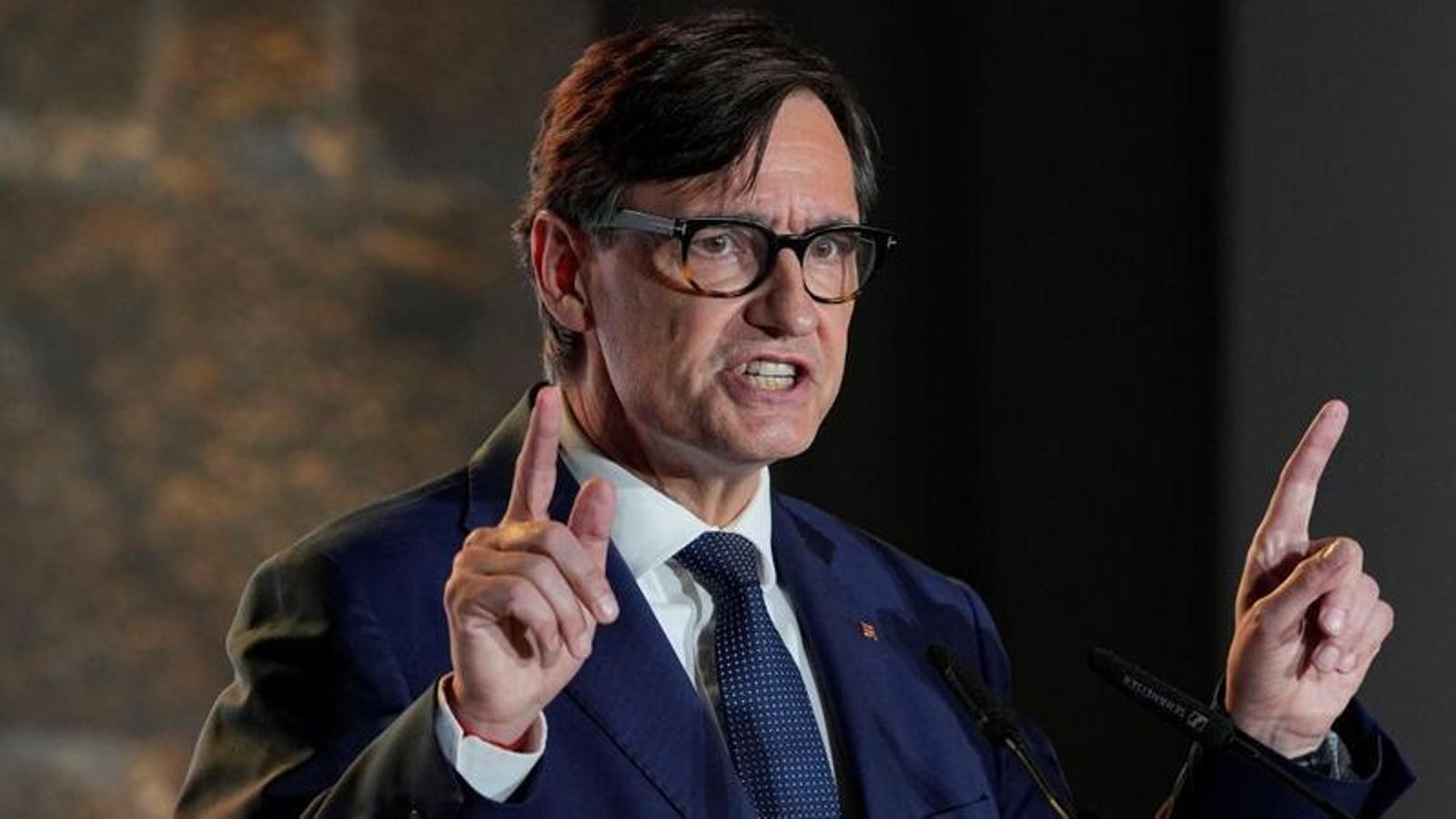

President Illa has decided to break the monotony, conscious, perhaps, that it was trapping him. His restrained tone was rewarded during the bewilderment of the 'Procés' aftermath and, by making a virtue of calm, he grasped the country's need to lower the tone and take a pause. With this criterion, and with his rejection of shrillness, Illa has been making progress, at a time when the exercise of conjuncturally assuming the framework of the possible seemed to be imposing itself.
However, and although it may seem a contradiction in terms, normality is not eternally sustainable. And if one is not aware of this limit, the person governing can end up losing sight of the world and find themselves offside. The current situation—in which the remnants of the 'Procés' are still being dragged along—does not allow for complacency. In politics, pure management is not enough. The responsibility of presiding over a country requires knowing how to anticipate. And the appearance of President Illa, presenting with a certain solemnity (presence of civil society included) the proposal for a pact for education, goes in this direction. The move from words to deeds will be a test that may determine the future of the legislature.
Illa has enjoyed a certain placidity. Undoubtedly, he has benefited from the crisis of the Catalan national right. Right now, Junts is far from the driving force of nationalism it inherited from Pujol's Convergència. The game of myths and points of reference is complicated in politics, and sometimes you cannot see the forest for the trees. And, today, Junts is at a dead end called Puigdemont, and as long as it does not get out of it, it favors its adversaries. It is evident that his long stay in exile—he is one of the few who remain there—has placed the character in the gallery of history's memories prematurely. And it is also true that Junts is becoming blurred in the hands of a small core of loyalists to the former president, who are holding back any step forward. With the serious addition that the one who is alarmingly capitalizing on the situation is the nationalist far-right, which had always been kept at bay and which now, led by Sílvia Orriols, is riding shamelessly, taking advantage of the reactionary wave that threatens Europe.
Politics is cruel to those who stop. President Illa has made his own path during this first period of his mandate, but for some months now it has begun to be evident that discretion is insufficient. And management, however good it may be, does not guarantee success, that is to say, the accumulation of political capital. Routine becomes tiring at some point. And Illa's step will likely generate other movements.
The president has opted for education when it comes to breaking inertia. It is a matter of general interest that commits all political forces; no one can ignore it. And it would be good if a substantive debate were really opened that could culminate in a real update of the system. It concerns the whole of society and is crucial for addressing social fractures and protecting citizens' rights. The quality of education marks a country.
Another thing, however, is whether it can be enough for the relaunch of a government that has made a low profile its way of being in the world. And which is now at a moment when it is not enough just not to bother. Monotony creates distance and alienates. Society wants to know and feel addressed and heard. What is evident is that the good tone that brought Illa to power was an energy with an expiration date. The mobilization for education that he proposes should revive Catalan politics and make what remains of the mandate a moment of construction.
The time of pause to digest the 'Procés' has passed. It is time to reactivate politics, and the debate on education can be a first step. A new phase of greater intensity in the day-to-day of democracy, with all democratic parties committed, can also help to ensure that the extreme right returns to its corner and cannot capitalize on the negligence of others. It is up to Illa to follow the path opened with his educational proposal, and it is up to the others to be there, to reanimate a legislature built on the complexes of each group and which seemed condemned to monotony.
Excesses burn out, but a low profile is never good in politics. It is an evasion of responsibilities. And nothing discredits the political class more. It only provides fodder for neo-fascists.
