Hungarian: and should we get excited?

"‒I don't understand why my son has joined this strike. They have a job and a stable salary, what else do they want? If it were up to me, I'd send them all to prison. My son first."In these terms, Sári néni, Aunt Sári, expressed herself while putting her unbeatable pogácsa into the oven, small round and savory pastries made from a wheat flour dough cut with a round mold. Widespread as an accompaniment to hearty soups or as desserts throughout the European territory that was once the Ottoman Sultanate, the range of flavors is quite wide, but in today's Hungarian cuisine, the most popular are generally made with cracklings, cottage cheese, or potato.The surprising reflection referred to a strike that the country's railway workers began in December 2008 to demand a whole series of substantial improvements in their working conditions, which were very precarious at the time.In Europe, as in other parts of the world, there are times of manifest political radicalization, after the order that emerged at the end of World War II has taken its toll. In the Magyar country, this polarization is a seminal sin that dates back to the very creation of the first Kingdom of Hungary, one thousand and twenty-six years ago. Before adopting Christianity as the official religion, King Stephen, its founder in the year one thousand, had to defeat the army of his brother Koppány, a defender of paganism and traditional Magyar values. The country's most famous rock opera, István a Király, is based on this episode. In the current Republic of Hungary, democratic thought has never had the opportunity to show its face and manifest itself. Unlike all the nation-states that emerged from the ruins of Imperial Europe in 1918 (born as democracies and ending as dictatorships before World War II), in the new Hungarian state, a Soviet Republic led by Béla Kun, one of the founders of the Hungarian Communist Party, was immediately imposed. In such a turbulent period, a republic of these characteristics had its days numbered, exactly one hundred and thirty-three. The war with Romania at a time when everyone was fighting to impose their new borders on their neighbor forced Kun to flee to Austria a few hours before General Rusescu's troops entered Budapest.After another brief period of violent instability, power finally fell into the hands of Miklós Horthy, an old-school admiral who established a regime of evident fascist character for almost twenty-five years. Once World War II ended, during which Hungary gave unconditional support to Hitler until the penultimate moment, the communists once again took the reins of the country for more than four decades. In Hungary, the pendulum has never stopped halfway.The 1956 Revolution, the first uprising against a totalitarian socialist regime in the Soviet Bloc, did not aim to establish a liberal, parliamentary, and multiparty democracy. As explained by the Daily Mail journalist in Budapest, Duncan Shiels, in his magnificent The Rajk Brothers. A European Family Drama (Acantilado, 2009), when Júlia Rajk, the wife of László Rajk, a historic communist leader purged by the regime, arrived in the capital to meet with Imre Nagy, the leader of the revolution was horrified to see "the reactionary right so close to the prime minister. A crowd of petty nobles, who clicked their heels, used aristocratic language and behaved as if they were the masters of the world. Seeing all those men who embodied the ultraconservative pre-war regime jumping back into the fray was unbearable for her."
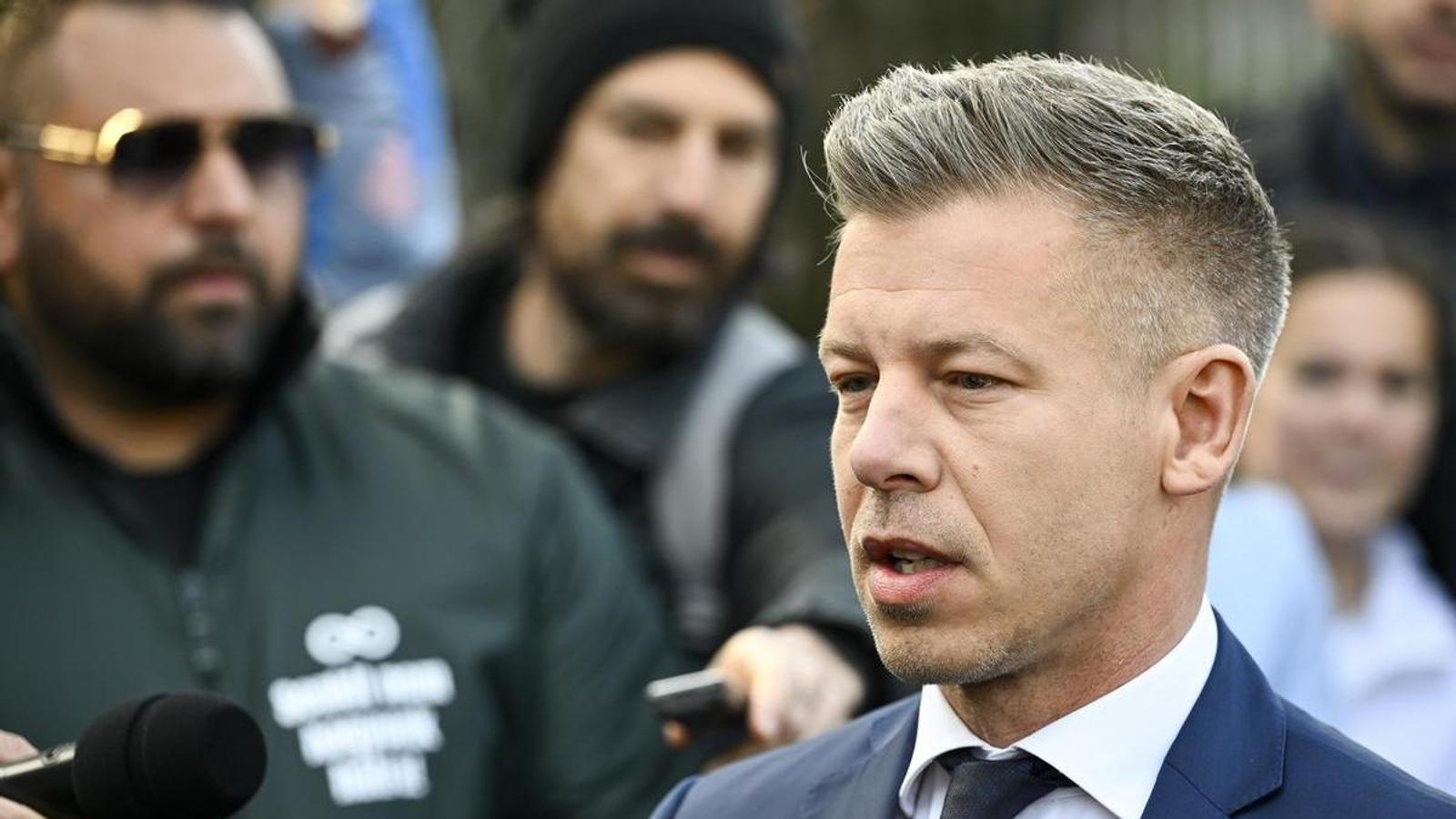
Julia Rajk was present at the massive ceremony of homage and rehabilitation of the '56 martyrs, which was held on June 16, 1989, in Heroes' Square in Budapest. At that historic event, the aggressive tone of the speech by a young and unknown orator, who demanded the immediate withdrawal of Soviet troops from Hungarian soil and the establishment of a Western-style democratic regime of freedoms, was impressive. That young man was called Viktor Orbán.It is very difficult for a true democratic mentality to emerge from a society where neither the circumstances nor the adequate conditions have ever been met; one does not need to go to Hungary to realize this.Péter Magyar, the politician who, for the first time in many years, has brought down Orbán's all-powerful regime, has emerged from the bowels of Fidesz, the ultraconservative party of the now ex-prime minister. I have serious doubts about the true intentions behind his program of opening up to Europe and about his authentic character. I hope I am wrong, but just in case, let no one get their hopes up too high.In Hungary, néni is a term of respect that accompanies the first name of an older woman to address her, similar to how madam is used here, but I find aunt to be closer and more affectionate. Its masculine equivalent is bácsi.Sári néni, a paradigm of the hospitality and good nature of rural Hungary, has not been with us for some years now, but her pogácsa remains the best I have ever tasted. Her granddaughter, heir to the recipe and who last Sunday left home in the morning to vote for Magyar (which means "Hungarian") with a European flag on her shoulder, has not yet been able to equal it. We do not lose hope.
