From Maricarmen to Daphne: struggles that change laws

There are laws with their own names. Nothing to do with the official one, made of the number, the year, and a description longer than a day without bread. The popular title arises from episodes that shake the social conscience, such as the Maricarmen decree (two decree-laws, pending validation). A timely name, not an opportunistic one. It is not a patch for the specific case because, unfortunately, there are many Maricarmens on the verge of ruin. It sets limits on the law of the jungle and grants more stability: suspension of evictions for vulnerable people, extraordinary extensions, limitation or freezing of updates, and measures against fraud (with seasonal rentals, for example). Nor does it seem hasty or radical. It is symptomatic that the Basque right, calm and pragmatic, offers partial support, with the red line of automatic extensions.
It is not unusual for injustices that shrink the heart to provoke rejection towards the perpetrators and sympathy towards those affected. Nor that they force changes in the rules of a perverse game. In France, on the night of January 31, 1954, with the thermometer hovering at 15 degrees below zero, a woman was found dead from the cold on the sidewalk of the Boulevard de Sébastopol, one of the most vibrant arteries in Paris. The most striking thing is that, between her frozen fingers, she held the official eviction order notified two days earlier. There is no trace, in police or corpse records, nor in the archives, of the woman's identity: we only know she was in her sixties. She is an anonymous symbol of collective tragedy. The immediate denunciation by Abbé Pierre on Radio Luxembourg provoked the “insurrection of kindness,” a wave of solidarity with the homeless. It was also the trigger for a series of protests to curb inhumanity. They culminated in the winter truce that, since then, suspends by law evictions and power cuts between November and March. The 2014 law, known by the acronym ALUR, for the promotion of social housing policies, consolidated the measure in addition to regulating rents in strained areas, limiting real estate abuses, and facilitating access to a decent home. It is not a panacea, but it makes it clear that strict market intervention and indefinite leasing are not utopian measures, but rather minimum standards in Europe for some time now. In the United Kingdom, the law of May 1st of this year shields the market and recovers the indefinite contracts eliminated by Margaret Thatcher.
Our Maricarmen did not settle for “the inevitable”, curled up in a corner, alone and helpless. Without adopting the role of victim or martyr, she reluctantly became the great standard-bearer of the housing movement. And this bothers those responsible, directly and indirectly, for a situation that is not exceptional but daily. Those who reject regulatory changes do not defend Mrs. Maria or Mr. Esteve —the new compensation fund secures the return for small landlords—; they serve the large holders, foreign and local. In Catalonia, the ranking of private owners is led by CaixaBank, followed by Cerberus and Blackstone, according to a report by Civio, which documents how abusive rent increases are not exclusive to vulture funds.
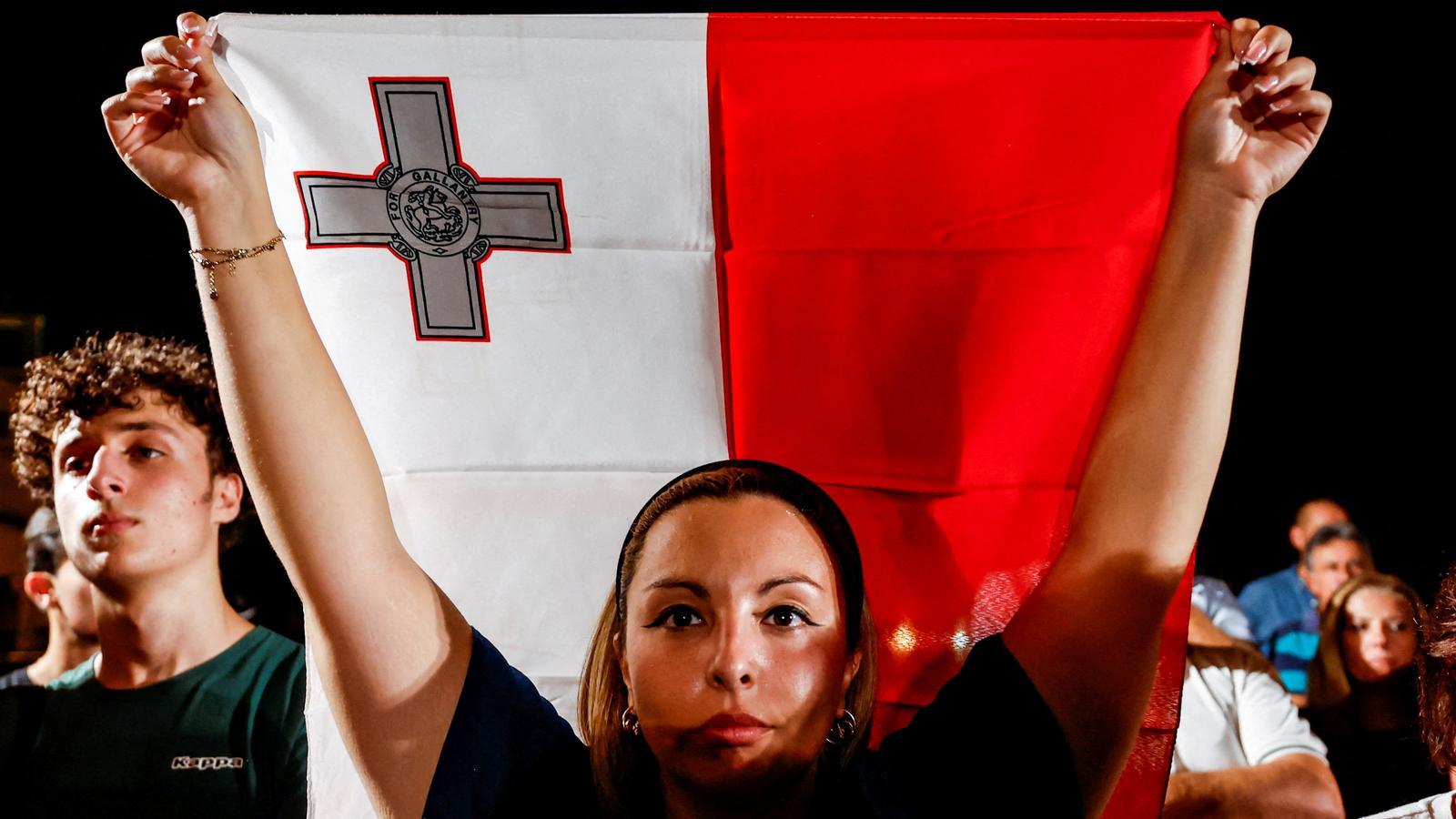
Among the European laws with their own name, which coalesce sustained struggles, is the 'Daphne law'. Officially it is the Anti-SLAPP Directive, a shield against the strategic lawsuits that journalists and activists suffer so that they back down in their investigations and stop the complaint. The popular name, however, is a posthumous recognition of the Maltese journalist Daphne Caruana Galizia, murdered in 2017 for pointing out the tentacles of a corrupt plot in banking, business, and politics. Before being executed with a car bomb, she had suffered a thousand stratagems to frighten and silence her, from killing her dogs to filing more than 40 defamation lawsuits against her. Her fight was neither solitary nor sterile. She was investigating in collaboration with the ICIJ team that brought to light the Panama Papers, lists of major tax evaders with the complicity of legal operators. The case is current because a jury has acquitted the businessman accused of being the mastermind behind her death. The scandal has mobilized civil society and the wave of protests against impunity has forced the Maltese Prosecutor's Office to appeal the verdict and continue the investigation.
Both Daphne and Maricarmen are the spearhead, but their case is not anecdotal. If they receive personal attacks and smear campaigns, it is because the collective struggle behind them represents a threat to certain positions and interests. The Maricarmen decree or the Daphne law go beyond curbing personal impact, whether it be an eviction or a procedural attack: they shore up fundamental rights and public freedoms —to decent housing, to participate in public affairs...— at a time of accelerated decomposition of the welfare state.
Attention must be paid to other norms without a first name, with a silent effect, that drown out critical voices. This is the case of the Law on the Protection of Citizen Security, the official euphemism for the gag law, a nickname that better suits its purpose. The rule, which the Spanish government promised to repeal, allows for the neighborhood and union movement that demonstrates peacefully against evictions, or the journalists who document the violence with which they are carried out, to be riddled with fines. The Catalan executive left the sanctions on pause with a 2022 protocol, but the current ministry applies them with renewed fury. As an example, the 30,000 euros for those who protested against the eviction of families with minors in April 2025.
The “revolution of the keys”, in the fiery rhetoric of the Tenants' Union, unites reflection and action: the lucidity of Montesquieu —“The law is not just because it is law, it must be law because it is just”— with the defiant determination of Giordano Bruno —“I have tried to do everything I could”.
