Drowned by the cost of living?

Next Wednesday we are called to a general strike to demand better wages, affordable housing, and measures against the rising cost of living. And this at a time when Catalonia is recording one of the lowest unemployment rates since 2008, the minimum wage has increased by almost 66% since 2018 and monetary poverty has decreased in recent years. And yet, many families continue to have difficulty making ends meet. How is this explained?
Good figures do not always translate into a better life. The poverty rate measures income in relation to the rest of the population, but not whether it is sufficient to cover basic needs. And the same salary does not allow for living in the same way in Barcelona as in Santa Coloma de Gramenet, nor for someone who rents compared to someone who has their home paid off.
But how much does it really cost to live? It is what we have studied in KSNET and Daleph calculating the living wage (living wage) in five large metropolitan areas. In the Barcelona area, a person living alone needs 1,722 net euros per month to live with dignity, equivalent to 2,189 gross euros in twelve payments. 54% more than the minimum wage. Not being poor, statistically, does not necessarily mean making ends meet.
A large part of the explanation is housing, which represents 58% of a person's budget in Barcelona. But the problem is not only how much it costs, but who bears the cost. According to Oxfam, in Catalonia 28.3% of people who work and live in rented housing are poor once the housing is paid for, compared to 6.1% of those who have a mortgage. Having a job no longer guarantees the same opportunities: it increasingly matters whether you live in rented housing, own a home, or can count on family assets.
Improving wages and strengthening social benefits is essential. However, we cannot rely on wages to indefinitely compensate for the rising cost of living. It is also necessary to improve productivity so that the increases are sustainable.
It is also necessary to act on what families need to spend. Affordable public transport, school lunch grants with higher income thresholds, or mechanisms to reduce energy bills lighten family budgets. However, not all measures are equally effective: generalized energy or fuel subsidies may end up benefiting the households that consume the most. It is not the same to lower everyone's bill than to help those who have more difficulty paying it.
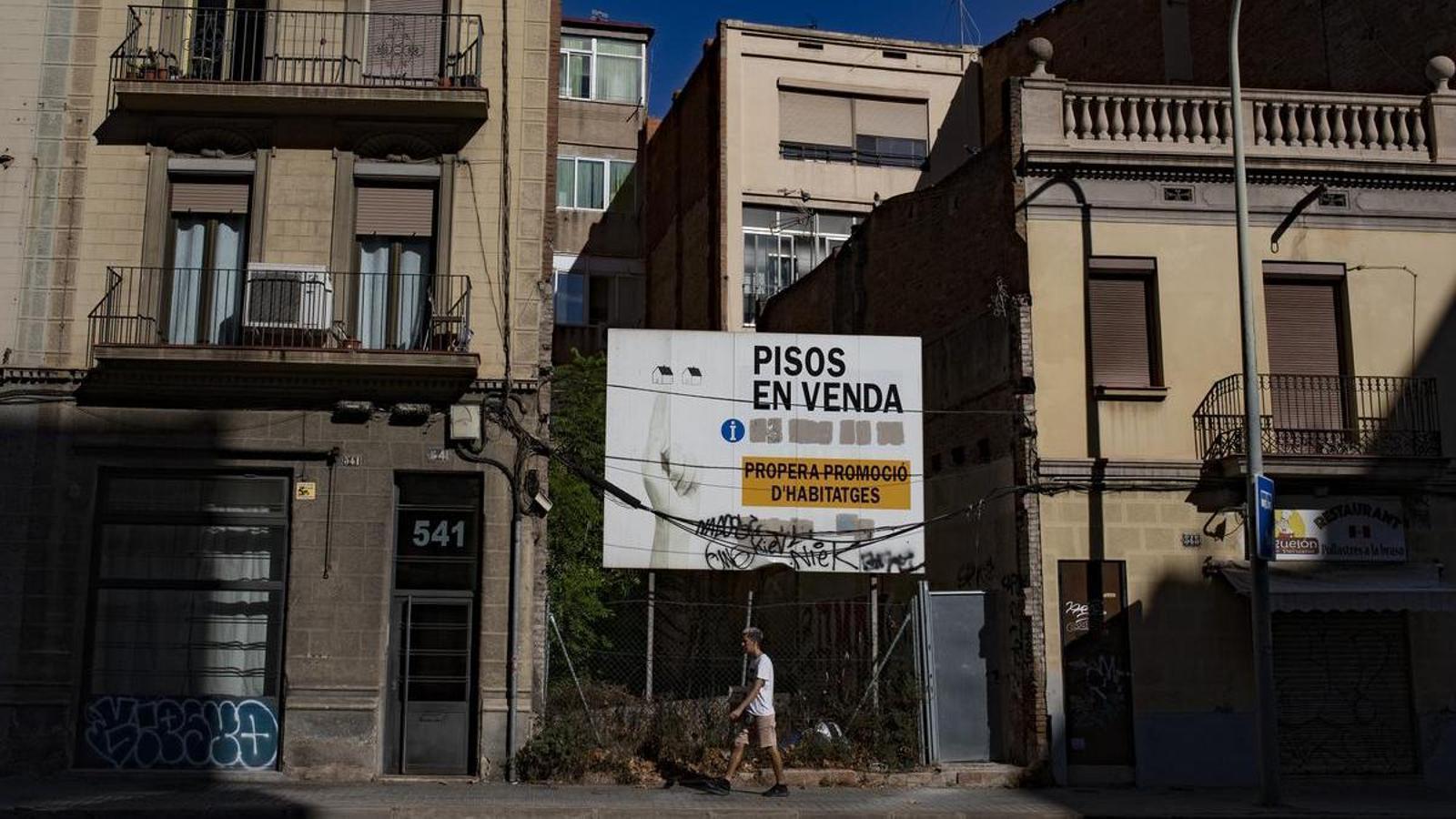
And, above all, it is necessary to act on housing. In Catalonia, the construction of new homes does not follow the pace of household creation, a fact that makes the price more expensive. We need to expand the supply of affordable rentals, also for middle incomes, protect the most vulnerable households and expand the public housing stock, still much lower than in other European countries.
The numbers say we are doing better, and it is true. The challenge is for this improvement to be felt in our day-to-day lives, and for that reason, it is not enough to wait for salaries to do all the work. Wednesday's strike reminds us that, beyond economic indicators, what matters is what kind of life we can afford with what we earn.
