Europe and the nihilistic challenge
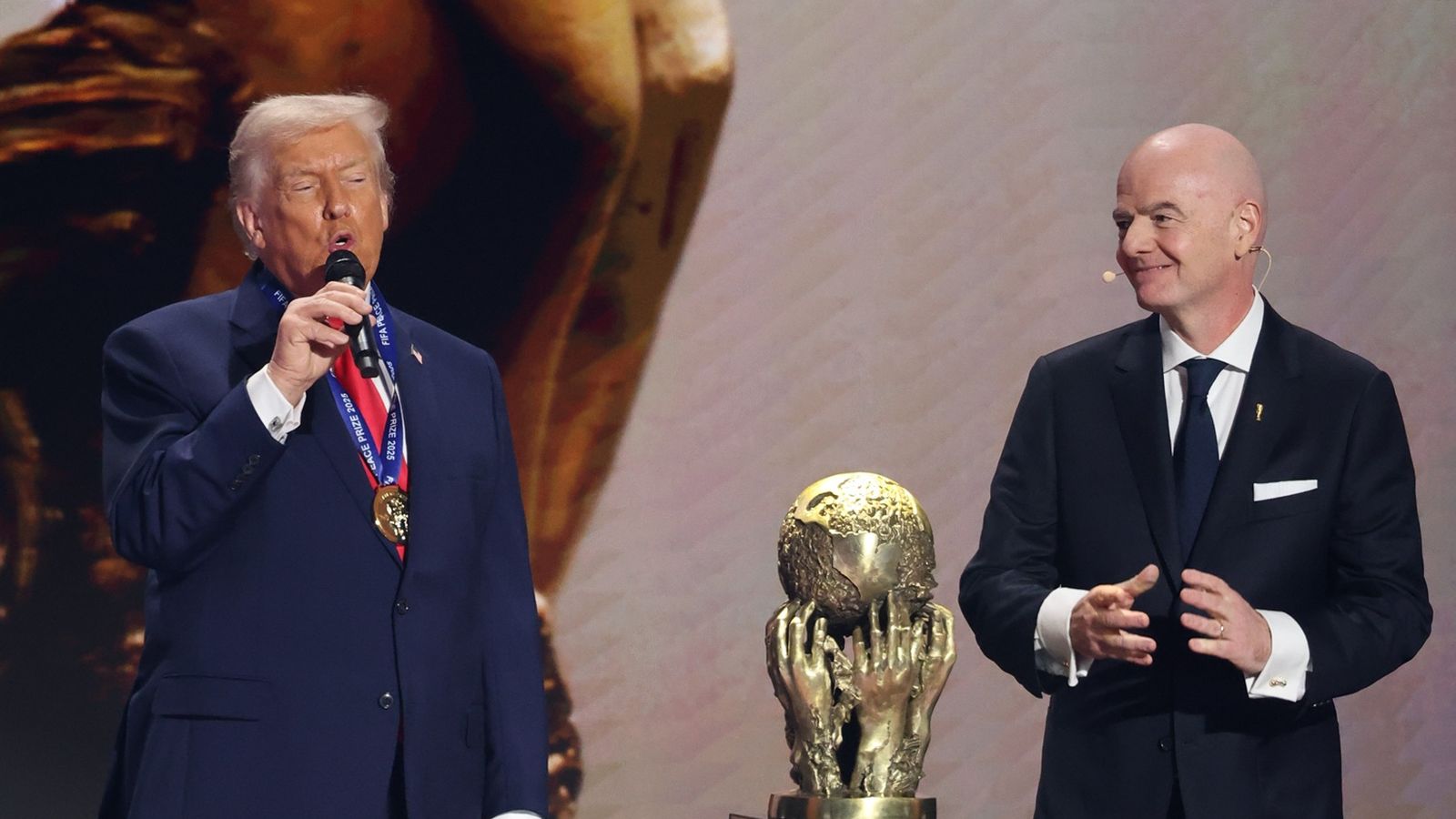

1. We have seen ridiculous things in the history of football – a suitable territory for egos needing recognition to let loose – but Donald Trump asking President Infantino to withdraw a red card for Balogun, a forward for the United States team, and the order being immediately executed breaks records for frivolity and indecency. It's not surprising from Trump, because he has been showing off for years and prioritizing his conviction that anything is permissible for him, that there are no limits for him, but it seems to be a vice that contaminates. The anecdote comes at a time when the contradictions his uncontrolled ego has led him to are generating accelerated disrepute that is already directly impacting the United States, where awareness of the president's irresponsibility is spreading. The way he acts, doing and undoing, means that, for example, in Venezuela he today supports those he wanted to overthrow yesterday, or that in the Middle East the impasse his delusions have led him to is giving life to the totalitarian regime of the Iranian ayatollahs, who have abruptly curbed his excesses by exposing him for what he is.
The world's leading power has surrendered to a person who has no empathy with reality, who is incapable of seeing things as they are because he knows nothing but his own fantasies, and who is convinced that no one can stop him despite having already had a few setbacks. His image is declining exponentially: we will have to see what signs the next midterm elections give. But it is surprising that American institutions react so timidly.
2. Nothing is coincidental. And it is evident that if the Trump case has been possible, it is because we are in a moment of accelerated change, and the new real powers, emerging from the radical mutation of the economic and social system, are causing ruptures and disarray that generate confusion and that we do not yet know how far they can take American institutions, and by rebound, the rest of the world. Only from mental blindness can one deny the evidence that Western democracies are deteriorating day by day, trapped in a change of model that translates into a generalized democratic regression, while China builds, at its own pace, an assault on world hegemony.
He who does not see it is because he does not want to. Every day the moral institutions that gave life, meaning and values to Western democracies are degraded a little more. They could be protected from the offensive of totalitarian communism (the fall of the Berlin Wall is emblematic) and space could be opened up in Eastern European countries. But what has become today of the moral institutions of the West, those that marked the difference between liberal democracies and totalitarian regimes, those that gave and still give meaning to a certain cultural tradition that, with its limitations, made Europe a special place for recognizing the human condition?
What institutions am I referring to? To privacy: the recognition of an inviolable personal space. To freedom of expression, which allows sharing words through dialogue, noble confrontation between people who mutually accept each other. To mixing: the possibility of sharing and progressing from different traditions and cultures, without discrimination. To respect for minorities: the right to express oneself and to meet with the naturalness of mutual recognition. To secularism: the neutrality of public space, from recognition to the diversity of ideologies and beliefs. To universality: the great human diversity converges in a common condition as a species, without an official ideology or belief being imposed. To the tragic sense: the precariousness of the human condition, which means that not everything is possible. In summary, to the cosmopolitanism of diversity: from "us or them" to "us and them." We are one species and we share, at least for now, one planet. What causes uncertainty? The acceleration with loss of the sense of limits: believing that everything is possible and that freedom – the ability to think and decide for oneself, as Kant said – is the heritage of a few.
