Ed Sheeran and the (dis)comfort of being apolitical

-
CAT -
CAST
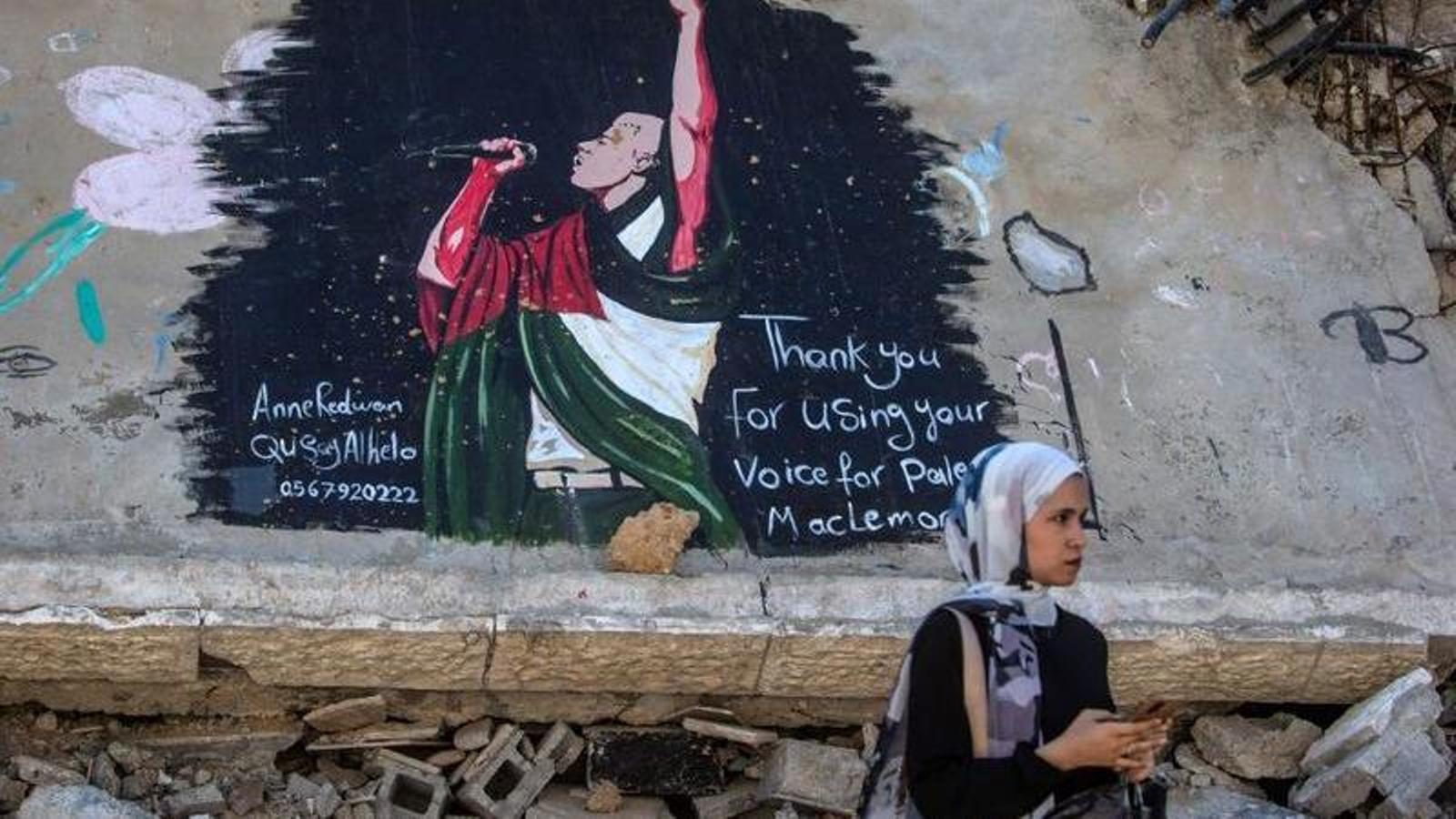
Ed Sheeran does not want to be political. Or, more accurately, he does not want his concerts to be. He explained this after rapper Macklemore had to leave his North American tour for having said "Free Palestine" –Free Palestine– on stage. And there is something fascinating about this idea that politics only appears when, or because, someone utters certain words.
Before Macklemore shouted "Free Palestine" there were already stadium owners, contracts, economic interests, pressures, and red lines regarding what could be said or done from a stage. The politics were already there, and all Macklemore did was make them visible.
For this reason, perhaps we should be less interested in discussing whether Ed Sheeran is a good or bad person, whether he should have done more, or what power he really had to stand up to the stadium owners. We should be much more interested in the ease with which we accept that some decisions are "political" and others are simply that, decisions.
Saying "Free Palestine" is political, but demanding that whoever says it disappear from the stage seems like a contractual matter. Talking about Gaza is political, but deciding that Gaza should not be mentioned seems like professionalism. Protesting breaks unity. But asking for silence, curiously, preserves it. This distribution is never neutral.
Palestine has been exposing this for three years with quite brutal clarity. We have seen how cultural institutions canceled events, universities repressed protests, workers faced professional consequences, and artists discovered that the freedom to take a stand on some crimes has quite different limits depending on what the tragedy is.
Sheeran's own argument proves it. In the past, he used his platform to publicly express solidarity with Ukraine. "I stand with you," he told the Ukrainians. Back then, no one needed to protect the children at his concerts from an unexpected eruption of geopolitics into the world of pop.
And here is the uncomfortable part. Some may want a concert to simply be a concert. Others have the right to be tired of every singer, actor, or footballer having to speak out on every atrocity on the planet (as if they actually did, but that is another matter). Many, like me, are wary of turning celebrities into moral compasses, no matter how much we demand more from them. But it is one thing not to demand they speak and quite another to accept that silence constitutes some sort of zero position, clean of politics. And, if you'll allow me, it is something very similar to what we have seen these days surrounding the eviction of Maricarmen.
Because silence also occurs within power relations. Sometimes someone decides to stay silent, and other times someone learns what they can say without losing a contract, a stage, or a professional opportunity. And others, as in this case, someone with much more power decides where the boundary of the acceptable lies. But there are also times when someone seems to have no power… and triggers an earthquake.
Perhaps that is why the reaction of the other guest artists on the tour is as important as, or more than, Sheeran's actions. Finneas, Lukas Graham, Aaron Rowe, and Beoga decided to leave after Macklemore's departure. Not because all artists have an obligation to become what too many people consider activists, but because there comes a moment when carrying on, and doing so in silence, also means making a decision.
Later Sheeran spoke, and not by chance, through a teleprompter. He described what is happening in Gaza as "catastrophic and unjustifiable" and acknowledged that he had handled the situation poorly, but he moved the focus back to October 7th so as not to step out of apparent neutrality and insisted on talking about a complex situation instead of a genocide. This, in fact, makes the episode quite a bit more interesting. Because in the end, it wasn't Macklemore who turned that tour political. It was those who decided that two words were enough for someone to no longer be welcome. Tired or not, perhaps we should start to be a bit more wary of spaces—and people—that proclaim themselves apolitical, especially when, to keep them that way, someone has to be silenced.
