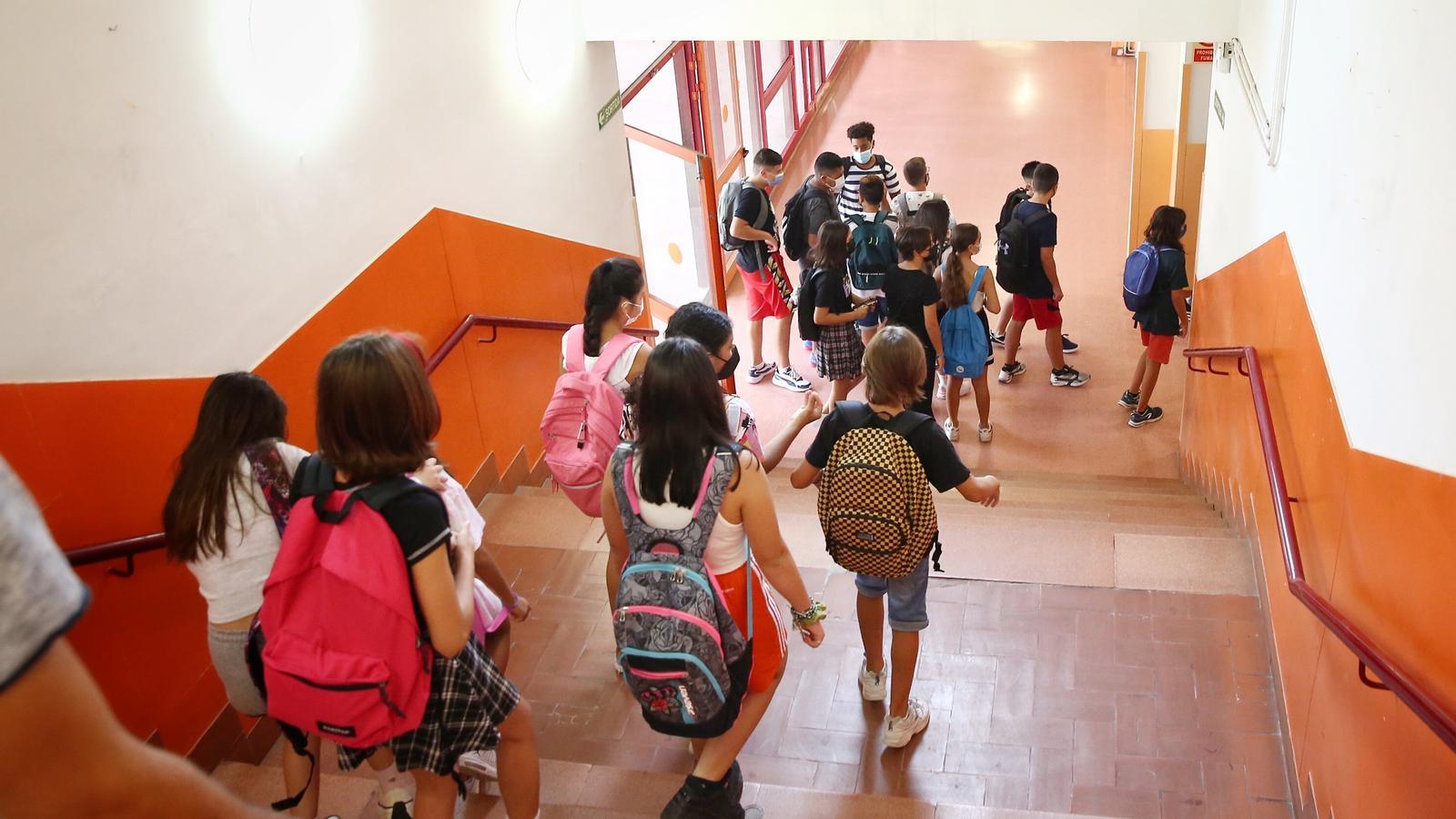

Attempts to associate public schools with the idea of conflict and unsafe spaces for students have become frequent. The right-wing parties PP and Vox are trying this in the Balearic Islands and the Valencian Country, presenting primary and secondary schools as settings for a linguistic struggle, where teachers, according to them, want to “adoutrinar” (indoctrinate) students in learning the Catalan language. The message is to go to private and state-subsidized schools, where neither students nor parents will have to face any kind of dilemma: in case of doubt, always side with the strongest.In Catalonia, it is a government that calls itself progressive, from the PSC, that proposes placing plainclothes police officers in schools and institutes. Not inside classrooms, they specify. Not to teach, they specify. Thank goodness. They are police officers trained in mediation, they clarify, who should only act when necessary (¿when is that, exactly?). It is understood that they will not be armed and that their function will not be punitive. The more nuances they add, the worse it sounds.I will not explain it better than David Fernàndez has already done, but I would like to emphasize that the mere idea of introducing police forces into public schools is an aberration. Police should only be present in educational centers in very specific cases, but they have neither a role nor should they have any role within the educational community, and even less so in the day-to-day of schools and institutes. The idea that is conveyed is once again that public school is an unreliable place. So dangerous, in fact, that it requires police surveillance. The message is the same again: parents, keep your children away from these unsafe places. Meanwhile, there is a major educational strike underway with a long list of demands (some as old as ratios), among which there is none that remotely resembles having plainclothes police officers in schools and institutes.A good teacher, or professor, exercises, within the classroom, a very special form of authority, which has nothing to do with that of a police officer. Good public school teachers and professors, who are the majority, teach to question, and at the same time to respect, authority (their own and, by extension, all forms of authority). It is a delicate, difficult, very fine balance. The social function of the teacher and that of the police officer are not complementary. They do not add up. Of course, the police play a necessary role in society, but their presence in schools only serves to distort, pervert, and degrade the educational ecosystem with a grave shadow of suspicion.Perhaps if all governments of all colors had not fallen into the temptation of layering educational laws over the years, this point would not have been reached. In any case, the function of a democratic government —especially if it calls itself progressive— is to ensure, above all, public services, so that there is healthcare and schooling for everyone and of quality. This is done by listening to professionals and multiplying resources. Not by sending them the police.
